




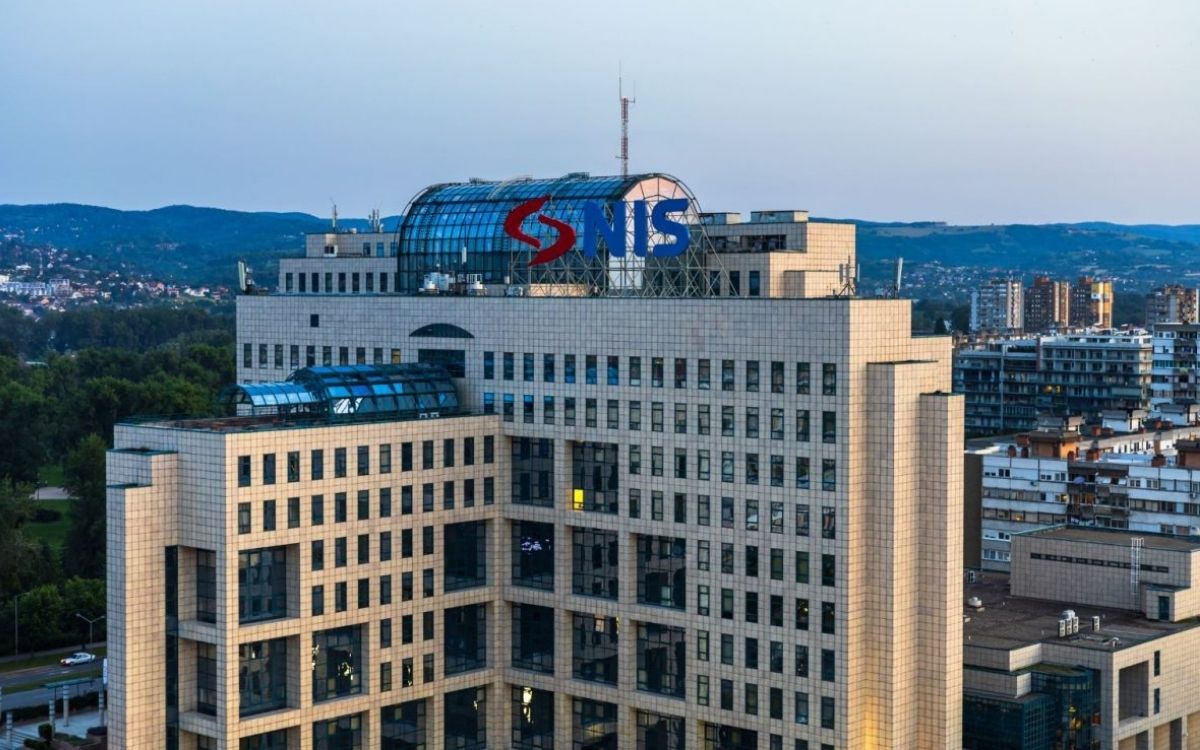
It seems as if both the domestic and regional public were already convinced that the American OFAC would extend the deadline for completing the sale of NIS by 30 days. Because all previous experiences and the constant shifting of deadlines pointed to such a conclusion. And just when everything began to take on the outlines of a serious devaluation of this American institution, a somewhat different response arrived from Washington late last night.
OFAC did grant MOL’s request. But instead of 30, it gave them only 10 days to conclude the purchase of the majority stake of Gazprom’s shares in NIS. Additionally, that new deadline, June 16, coincides with the day until which NIS itself has an operating license to work. This, on the other hand, leads to the conclusion that just when it was thought that by its constant delaying it was sending an unclear message and making the sanctions it introduced itself meaningless, OFAC has now tightened the reins. Because, it is now somewhat clearer that June 16 could indeed be D-day for the fate of NIS.
It would be illogical, due to that coincidence of dates for both required licenses, for OFAC not to extend the license for the sale negotiations on that day, if they are not completed by then, while approving a new license for operational work and oil delivery via Janaf to NIS. The same would apply if the opposite happened.
On the other hand, it would be frivolous to make a decision on that June 16 to extend both licenses once again.
What MOL announced
As announced on the Budapest Stock Exchange, the negotiations between MOL and Gazprom have advanced significantly. And that after May 22 when OFAC extended the deadline until June 6. And now it can be expected that the new 10 days will allow the transaction to be finalized.
In MOL, therefore, although the approved deadline is 20 days shorter than what they requested, they are convinced that they will succeed in finishing the painstaking negotiations with the current owners of the majority stake of shares in NIS.
He also said on that occasion that he is optimistic that an agreement can be reached by the end of this week. However, on the day when this week expires, the public in Serbia has not been informed about anything. Neither about what was written in that response that the Government was supposed to receive a few days ago. At the same time, it is not known whether the negotiations have ended or are close to it.
Serbia’s maneuver
If we go back to the statement of the President of Serbia, who once, when the offer of Ranko Mimović appeared out of thin air, said that NIS cannot be sold without Serbia’s permission, it is logical now in the finish of the decision to wonder what Serbia will do if it does not reach an agreement with MOL, and Gazprom agrees to the sale of the majority stake.
In other words, it is up to our country in that situation either to “erase” its red lines and agree to what MOL offers. Or to activate the right of first refusal and prevent the sale of the majority stake to MOL.
There are, however, small chances that something like that could happen. Serbia is obviously not ready for that risk, because the political price would be high.
What if there is no new license
If for some reason the two sides in the purchase negotiations do not reach an agreement by June 16, and OFAC does not extend the licenses, Serbia will find itself in a hopeless situation for the first time since October last year. On the one hand, NIS will not be able to import crude oil and process it in the refinery. And on the other, the idea of the Russians exiting the majority ownership goes back to the very beginning.
Not even this time, however, is it mentioned whether MOL is buying just over 56 percent of NIS shares alone. Or if it is doing it together with the Arab company ADNOC, which was mentioned as a partner to the Hungarians in this venture. It is still not known whether the Arab partner gave up participation in this business due to the outbreak of the war in Iran. It is not known, furthermore, whether or not a joint venture has been formed that would be the future owner of the majority stake of shares.
Serbia went silent
And while MOL announces that the purchase negotiations have advanced significantly in the last 15 days or so, the government representatives in Serbia have gone silent. There is still no information on how far the negotiations that the Government is leading with the management of MOL have progressed. And whose result should be an interstate agreement that would define mutual ownership relations.
The last information regarding that was given five days ago by the Minister of Finance Siniša Mali. He stated then that he expects to receive feedback from MOL the very next day on the last proposal that Serbia sent. Of course, in the first place, it is about the future work of the refinery in Pančevo, but also about some other issues that remained open.
In such a situation, the only thing that Serbia would have at its disposal is to persuade the Russians for it to buy their stake and in that way completely restore ownership in NIS. Or if they do not agree to that, to nationalize this company. In all previous months, it seemed that there was no room for either of these options. Russia, for its own reasons, turned a deaf ear to every mention of Serbia to sell the NIS shares to it. It was not shaken in this even by the price, which is higher than the one offered by MOL. On the other hand, neither the President of Serbia nor the Government of Serbia showed readiness to nationalize NIS in such a situation.
But, if these dark premonitions were to come true on June 16, Serbia would not have the luxury of allowing the Russians to mothball the refinery and wait for the lifting of sanctions. The bill in that case for the economy and the entire country would be unforeseeable.
MORE TOPICS:
I EXPECT THE ARRIVAL OF PUTIN IN BANJA LUKA: Dodik on the agreement with the Russian president!
Source: Forbes Srbija, Photo: nis.rs
 Add Serbian Times as your Google source