




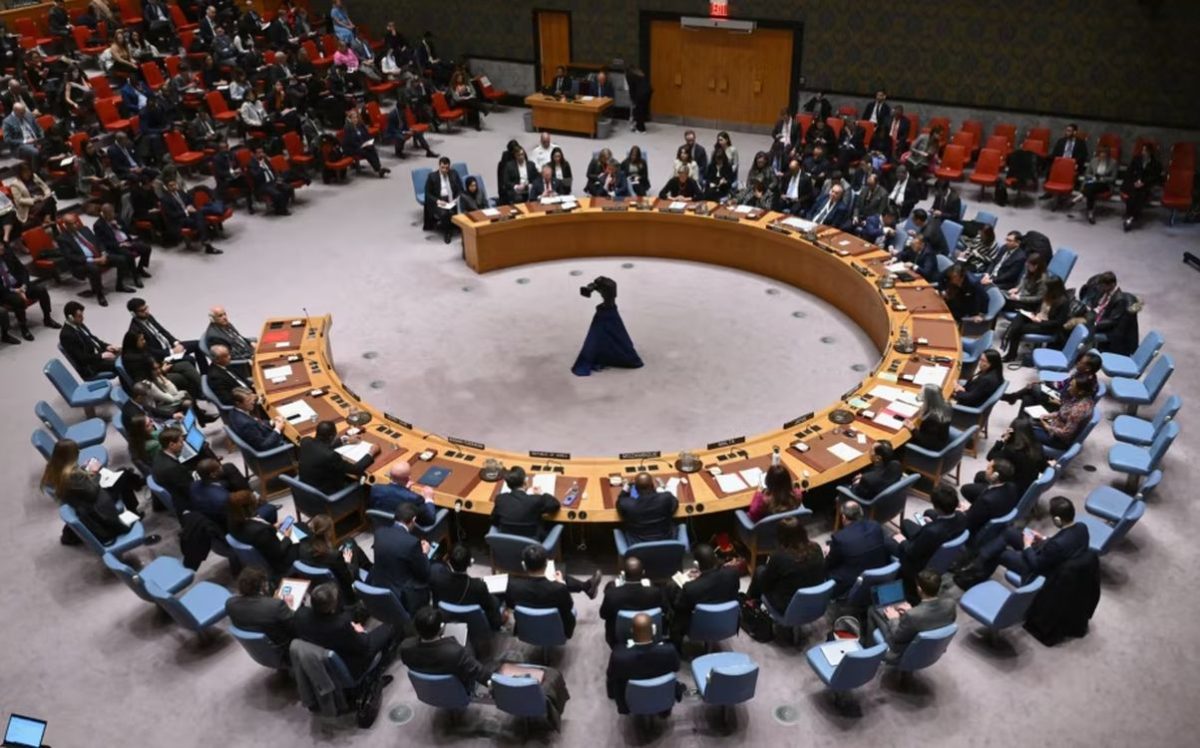
At the United Nations (UN) Security Council session in New York, dedicated to the situation in Bosnia and Herzegovina (BiH), US representative Tami Bruce stated that the end of international interventionism and tutelage in BiH is approaching.
“The US believes that the next elected High Representative should work on transferring management responsibilities of institutions to domestically elected politicians and must have both internal and international consensus,” she said, presenting the US position.
Bruce added that the Office of the High Representative in BiH (OHR) was never intended to be a permanent mission, and that the next elected High Representative will have limited powers, BiH media reports.
She reminded that the former president of Republika Srpska (RS), Milorad Dodik, has stepped down from office, and that laws in RS which the US considered contentious have been withdrawn, adding that general elections are being held in BiH in October.
Bruce assessed that the international mission in BiH is moving toward a new phase, and that the function of the High Representative will soon no longer be necessary, adding that pragmatic solutions should be sought through agreement, not through dictate.
She emphasized that the US will evaluate candidates for the new High Representative in terms of trust and impartiality, and that America also has its own candidates if necessary.
Bruce told the leaders in BiH to focus on pragmatic management, rather than dramatic changes.
The representative of Great Britain in the Security Council called on politicians in BiH to focus on the reform agenda, and the international community to support BiH on that path.
The UK’s Deputy Ambassador to the UN, James Kariuki, said that official London is concerned about the situation in BiH, stressing that in an election year it is important to “strengthen democratic resilience,” as well as to use modern technology in the elections.
“The Dayton Peace Agreement obligates respect for the political independence, territorial integrity, and sovereignty of BiH,” he emphasized.
Immediately at the start of the Security Council session, Russia opposed the presence of the High Representative in BiH, Christian Schmidt, stating that he never had, nor does he have, the right to address the international community.
“He should not submit any documents to this Council. We request that his words be taken as the personal view of a German citizen. Schmidt has allegedly stepped down from a position he never even held,” emphasized Anna Evstigneeva, Moscow’s deputy permanent representative to the UN.
Russian Ambassador to the UN Vasily Nebenzya called for the immediate closure of the OHR, assessing that it has been privatized and is the main factor of instability in BiH.
“A protectorate has been established in BiH. We had the illegal appointment of Christian Schmidt. He tried to accuse Republika Srpska of instabilities in BiH,” Nebenzya said.
He accused Berlin, London, and Paris of interfering in the internal affairs of BiH, which, as he assessed, brought instability.
“The West is sacrificing efforts for stabilization. The implementation of the Dayton Peace Agreement is a subject of manipulation to disrupt peace for the citizens,” Nebenzya said.
“For those inclined to forget: in the 90s, we had Western actors who encouraged the conflict in BiH, which was contrary to the preservation of the territorial integrity of Yugoslavia,” the Russian ambassador to the UN said.
MORE TOPICS:
Source: Danas; Photo: AFP
 Add Serbian Times as your Google source