




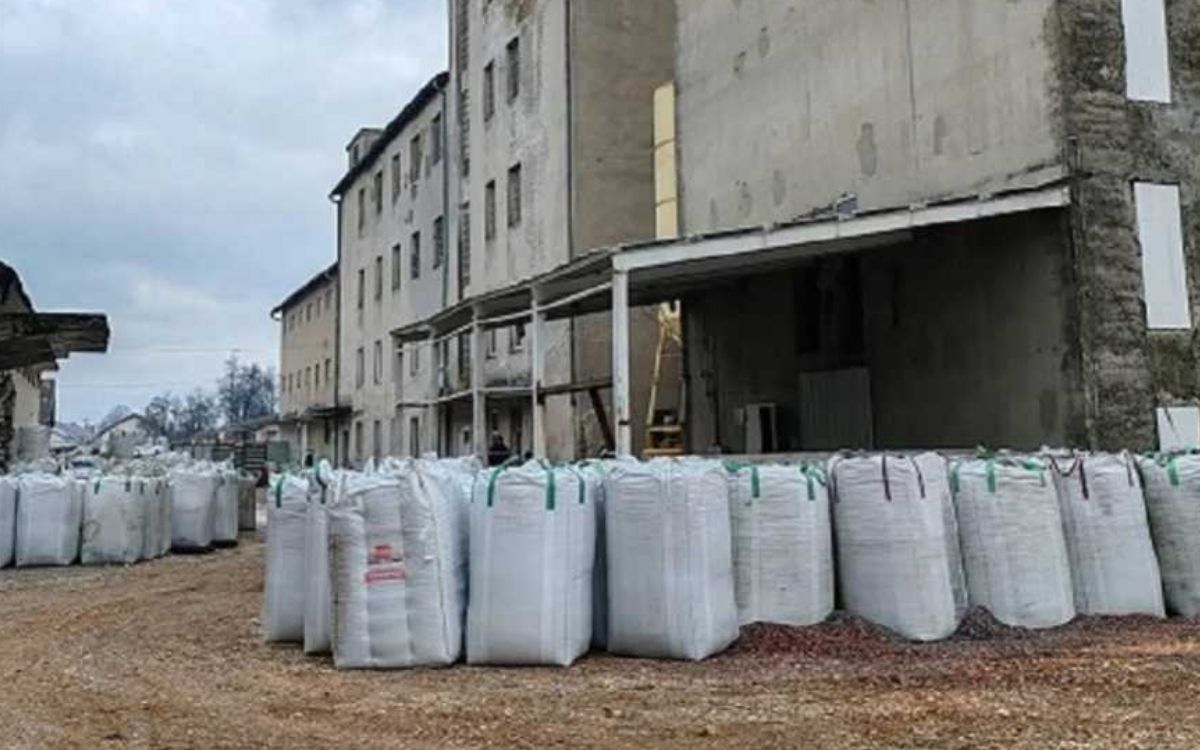
Prime Minister of Croatia Andrej Plenković has called an urgent Government meeting over the waste dumping affair in Gospić, after serious soil and groundwater contamination was discovered. Croatian President Zoran Milanović says that “Lika’s soil has been buried for years with dangerous substances brought from EU countries.” Around 37,000 tons of waste were found at the location, including remnants of electronic and medical equipment, plastics, and other materials. Heavy metals were discovered in the soil, while PFAS compounds, so-called “forever chemicals,” were found in the groundwater.
Croatian Prime Minister Andrej Plenković has called an urgent meeting of the ruling coalition party leaders due to the case of illegal waste disposal in Gospić and growing public pressure, reports Zagreb’s Jutarnji list.
The case has gained a new dimension in recent days following the publication of expert evaluation results from the Environmental Protection Agency, which showed that around 37,000 tons of mixed technogenic waste are located at the site of the former “Velebit” Nature Park silo, including processing remnants of electrical and electronic equipment and medical waste, plastics, as well as construction and mineral materials.
Part of the waste was classified as hazardous and ecotoxic. Elevated concentrations of heavy metals were determined in the soil, while PFAS compounds, known as “forever chemicals,” were found in the groundwater downstream from the location. The expert evaluation also established the irreversible destruction of habitats over an area of almost 18,000 square meters.
Harsh reactions and political crisis
Croatian President Zoran Milanović called the case ecocide and demanded urgent remediation and punishment for those responsible.
“The Government of Croatia can no longer justify itself with procedures and public tenders for even a single day, because human health is unambiguously endangered and permanent pollution of the area is threatened,” Milanović stated.
He noted that too much time has passed since it was discovered that “Lika’s soil” was being poisoned with dangerous waste from European Union countries and that public goods were being used for private interests and profit. Milanović noted that “it seems all of this was happening with the help of the now-dismissed Chief State Inspector.”
Pressure on the Government was also stepped up by the Croatian opposition. The most influential among them, the Social Democratic Party, announced the initiation of a procedure to recall the Government, while “Most” announced that it will ask parliamentary groups to jointly initiate a vote of no confidence in the Government and convene an extraordinary session of the Sabor.
Even the ruling Homeland Movement, a coalition partner of Plenković’s Government, proposed declaring an ecological disaster in Lika.
President of the Parliamentary Committee for Environmental and Nature Protection Dušica Radojčić scheduled an extraordinary session of the Committee in Gospić dedicated to this case.
Genesis of the disaster
The problem with illegal waste disposal in the Gospić area has lasted for years. According to investigation data, illegal delivery and disposal of waste at the location of the former PPK “Velebit” began in 2021. The company “Tipos resurs”, which dealt with the management and recycling of plastic waste, received a permit from Lika-Senj County in 2022 to manage non-hazardous waste.
According to investigator suspicions, waste was brought into Croatia from abroad, falsely presented as recyclable material, and then illegally buried or dumped in open areas, writes Croatian portal Index.
The scandal erupted in public in February 2025, when Croatian police, supported by Europol, arrested 13 people in an international operation. Among them were entrepreneur Josip Šincek and his wife Monika, owners of the company “Tipos resurs”.
Europol had previously launched an investigation, and the Croatian Office for the Suppression of Corruption and Organized Crime (USKOK) opened an investigation against 10 people and four companies, which was later expanded.
In November 2025, the case also gained a corruption branch, when USKOK arrested then-Chief State Inspector Andrija Mikulić on suspicion of corrupt conduct related to the illegal waste dumping case. Mikulić denied those allegations.
Revocation and reinstatement of permits
According to USKOK allegations, Jerko Kostelac, then-senior environmental protection advisor in Lika-Senj County and member of the ruling Croatian Democratic Union, was also in charge of issuing permits to the company “Tipos resurs”.
In the first proceeding, according to USKOK suspicions, Kostelac stated that there was no waste at the location, even though at least 5,792 tons of illegally stored waste were located there and at surrounding locations at that moment.
In the second proceeding, from September to November 2024, USKOK suspects that, at the request of the owner of “Tipos resurs”, he issued an urgent permit even though he knew about the environmental inspection proposal to revoke the previous permit. It is also suspected that he drafted an inspection report for an inspection he did not carry out and falsely stated that the situation at the location corresponded to the conditions from the study.
Although Lika-Senj County revoked the first permit in June 2024 after the State Inspectorate requested it, a new permit was issued to the company “Tipos resurs” in October of the same year, with a validity period until 2027.
The environmental protection inspection requested its revocation again in December 2024, and the county non-finalized the revocation of the new permit by a decision on February 18, 2025, five days after several people were arrested in a major operation due to illegal waste disposal.
A five-year affair
Citizens of Gospić, however, claim that they had been warning the competent institutions for years about suspicious waste transport. Representatives of the Civic Initiative “Gospić is Our Home” stated that back in 2022 they started reporting suspicious activities related to the delivery and disposal of waste.
According to their statements, citizens noticed that large quantities of waste were being brought in during the night, took photos of trucks and recorded their movement, and sent reports to the police, State Inspectorate, city, and county. They also state that they continued with reports during 2023 and 2024.
According to their own statements, citizens also reported the case at the beginning of 2024 via the application of the Croatian Ministry of Internal Affairs, but received no information on whether anything was done regarding that report.
The State Inspectorate stated in a letter to the Civic Initiative that over a period of slightly more than two years it had carried out 21 inspections, during which it was established that both hazardous and non-hazardous waste were located at the site.
The Initiative, however, pointed out that back in March 2025 they asked for the waste to be covered in order to prevent pollution from penetrating into the karst area, but that this was not accepted under the explanation that the investigation was ongoing.
Experts from the Faculty of Geotechnical Engineering in Zagreb, who conducted the expert evaluation for the needs of criminal proceedings, later determined that in certain parts there are layers through which the contaminated part of the waste could most likely penetrate and reach groundwater.
What are “forever chemicals” or PFAS compounds
PFAS compounds are per- and polyfluoroalkyl substances. They are a class of about 15,000 compounds commonly used to make products resistant to water, stains, and heat. They were man-made in a desire to have a substance that lasts and does not change properties.
They are often called “forever chemicals” because they do not break down naturally, and scientists have linked them to cancer, kidney disease, liver problems, immune disorders, birth defects, and other serious health problems.
The Civic Initiative stated that they had warned competent institutions about the danger of groundwater contamination a year earlier.
Additional testing was conducted in July of this year, when the presence of PFAS compounds (“forever chemicals”) was confirmed in the groundwater downstream from the dump site.
The Ministry of Environmental Protection of Croatia announced that it had been undertaking remediation activities from day one, but stresses that it did not participate in issuing permits and is not competent for inspection oversight.
Lika-Senj County Prefect Ernest Petri harshly condemned the illegal waste disposal and said that he expects all state institutions to determine who is responsible, that those responsible be criminally prosecuted, and that the situation be completely cleared up.
MORE TOPICS:
Source: RTS, Photo: Europol
 Add Serbian Times as your Google source