




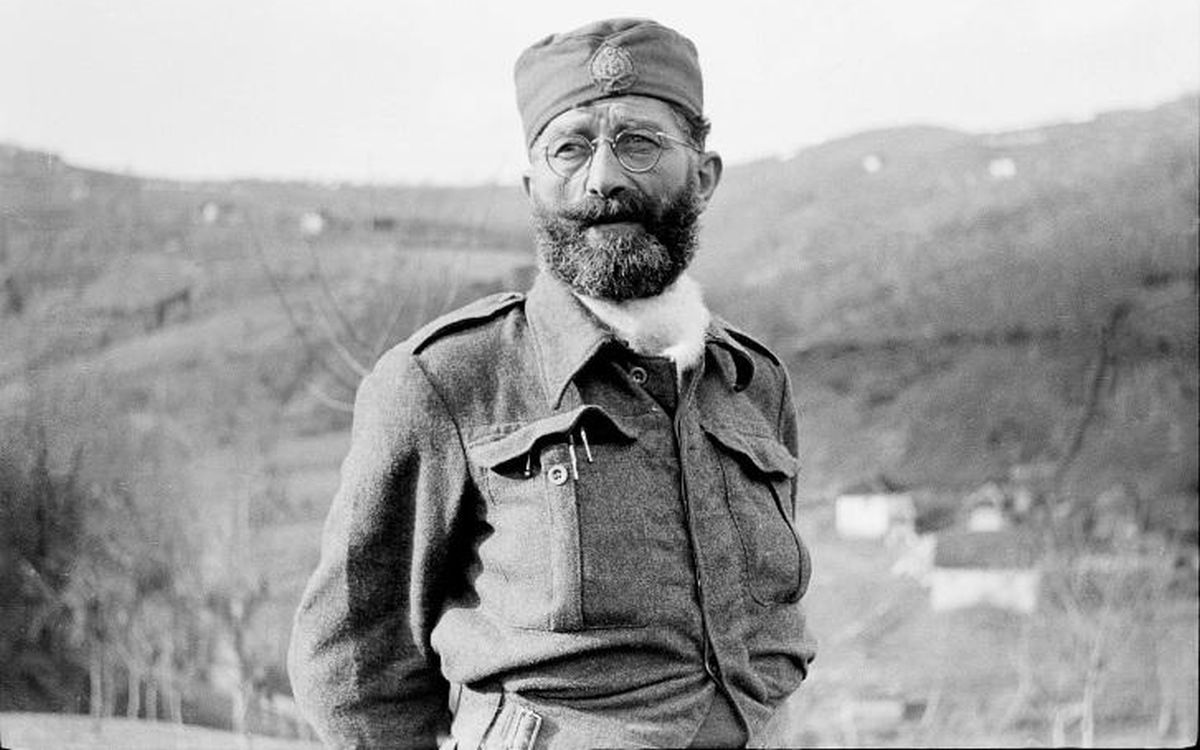
On July 17, 1946, Dragoljub Draža Mihailović, commander of the Yugoslav Army in the Homeland, was executed. Many details surrounding the arrest, trial, and death of Dragoljub Mihailović remain shrouded in mystery to this day, while his life and legacy continue to spark numerous debates and controversies. However, some of what the general said in his own defense has been preserved.
The official name of the proceedings against the commander of the Yugoslav Army in the Homeland was “The Trial of Dragoljub-Draža Mihailović and Other Collaborators for Treason and War Crimes Committed in the Territory of Yugoslavia During the War (1941–1945),” though today it is far better known as the Belgrade Trial.
The trial was held in Belgrade from June 10 to July 15, 1946. It was open to the public and attended by around 60 foreign correspondents.

Dragoljub Draža Mihailović was tried before a military court presided over by Colonel Mihailo Đorđević, with Lieutenant Colonels Milija Laković and Mihailo Janković serving as members of the panel. The associate judges were Nikola Stanković, Radomir Ilić, and Todor Popadić (secretary). The prosecution was led by Colonel Miloš Minić, assisted by Miloš Jovanović.
Mihailović was charged on 47 counts and was tried for actions against the Partisans, collaboration with the Germans, and war crimes against civilians.
The course of the trial remains the subject of disputes and controversy to this day. The court rejected every proposal submitted by the defense. Allied airmen who had been rescued and evacuated with the help of the Chetniks in 1944 were not allowed to testify in Mihailović’s favor, with the explanation that their testimony was irrelevant. Only two women were permitted to testify on his behalf.
READ MORE:
On June 14, 1946, the Daily Telegraph published a report from its correspondent covering the trial in Belgrade, describing Draža as appearing “tired,” noting that every word he spoke was greeted with jeers from the audience, and that the judge frequently interrupted him and prevented him from speaking.
The correspondent for The Times viewed the proceedings somewhat differently.
“Mihailović’s defense was free of rhetoric, free of bitterness toward political opponents or personal enemies—clear and detailed. It was a professional soldier delivering his report, compelling precisely because of its simplicity,” the correspondent wrote.
Some of what Dragoljub Mihailović said in his defense has nevertheless been preserved, with the words he delivered at the very end of the trial being the most frequently quoted:
“I remained a soldier convinced that the people should have the final say. I am convinced that I was on the right path. I called upon journalists from around the world and requested a mission from the Red Army. Fate was merciless to me when it cast me into the fiercest storms. I wanted much, I began much, but the whirlwind, the world whirlwind, swept away both me and my work.”
The defense concluded its closing statement 30 minutes after midnight on July 12, 1946. The reading of the verdict began at 8:15 a.m. on July 15. Out of the 47 counts in the indictment, General Mihailović was convicted on eight.
Dragoljub Mihailović was sentenced to death by firing squad, permanent loss of political and civil rights, and confiscation of all his property.
Most historians regard July 17, 1946, as the date of Dragoljub Mihailović’s death. The location of his execution remains unknown, although Ada Ciganlija is considered the most likely site. The exact location of General Mihailović’s grave is still unknown.
On May 14, 2015, the Higher Court in Belgrade rehabilitated him. The court determined that Mihailović had not received a fair trial. The reasoning behind the rehabilitation ruling stated that the original verdict had been handed down in an unlawful proceeding motivated by political and ideological reasons.
MORE TOPICS:
Source: Istorijski Zabavnik Foto: Wikimedia Commons
 Add Serbian Times as your Google source