




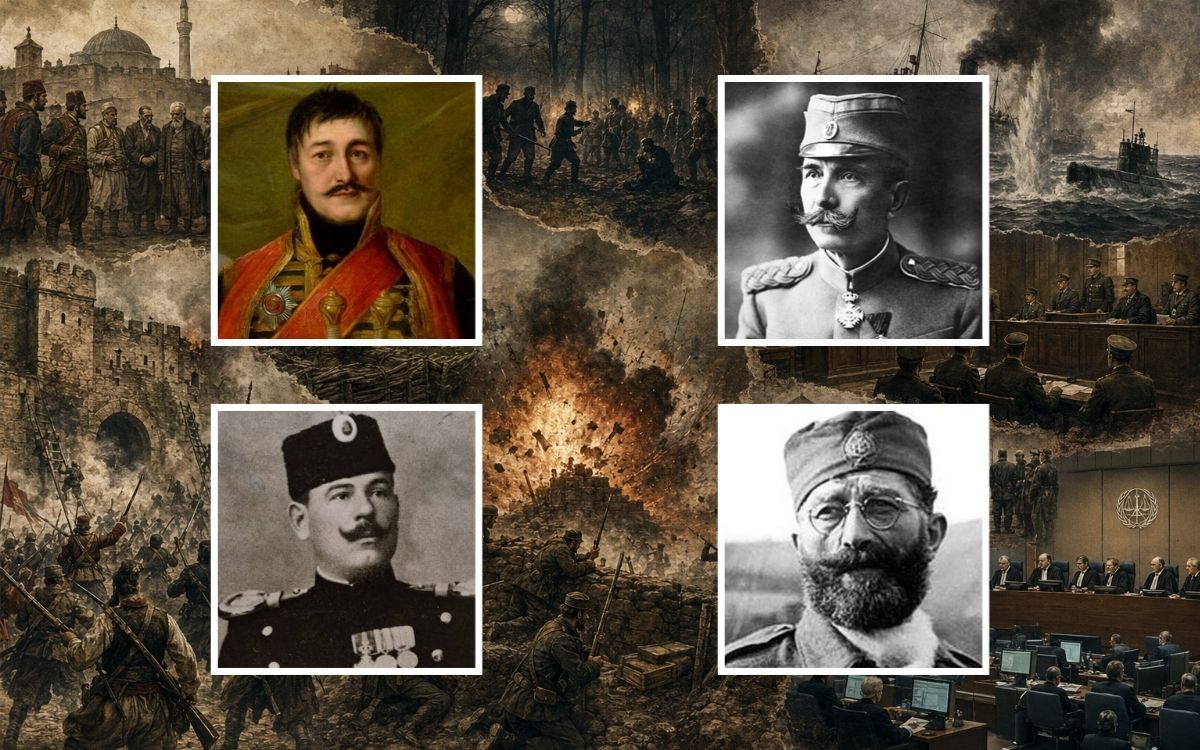
In Serbian history, a military commander could rarely afford to be just a soldier. He often had to be a statesman without a state, a diplomat without allies, a judge without a court, and a hero who was the first to enter battle but the last to be given the chance to explain himself. Many died by enemy bullets, but an alarmingly large number fell victim to verdicts, political revenge, conspiracies, or the hands of their own countrymen.
The story begins even before liberation from Ottoman rule. Aleksa Nenadović and Ilija Birčanin were among the most respected Serbian leaders whom the Dahijas executed in Valjevo at the beginning of 1804, believing that eliminating the Serbian elite would prevent an uprising. The opposite happened: their execution became the immediate trigger for the First Serbian Uprising and the beginning of the restoration of the modern Serbian state.
Only two years later, during the liberation of Belgrade, Vasa Čarapić was mortally wounded. He died as a soldier while leading the assault on the Stambol Gate. In 1809, at the Battle of Čegar, Stevan Sinđelić, surrounded and left without the expected reinforcements, fired into the gunpowder magazine, killing himself, his men, and a large number of Ottoman soldiers. Both belong to those whose end came on the battlefield, when there was no longer any room for retreat or surrender.
Čegar, however, also revealed another side of the Serbian military fate. Miloje Petrović Trnavac, one of the most powerful insurgent commanders, fell out of favor after the disaster near Niš, lost his position, and entered into open conflict with Karađorđe. In 1810, he was captured and killed on Karađorđe’s direct orders as retaliation for organizing the murder of Prince Marko Katić. Thus, the man who had taken part in the liberation of Belgrade ended his life not by an Ottoman bullet, but by the judgment of his former comrades.
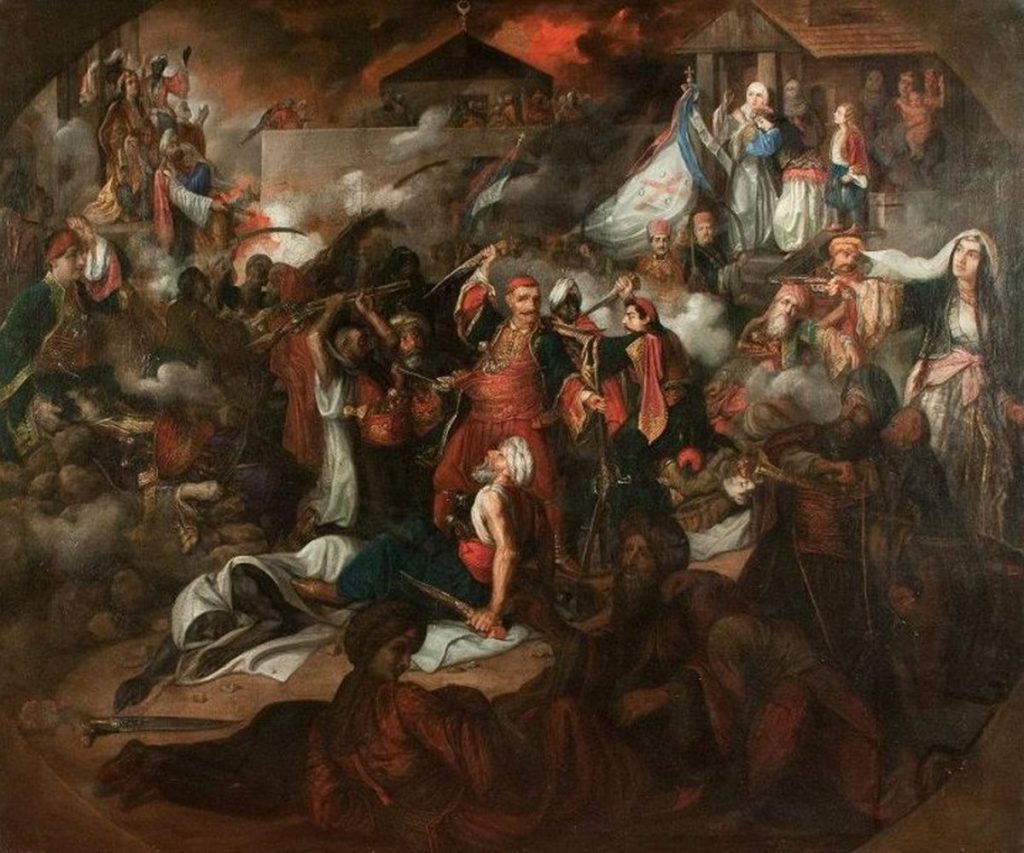
Nor did Hajduk Veljko Petrović live to see the freedom for which he fought. He was killed in 1813 while defending Negotin against a superior Ottoman force. Stanoje Glavaš, one of the men who had been offered the chance to lead the uprising, tried to survive under the restored Ottoman administration after its collapse. He was killed in 1815 on the orders of Suleiman Pasha, shortly before the Second Serbian Uprising. One died on the ramparts, the other in the political retaliation of the victors.
As with many other nations, the darkest chapters of Serbian history began when the struggle for freedom and against foreign rule turned into a ruthless struggle for power among Serbs themselves.
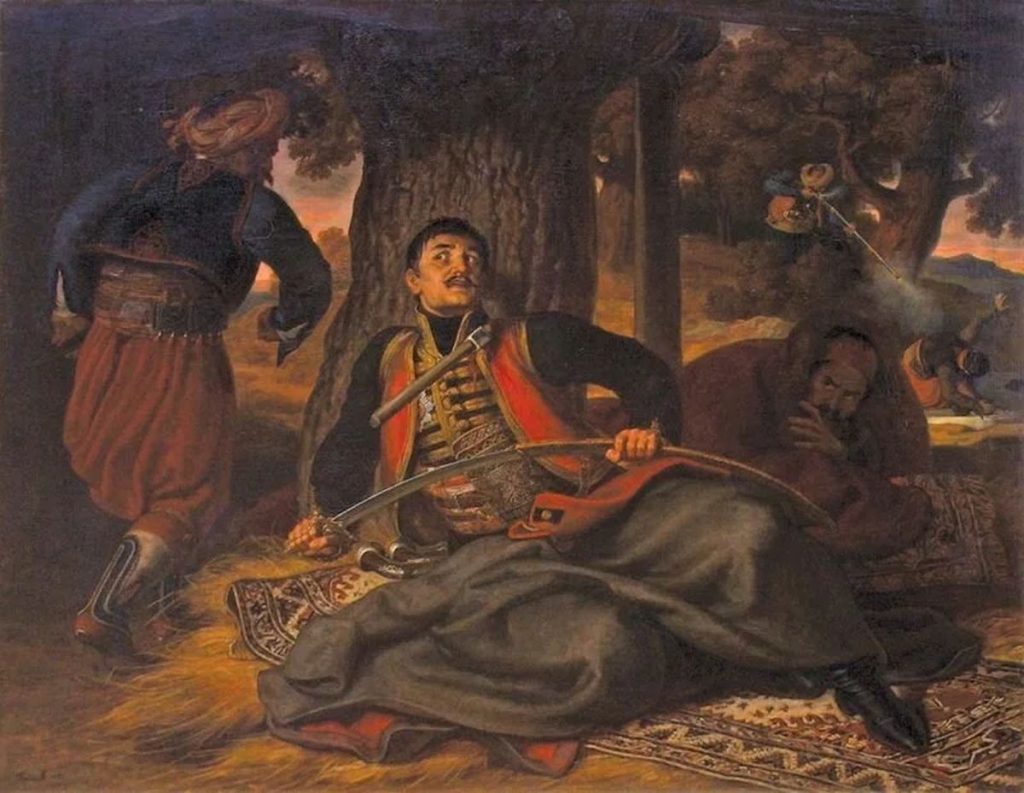
Petar Nikolajević Moler, a duke, artist, and one of the first presidents of the Serbian government, was killed in 1816 by Ottoman hands with the mediation of Prince Miloš Obrenović. A year later, after returning to Serbia, Karađorđe Petrović was also killed in Radovanjski Lug. The Supreme Leader was beheaded, and his head was sent to Constantinople as proof that the new Serbian order would not return to open war with the Sultan.
Already in the first decades of the restored Serbian state, a pattern emerged that would be repeated: a military commander was needed during wartime, but after the war he often became a dangerous witness, a political opponent, or an obstacle to someone’s rule. Serbia celebrated its commanders in songs, yet in real life often left them without protection.
A century later, General Ilija Gojković demonstrated how far a soldier’s sense of honor could go. After retreating across Albania and recovering in France, he was returning to the Salonika Front when his ship was torpedoed by a German submarine off Sicily. Gojković survived the attack but refused to surrender, drew his pistol, and opened fire on the submarine. The Germans returned fire and killed him. He remains remembered as the only Serbian general killed during the First World War.
Even more tragic was the end of Colonel Dragutin Dimitrijević Apis, the former head of Serbian military intelligence. At the Salonika Trial in 1917, he was sentenced to death for allegedly plotting against Regent Alexander. Major Ljubomir Vulović and intelligence officer Rade Malobabić were executed alongside him. Decades later, in a retrial held in 1953, the convictions were overturned, but that could restore neither the lives nor the honor of those who had already faced the firing squad of their own army.
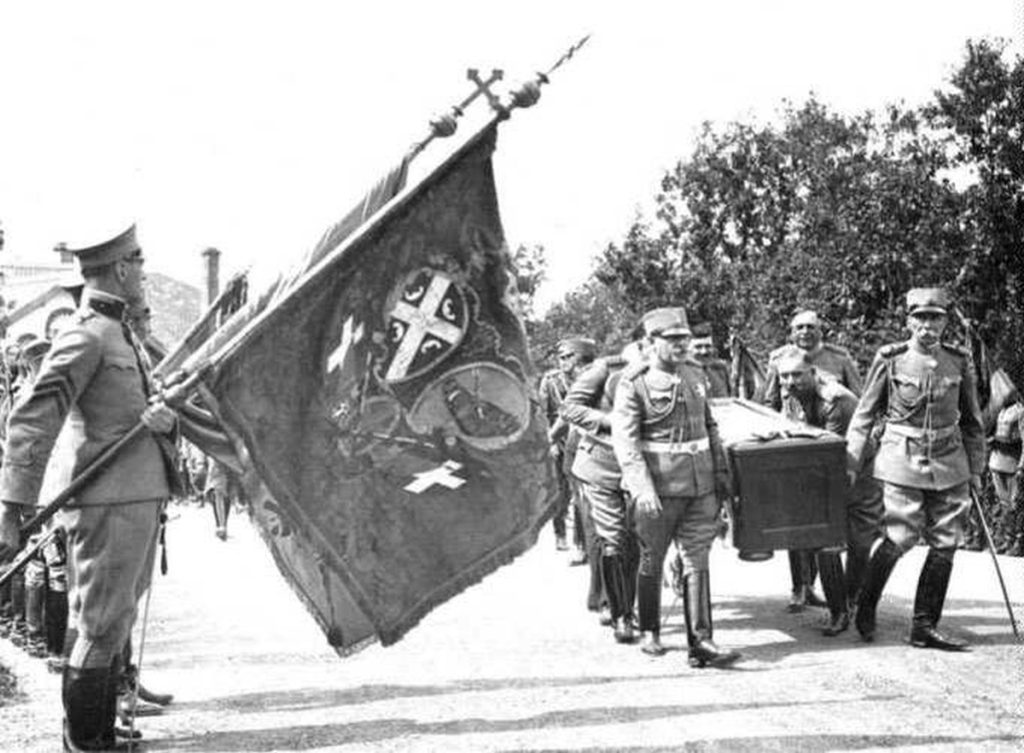
After two Balkan wars and two world wars, Field Marshal Petar Bojović lived to old age but not to the peaceful end worthy of the liberator of Belgrade. The new authorities interrogated him, his home was subjected to raids and humiliation, and he was buried without state or military honors. Unlike testimony claiming that he died from injuries sustained in a beating by communists, church records list bilateral pneumonia as the cause of death. His end, therefore, was either execution, or the quiet humiliation of the man who had once led the victorious Serbian army—or perhaps both.
The Second World War brought fates that are still discussed today through ideological divisions. Pavle Đurišić, an officer of the Royal Yugoslav Army and one of the most prominent Chetnik commanders in Montenegro, was captured after the defeat at Lijevče Field and killed by the forces of the Independent State of Croatia, most likely within the Jasenovac camp system. His wartime record was also marked by accusations of collaboration with the occupiers and serious crimes against civilians, and his tragic end is often overshadowed by his controversial biography.
The best-known postwar trial was conducted against General Dragoljub Draža Mihailović, commander of the Yugoslav Army in the Homeland. The new communist authorities convicted him in 1946 of treason, collaboration with the occupiers, and war crimes before executing him at a location that has still not been reliably established. In 2015, the Higher Court in Belgrade annulled the verdict, ruling that he had not received a fair trial. That decision, however, concerned the legality of the proceedings, not the final historical resolution of all questions regarding the actions of his movement.
When discussing the wars during the breakup of Yugoslavia and the conflict in Kosovo, greater restraint is necessary. Some direct participants are still alive, memories remain politically divided, archives have not yet been fully examined, and historical distance is still insufficient for definitive and impartial judgments about all commanders.
The Hague Tribunal, an international court whose legitimacy has been disputed by several countries, including the United States, convicted Yugoslav Army generals Dragoljub Ojdanić, Nebojša Pavković, and Vladimir Lazarević for crimes committed in Kosovo. Mile Mrkšić was convicted for responsibility related to the killings of prisoners at Ovčara, while General Zdravko Tolimir of the Army of Republika Srpska was sentenced to life imprisonment for genocide and other crimes in Srebrenica and Žepa. Tolimir died in the UN detention unit in Scheveningen, Mrkšić died while serving his sentence in Portugal, while Ojdanić and Pavković passed away in Serbia after being released.

For that reason, the history of Serbian commanders is not a simple gallery of saints, martyrs, or flawless heroes. Among them are almost mythical heroes, those who fell defending trenches, those executed in unjust political trials, but also those convicted for crimes against the very people they were supposed to protect.
A tragic end alone does not absolve anyone of responsibility, just as the verdict of one era does not necessarily represent history’s final word. However, when looking at the long arc from the Slaughter of the Knezes to the courtrooms of The Hague, it is difficult to escape the impression that being a military commander in Serbia has been one of the most dangerous professions in history. In terms of risk, it is almost comparable to the position of a Roman emperor: the enemy waits outside the walls, the conspirator stands behind your back, and the judge arrives when the cannons fall silent. The difference is that Serbian commanders received incomparably smaller rewards, while the dangers were, as a rule, even greater.
That is why the memory of the men who sacrificed their positions, families, health, and lives for their country should be preserved, especially those who received neither gratitude nor a fair trial in return. Respect, of course, does not mean abandoning critical thinking or engaging in historical relativization or revisionism. It means recognizing that a state which forgets its military commanders, uses them in war, and discards them in peace risks repeating the most tragic lessons of its own history.
MORE TOPICS:
Source: Serbian Times; Foto: Wikipedia, AI generated image
 Add Serbian Times as your Google source