




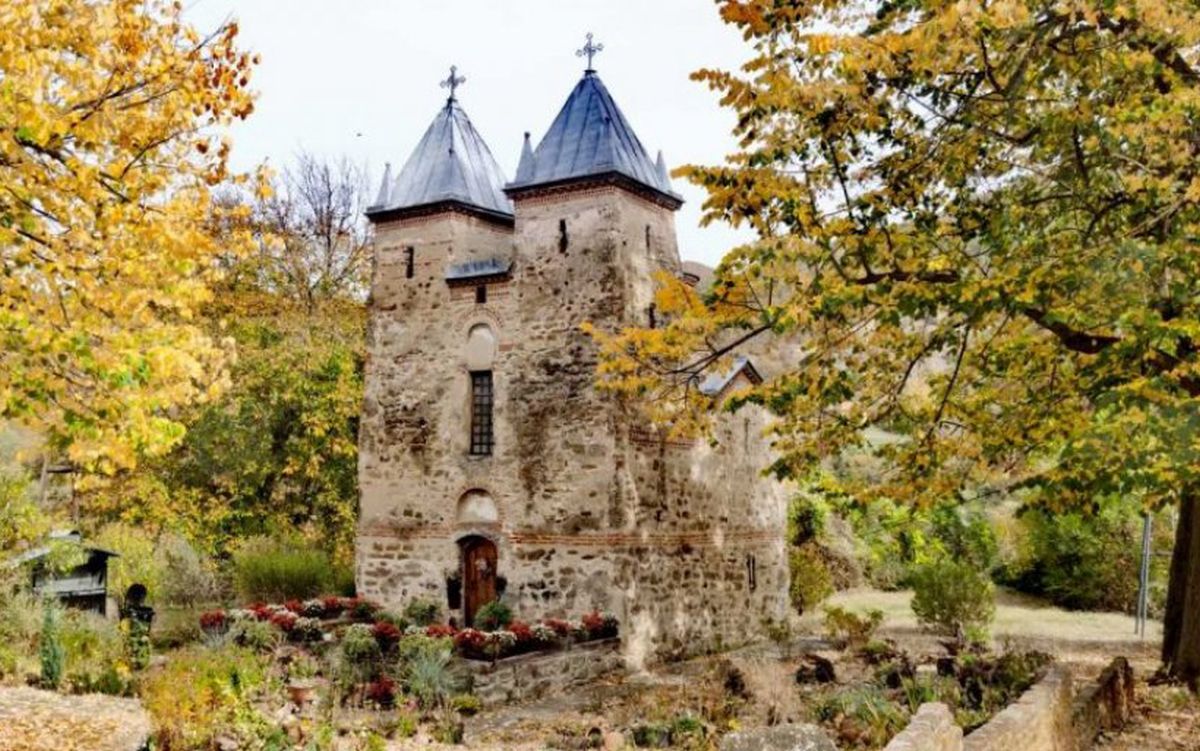
Just 15 kilometers from Knjaževac, on the left bank of the Trgoviški Timok River, in the center of the village of Donja Kamenica, stands the Church of the Holy Mother of God – a unique gem of the region and one of the greatest mysteries of medieval Serbia. Distinguished by its architecture, which combines Romanesque, Gothic, and medieval styles, and by the two bell towers on its western façade, it has rightfully earned the nickname the Serbian Notre Dame.
The exact year – and even the century – in which the church was built remains a matter of debate. Based on the construction materials, building techniques, and the rich frescoes inside, historians believe it was erected in the 14th century. Its founder was Despot Mihajlo, although it is still uncertain over which territory he ruled. For many years, Bulgarians considered the church part of their heritage because it dates from the period when they ruled the region, while another theory suggests that its patron was a Serbian nobleman.
One thing, however, is undisputed. Even after several centuries, the Serbian Notre Dame continues to captivate visitors not only with its architecture but also with its extraordinary frescoes, some of which are unique in medieval painting in this part of Europe. The frescoes were painted using Byzantine blue, an exceptionally rare pigment. Another distinctive feature is that many of the faces and eyes depicted in the frescoes have been scratched and damaged. The only completely preserved fresco is the depiction of the Last Supper.

It is believed that the damage occurred during Ottoman rule and later after World War II, when defacing the images of saints was a way of diminishing the value of the frescoes and, consequently, undermining religious devotion.
“The Church of the Holy Mother of God near Knjaževac is renowned for its unique architecture and the frescoes preserved within it. This sacred building dates back to the 14th century and is dedicated to the Holy Mother of God because of the large number of Marian depictions inside. Architecturally, it is based on the inscribed cross plan with a dome, featuring a gallery on the western side of the church above which rise the two bell towers. It was built of rough stone and mortar, with occasional use of brick. What makes it truly unique is that there is not a single right angle in the building’s ground plan. A wooden porch once stood in front of the church, but unfortunately it collapsed, as evidenced by the wooden remains found in its foundations. On the other hand, the cycles depicting Christ’s Passion, the Great Feasts, and the Life of the Virgin have been preserved,” explains Milica Mihajlović, curator and art historian at the Knjaževac Homeland Museum.
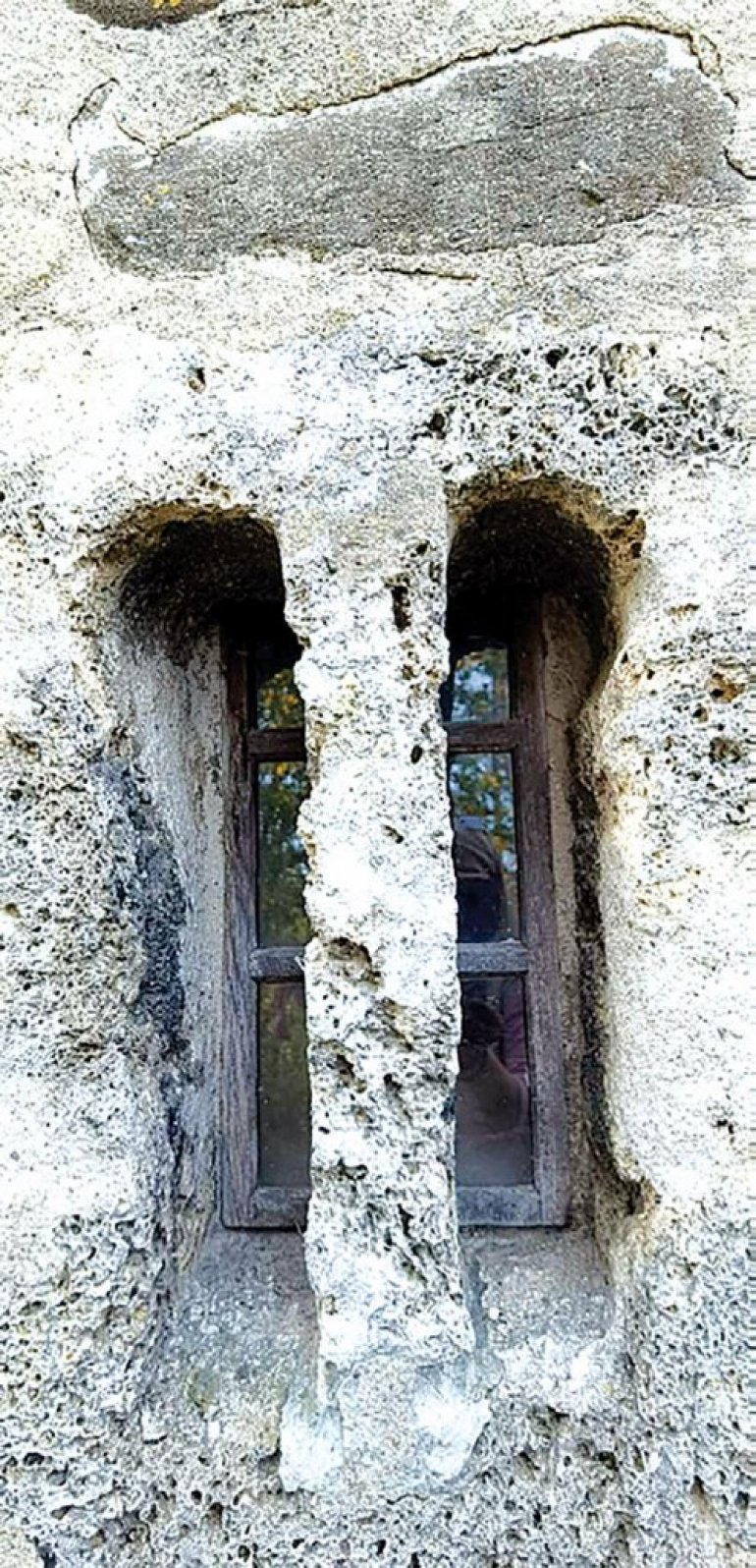
Inside the bell towers, on the upper floor of the church, which is reached by narrow wooden ladders, visitors can see an exceptionally rare fresco of Saint Petka with bare breasts, as well as scenes from the life of Saint Nicholas.
“In the lower zone are the cycle of holy warriors and, notably, three donor compositions that clearly show Despot Mihajlo was indeed the patron of this Church of the Holy Mother of God,” Milica explains.
Archaeological excavations have confirmed the existence of a necropolis near the church dating from the 14th to the 17th century. One of the most valuable discoveries from that period is now preserved in the Knjaževac Homeland Museum.
“There is a silver diadem with gilded decoration that was found near the church. During the excavations, around 75 graves were uncovered in the churchyard. Many unanswered questions remain regarding this church, including who built it, who painted it, and exactly when it was constructed.”
Representatives of the Knjaževac Tourist Organization say the church has recently been attracting an increasing number of visitors from Serbia, neighboring Bulgaria, and other countries.
“The church occupies a very important place on the map of Knjaževac’s tourist attractions. It is one of the favorite stops for visitors. Across from the church is the Tourist Information Center with a souvenir shop, where visitors can purchase souvenirs or obtain additional information. Numerous questions remain regarding who built the church, who painted it, and when it was constructed. The church has been restored and was subsequently declared a cultural monument of exceptional importance,” Danijela Arsić of the Knjaževac Tourist Organization told Novosti.
Byzantine Blue
The frescoes were painted in the Palaeologan Renaissance style, under whose influence some of the finest achievements of Orthodox fresco painting were created. The use of Byzantine blue reflects the intention of the church’s patron to build a sanctuary in Donja Kamenica that would serve as a spiritual gathering place for centuries. During the Middle Ages, obtaining the natural blue pigment used to produce this color was neither easy nor inexpensive. The Church of the Holy Mother of God in Donja Kamenica is considered the pearl of the Timok Eparchy and is protected by the Serbian state as a cultural monument of exceptional importance.
MORE TOPICS:
FROM A CAMP IN SERBIA TO VENEZUELAN LEGEND: How Marija from Kruševac became América Alonso!
THE LOST ISLAND ON THE DANUBE: This is the Forgotten History of Ada Kale and Duke Milenko’s Harem!
Source: Novosti; Foto: J. Ćosin
 Add Serbian Times as your Google source