



Threats by Donald Trump against Greenland, Russia’s aggression against Ukraine and the global race for critical raw materials are pushing the Arctic to the very top of the European political agenda.
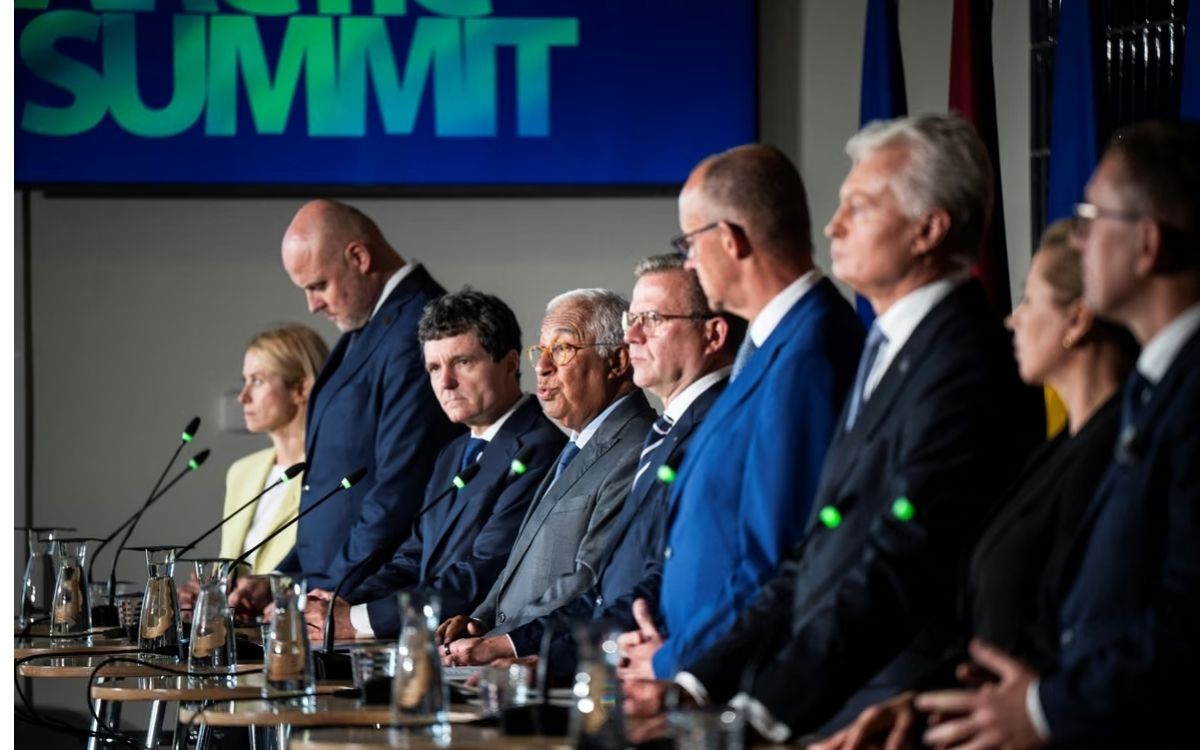
The Finnish city of Rovaniemi, known as the “gateway to the Arctic,” lies exactly on the Arctic Circle, DW writes. As its forests welcomed European leaders in their autumn colors, they gathered there at the invitation of Finnish Prime Minister Petteri Orpo to discuss the European Union’s new strategy for the Arctic.
Climate change and Russia’s war against Ukraine have brought Europe’s far north into the spotlight.
“There is a great need for concrete EU action in the Arctic,” Orpo said. “Our security environment has fundamentally changed. The Arctic has become a central arena of great-power competition.”
The Finnish prime minister added that the region’s enormous natural resources are also attracting growing interest.
New Security Environment in the Far North
The changed security situation was the main topic of the summit. EU foreign policy chief Kaja Kallas warned that Russia is reopening former Soviet military bases in the region and conducting missile exercises in the far north.
“We also see that China is showing growing interest in the region, which is why we must remain vigilant,” Kallas said.
The leaders gathered at Finland’s northernmost air base. Under clear skies, they watched a demonstration flight by Finnish fighter jets.
Prime Minister Orpo placed security at the very center of the talks. From Rovaniemi, the Finnish Air Force continuously monitors Europe’s Arctic border with Russia.
German Chancellor Friedrich Merz, who traveled to the summit despite political problems at home, assessed that the region is becoming increasingly important for European security.
“This region has become a geopolitical hotspot. Russia is strengthening its military capabilities here and using its presence every day for hybrid activities,” Merz said, but also stressed that the Arctic is not only a security issue, but also a major economic opportunity, particularly when it comes to critical raw materials.
Cooperation Replaced by Rivalry
“Ever since Putin came to power, Russia has been developing military capabilities everywhere, including in the Arctic,” said Timo Koivurova of the Arctic Centre at the University of Lapland.
For years, Western countries nevertheless cooperated with Moscow on scientific research and climate issues. However, Russia’s invasion of Ukraine marked the end of that era.
Finland and Sweden joined NATO as a direct consequence of the war. This also turned Finland’s 1,340-kilometer border with Russia into a NATO border. This fundamentally changed the security picture in Northern Europe.
The European Commission plans to present an updated EU Strategy for the Arctic, adopted in 2021, as early as October this year.
A joint declaration from the summit calls for greater investment in military mobility, cross-border connectivity and critical infrastructure in the far north of Europe, including transport links, digital networks and satellite technologies.
Koivurova believes that Russia is currently focused on the war in Ukraine, which is consuming significant military resources: “But when that war one day ends, and it will end, Russia will very likely invest heavily in its northern regions as well, because they are of enormous importance to its overall security,” he told DW.
America as an Additional Source of Tension
According to Koivurova, the Arctic is also suffering the consequences of tensions among Western partners. He specifically points to U.S. President Donald Trump’s proposals concerning Canada and Greenland.
“Trump’s idea that Canada should become the 51st U.S. state or that America should buy Greenland represents a serious problem for cooperation among the Western Arctic states.” This, he says, is an additional factor putting pressure on Arctic governance.
Longtime regional expert Marku Heikila believes that the Arctic is increasingly being divided into three blocs. In his view, Russia forms one bloc. The second consists of the European Union countries, Norway, Iceland and Canada, which continue to advocate an international rules-based order, climate policy and the rights of Indigenous peoples.
“The official U.S. position today differs significantly from what it used to be,” Heikila points out.
Climate Change Is Reshaping the Arctic
At the same time, climate change is altering the Arctic faster than any other region in the world. Scientists expect that the central part of the Arctic Ocean between 2040 and 2050 could remain almost ice-free during the summer.
The retreat of the ice cover is giving the region new strategic importance. New maritime routes are opening up that significantly shorten distances between major trading centers and create new economic and geopolitical opportunities.
But climate itself has become another point of dispute between the United States and many of its Arctic allies.
“Climate change is of enormous importance to the Arctic. The region is warming four times faster than the global average. Everything we do in the Arctic today is connected in one way or another to climate change,” Koivurova says.
He adds that the Donald Trump administration’s approach has significantly affected international cooperation, including the work of the Arctic Council: “The United States is currently blocking any mention of climate change. That is a truly major change.”
Orpo: Strengthen the Arctic’s Resilience
At the end of the summit, Finnish Prime Minister Petteri Orpo called for new investments to increase the region’s resilience: “We must strengthen the resilience of the Arctic through strategic investments in infrastructure, dual-use transport networks, critical raw materials, icebreakers and technological innovation.”
The city of Rovaniemi is known around the world as the home of Santa Claus. Not far from the “Arktikum” museum and science center, where the European leaders met, there is also “Santa Claus Village,” with Santa’s official post office operating year-round. Visitors can meet Lapland’s most famous resident in person there.
Whether any of the summit participants did so, and what they may have wished for, remains unknown.
READ MORE:
MORE TOPICS:
Source: N1 ; Foto:Jouni Porsanger via REUTERS
 Add Serbian Times as your Google source