




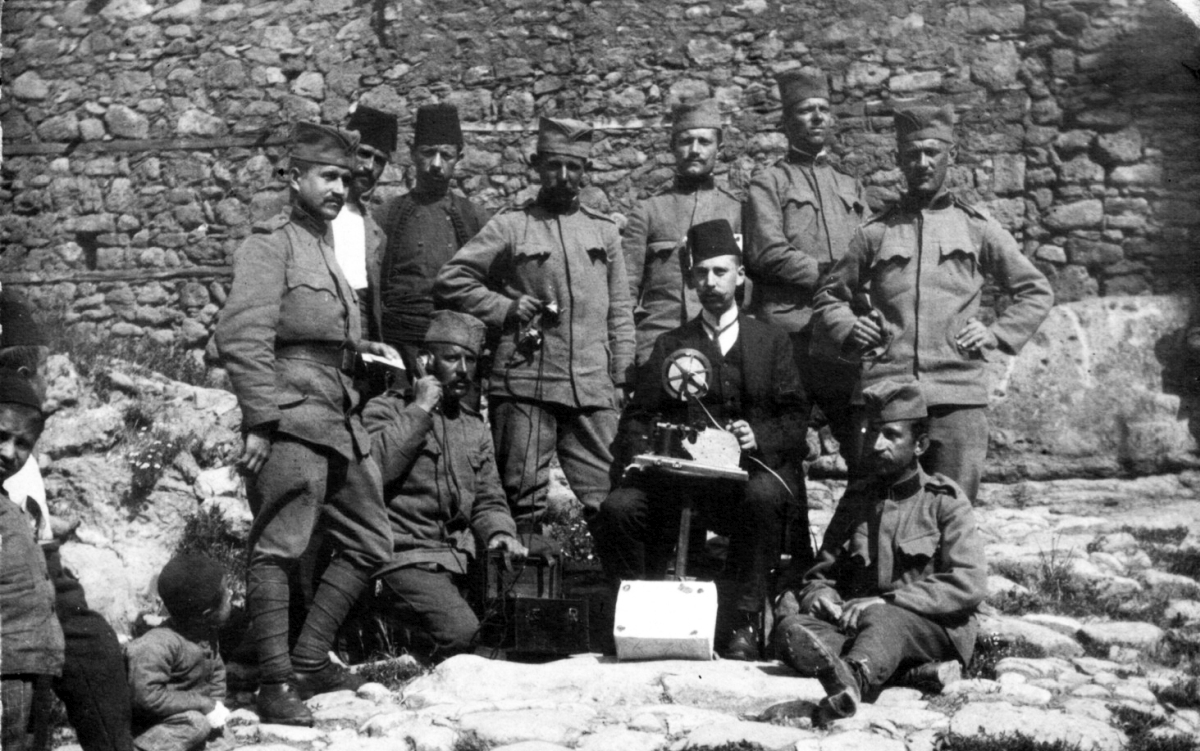
With a sudden night attack by the Bulgarian Fourth Army on Serbian positions, the Battle of Bregalnica began on June 30, 1913. This attack triggered the Second Balkan War.
After the end of the First Balkan War, diplomats from Serbia and Bulgaria could not agree on the division of the conquered territories.
Serbia, according to the alliance treaty, believed that the resolution of the dispute should be submitted to the arbitration court of Russia, while Bulgaria, under the influence of the military party and encouraged by Austria-Hungary, did not want to wait for the decision of the Russian tsar. Without waiting for an answer, Bulgaria, on June 30, 1913, without announcement, carried out a surprise attack on the Serbian and Greek armies, thereby starting the war, and at the same time, the battle on the Serbian front. Thus, just one month after the formal end of the First Balkan War, the Second Balkan War began.

The Battle of Bregalnica was fought from June 30 to July 9 (from June 17 to 25 according to the old calendar), 1913. The area where the battle took place extended from Carev Vrh on Mount Osogovo, and down both of its ridges, which descend to the south and southwest, on both sides of the Zletovska River to its confluence with the Vardar.
The battle involved the 1st and 3rd Armies, 7 infantry and 1st cavalry divisions (127 battalions, 253 cannons, and 33 squadrons), totaling about 176,000 fighters with 253 cannons on the Serbian side; on the Bulgarian side, the 4th Army, the Macedonian-Adrianople Volunteer Corps, 4 divisions, and 3 brigades (95 battalions, 230 cannons), about 130,000 fighters.
The Bulgarian plan for the battle was to carry out a sudden attack on the Serbian army with the concentrated forces of the 4th Army, to lead an offensive battle with a limited goal (taking the disputed territory), in which to defeat the Serbian army on the front from the Vardar along the Bregalnica and Zletovska rivers to Carev Vrh, and to capture Ovče Pole.

Tensions were boiling, so Serbia also had a plan for the battle which envisaged a strategic reception of the Bulgarian attack on the Bregalnica front and, after its rejection, the transition to the advance of the third Serbian army in connection with the Greeks. Despite the fact that the plan anticipated a Bulgarian attack, and the Serbian army was somewhat on guard, the time of the Bulgarian attack was not known, which is why the Battle of Bregalnica was a surprise.
The Bulgarian generals nullified the advantage of the sudden attack and significant numerical superiority with a major strategic mistake: in anticipation of rapid intervention by Western powers in their favor, they stretched out their troops to occupy as much territory as possible, and after decisive Serbian resistance and counterattacks, they suffered a major defeat.
For the sake of their territorial claims, the Bulgarians were attacked by the Greeks, and then by the Turks, who reclaimed part of their lost territories in the fight, so that the Romanian attack on the unprotected Bulgarian rear brought the Second Balkan War to an end.
MORE TOPICS:
Source: National Geographic; Photo: Wikimedia Creative Commons
 Add Serbian Times as your Google source