




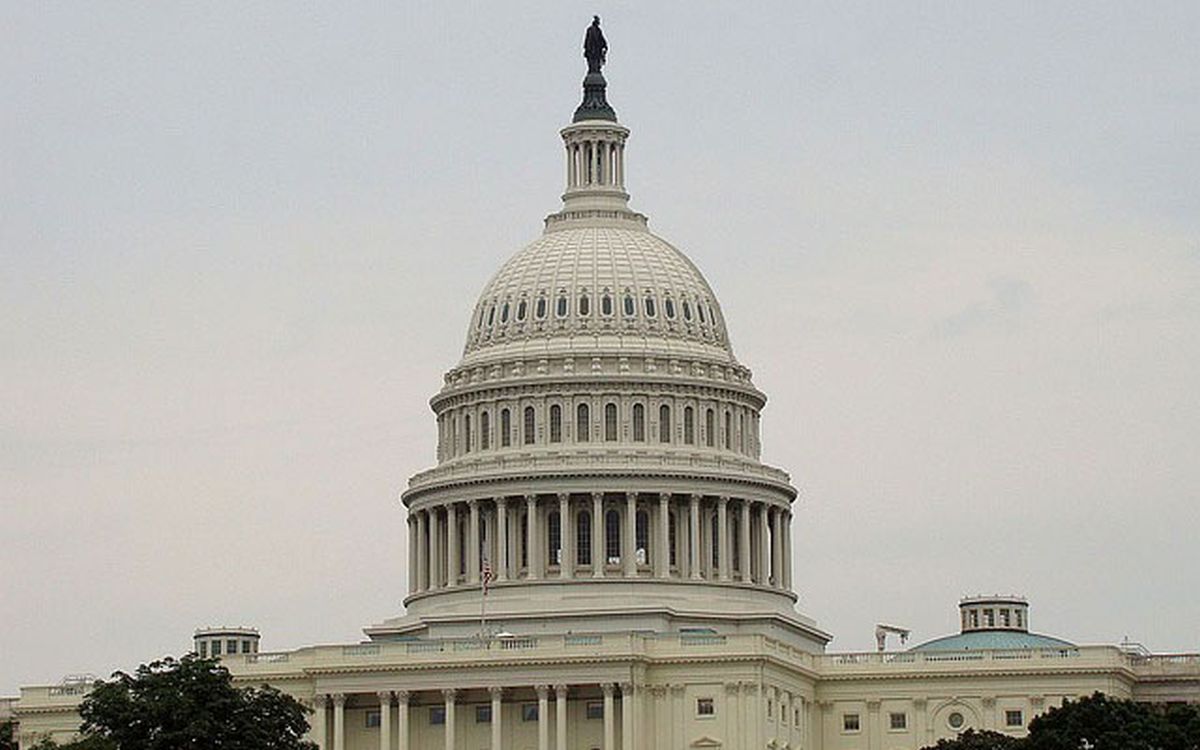
An important topic regarding the strategy of the United States of America (USA) in Bosnia and Herzegovina (BiH) opens this week in the US Congress, with a hearing of Daniel Lawton, Deputy Assistant Secretary of State for Western Central Europe and Southern Europe in the Bureau of European and Eurasian Affairs, already scheduled for tomorrow before the Foreign Affairs Committee of the House of Representatives.
The topic of the hearing, as published by the Sarajevo portal Raport, is American policy and regional security challenges in the Western Balkans.
According to the portal, after this hearing, it will soon be known when the Senate will schedule an interview for the hearing of Ronald Johnson, the designated US Ambassador to BiH.
Although the Presidency of BiH has already approved the agrément for Johnson, the Senate has not yet completed the procedure for his hearing, nor confirmed his appointment.
According to Raport’s sources, Lawton’s hearing and his report on the Western Balkans, which also includes BiH, will serve to define clear guidelines for the Senate regarding the hearing and confirmation of appointments of not only Johnson, but also two other US Ambassadors in the Balkans.
The hearing on the situation in the Balkans, it is added, is led by a congressman who opposed the lifting of sanctions on the leader of the Alliance of Independent Social Democrats (SNSD), Milorad Dodik.
It is emphasized that Lawton’s hearing will be led by two key and extremely influential congressmen: the Chairman of the Foreign Affairs Committee, Brian Mast, a Republican, and the leading Democratic member of the Subcommittee, William Keating, who strongly opposed the lifting of sanctions on Dodik.
The focus during Lawton’s questioning, it is stated, will be on the National Defense Authorization Act (NDAA) for 2026, through which both Republicans and Democrats jointly demand strong American engagement and the fight against the malignant influence of Russia and China in the Balkans.
Precisely in that context, the article states, the topic could open regarding the lifting of sanctions on Milorad Dodik, members of his family, and associates in October last year, as well as the question of “how much that emboldened him to continue his undermining of BiH and the spread of, particularly, Russian influence in BiH.”
It is emphasized that in this context, the question will also open as to how much the lack of a US Ambassador in BiH, Serbia, and Montenegro contributes to Chinese and Russian influence in the Balkans.
After tomorrow’s hearing of Lawton, it is assessed, it will be much clearer whether the position of the State Department remains to stay “on the sidelines” when it comes to political processes in BiH, “even when attacks on the constitutional order and the Dayton Agreement are repeated under their cover,” or whether the US Congress Subcommittee on Europe will submit its demands for restoring a stronger US influence, both in BiH and in other countries of the Western Balkans.
READ MORE:
In addition to the US Ambassador to BiH, mandatory interviews have not yet been scheduled in the US Senate for the new Ambassador to Serbia, Michael Young, while the designated Ambassador to Montenegro, Peter McCoy, passed questioning before the Senate Committee back on August 5, but is still waiting for the final vote of the full Senate to officially assume office.
The House of Representatives, which is organizing Lawton’s hearing tomorrow, has no right to vote on the appointment of ambassadors, as that is the exclusive right of the Senate.
The importance of this hearing, it is emphasized, lies in the fact that it serves as an unavoidable procedural and political platform on which hearings for US ambassadors will obviously be conducted in the Senate in the coming period.
It is with these fresh details and guidelines arising from tomorrow’s hearing that the Senate will welcome Ronald Johnson, designated as Ambassador to BiH, at his final interview in the next phase, determining the conditions that the new ambassador will have to implement when he finally arrives in Sarajevo.
MORE TOPICS:
Source: N1 ; Foto: Pixabay
 Add Serbian Times as your Google source