




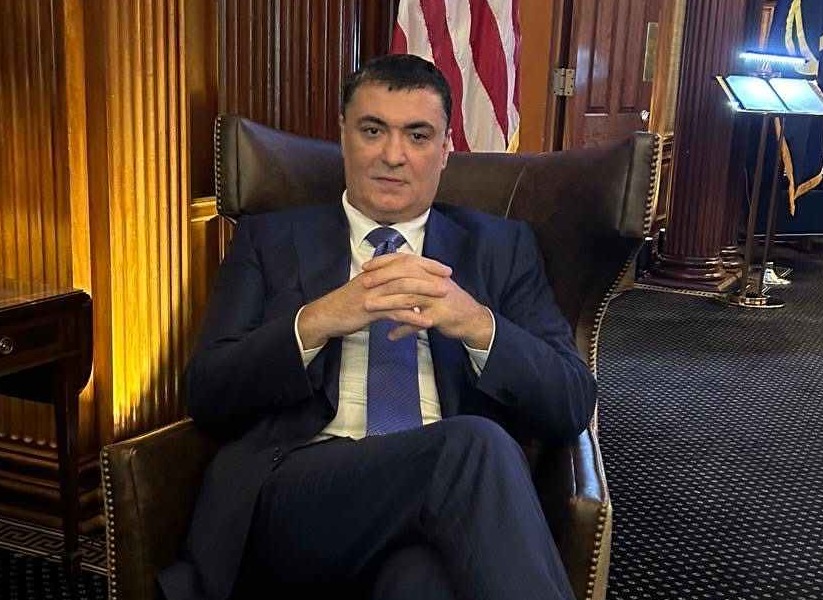
Rade Basta once advocated and worked towards Serbia building a nuclear power plant in cooperation with the United States and the European Union. Then, after a brief stint as a member of parliament, he became Minister of Economy in Ana Brnabić’s third government (from 2022 to 2023), as a member of United Serbia (JS).
He was expelled from the party and the government a year later, at the proposal of party leader Dragan Marković Palma and Socialist Party of Serbia (SPS) leader Ivica Dačić, because he advocated imposing sanctions on Russia. Before that, he had expressed support for the mass protests that began in May 2023. Soon afterwards, he founded the “European Path” movement, and today he lives between Washington and Belgrade.
Serbia’s former Minister of Economy speaks to Serbian Times about the students’ victory, his conflict with the authorities, Russian influence, energy policy and Serbia’s future in Europe.
Mr. Basta, three years ago you warned Germany that it was misjudging the situation in the Balkans. The students have now won the elections. Did you expect this outcome?
-I believed that the moment would come when citizens would no longer accept a policy of fear, pressure and control over institutions. The students have shown that Serbia has the strength to demand change. Their victory represents a serious defeat for the political model that Aleksandar Vučić has been building for years. The most important thing now is to turn the election result into real changes in institutions and in citizens’ lives.
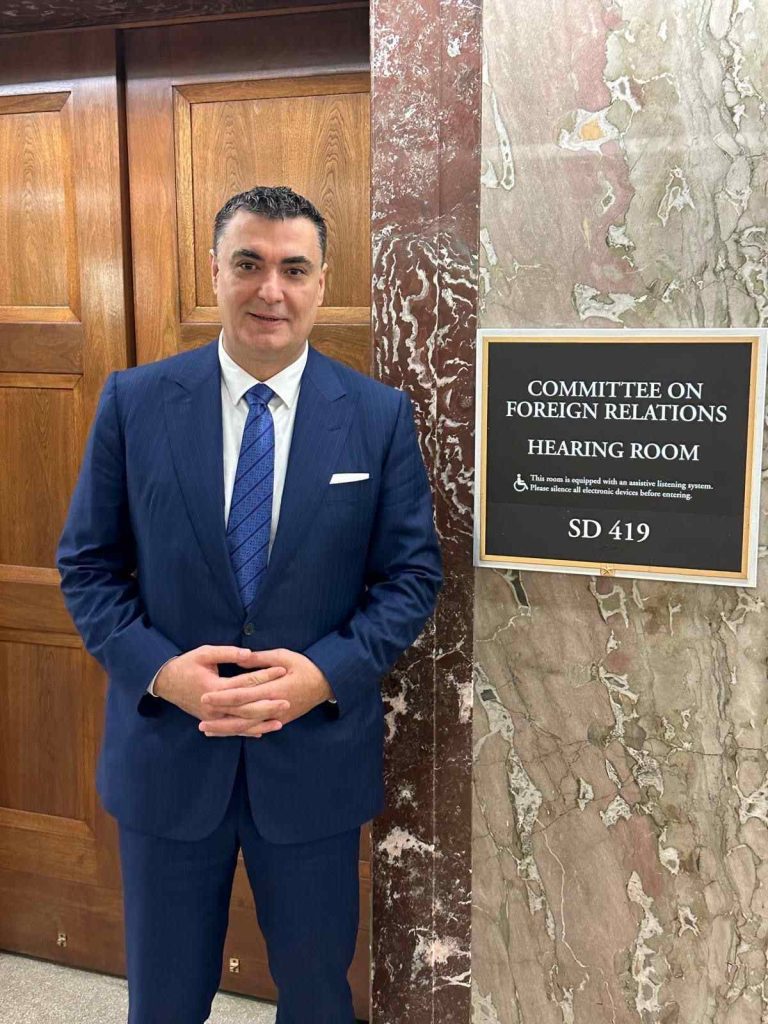
Do you believe that Vučić has definitively lost? The levers of power are still in his hands, as are most of the media, capital, tycoons and security services?
-Politically, this is a clear defeat for his policy, one from which he certainly will not recover. No government can ignore citizens’ dissatisfaction indefinitely. However, winning an election and changing the system are not the same thing. The real test is yet to come: will institutions become independent, will contracts be transparent, and will the law apply equally to everyone?
You were a minister in that government. Why should citizens trust you today?
-I am not asking citizens to forget where I was or what I did. I was Minister of Economy and, before that, an executive in the energy sector. My political path should be judged on the basis of concrete decisions and public statements. When I publicly advocated sanctions against Russia, even though that was not the government’s policy, I knew there would be political consequences. I did not want to remain silent simply because keeping quiet was easier. I said then what I am saying now.
In December 2023, you warned that Moscow had too much influence over Serbia. Have you changed that position since then? Putin supported Vučić, yet Vučić still lost the elections…
-No, I have not changed my position. The Kremlin had, and continues to have, considerable influence over all structures of power and authority. Citizens voted against that, so I expect this influence to diminish over time. Serbia must make its own decisions about its future. Energy dependence must not turn into political dependence. We need diversified energy sources, transparent contracts, reliable partners and institutions that protect national interests. Serbia should acquire all of this on its European path, which I consider the only right one.

What exactly do you advocate in the energy sector?
-As director of “Belgrade Power Plants,” I advocated more efficient energy use, reducing losses in the heating system and managing resources more rationally. I also spoke about Serbia’s long-term energy security. Back in 2021, I publicly advocated lifting the moratorium on the construction of nuclear power plants and cooperating with American and European partners. I proposed that Serbia begin seriously planning for nuclear energy, training experts and considering both large-scale and modular reactors. This is not a project that can be implemented overnight, but a strategic decision for the coming decades.
So, the changes you would introduce in Serbia’s energy sector would concern the use of nuclear energy?
-Yes, but certainly not only that. I would demand full transparency in major energy contracts, independent expert assessments of investments, measurable energy-efficiency targets and a long-term strategy that does not depend on one politician or one external partner, regardless of their name or how powerful they may be. Serbia must know how much energy costs, who profits from the contracts and what obligations will be left to future generations.
You once sharply criticised Berlin and Brussels. What message do you have for them today?
-Stability is not the same as the absence of protests. Stability means that citizens have confidence in institutions, that elections are fair and that the government can be replaced. If Europe talks about democracy, then it must support the same standards in the Western Balkans. Democracy cannot matter only when it serves geopolitical interests.
Should Serbia accelerate its accession to the European Union?
-Serbia should be given a clear and credible European perspective, accompanied by concrete commitments in the areas of the rule of law, judicial independence, media freedom and alignment with European rules. Membership cannot be just a political slogan. It must bring institutions that function and a better life for citizens.
Were you pleased by the students’ victory?
-Honestly, I supported the students with all my heart. But I do not claim their victory as my own, as I see many people already doing. This is their struggle, their work and their responsibility towards citizens. I can speak about my experience in state institutions, the decisions I made and the political pressure I experienced, according to my own account. I am not asking the students to give me political legitimacy. They decide for themselves who represents them.
You previously said that you had been exposed to threats and had spent two years outside Serbia. Why are you returning to political life?
-Because I do not want to accept that the only choice for someone who disagrees with the authorities is to remain silent or leave the country. I am prepared to speak publicly about my experiences and substantiate them with documentation wherever possible. For me, returning means that I want to take part in the debate about Serbia’s future, but without false promises and without claiming someone else’s struggle as my own.

What should be the first task of the new political majority formed by the Student List?
-Certainly not revenge, nor replacing one party’s control with another. The first tasks must be independent institutions, transparent public contracts, free media, a professional police force and judiciary, as well as a serious policy for the domestic economy. Every suspicion of corruption must be investigated through legal proceedings, regardless of who is involved.
What is the fundamental change that Serbia must implement first?
-Serbia does not belong to one man, one party or one great power. It belongs to its citizens. The students have shown that citizens can set change in motion. Now it is the responsibility of all political actors to turn that change into a system in which no one will ever again have to risk their future to demand justice, freedom and accountability from those in power.
MORE TOPICS:
Source: Antonije Kovačević Foto: Privatna arhiva
 Add Serbian Times as your Google source