




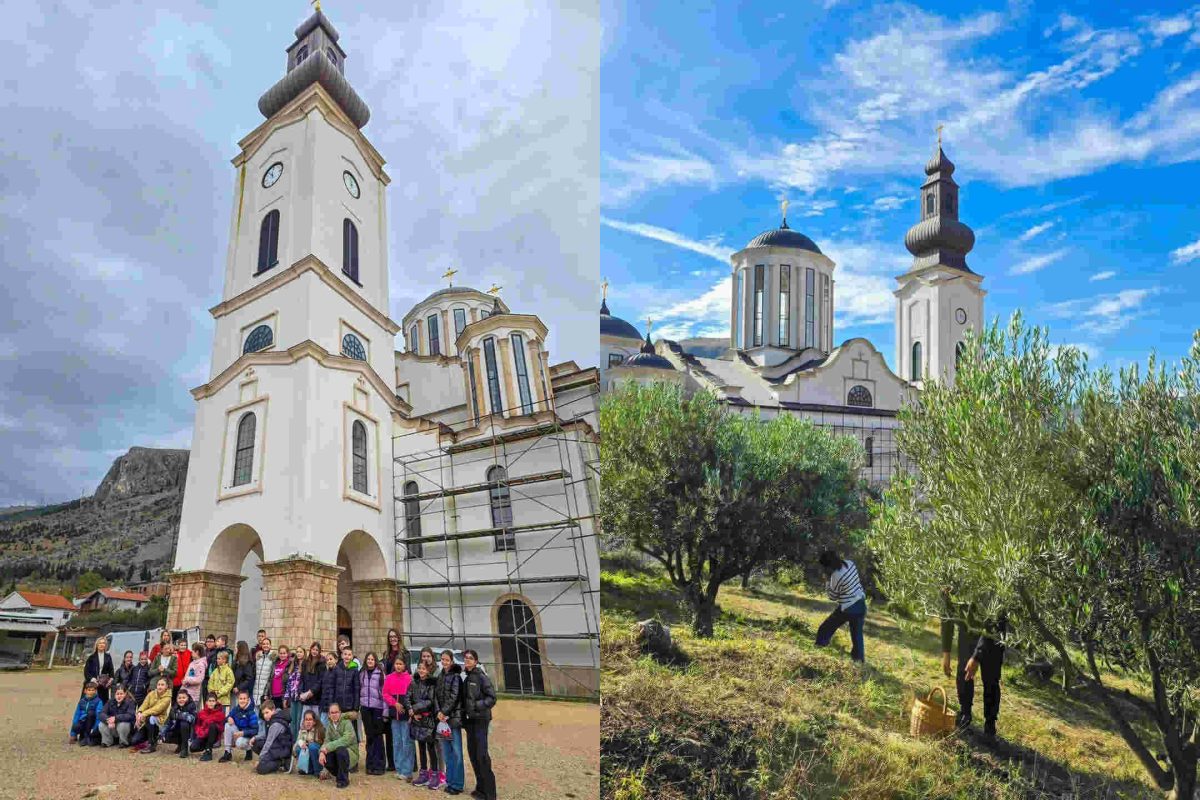
For centuries, Mostar was a city of encounters, but also a city of deep historical wounds. In its center rose a sanctuary that shaped the spiritual identity of the Orthodox people in Herzegovina — the Cathedral of the Holy Trinity in Mostar.
Its fate became one of the most difficult chapters in the contemporary history of this region.
Historical beginnings and spiritual foundation
The construction of the Cathedral began in 1863, and was completed and consecrated in 1873. It was one of the largest Orthodox temples in the Balkans, a symbol of the restoration of spiritual and national life in Herzegovina after long centuries of Ottoman rule.
The temple became the center of the religious and social life of Serbs in Mostar — a place of baptism, wedding, gathering, and remembrance.
Visit of Patriarch German — 1960
One of the most significant historical moments occurred in 1960, when the Serbian Patriarch German Đorić visited the Cathedral.
On that occasion, a message was spoken in Mostar that became a vow:
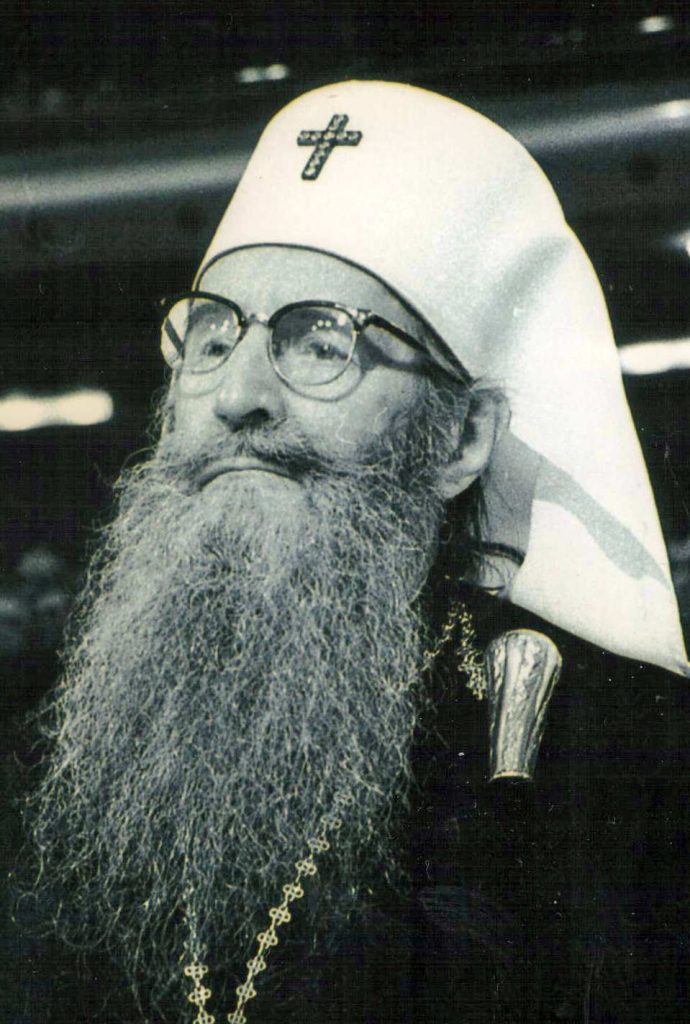
WORDS THAT ARE REMEMBERED: Patriarch German
“Our tribe will not perish, our courts will not remain deserted…”
The words of the then Bishop of Zahumlje and Herzegovina, later Metropolitan Vladislav, remained as the spiritual seal of an era and a prediction of the people’s perseverance despite all historical ruptures.
Episcopal lineage and spiritual duration
The history of this diocese begins much earlier, back in the 19th century, when after the restoration of the Patriarchate of Peć and the strengthening of church life in Herzegovina, the continuity of the archiepiscopal service was established.
Among the significant bishops of that period, the hierarchs who bore the burden of preserving the people in times of political change stand out in particular, and the name of Leontije Radulović is especially kept in historical memory as a clergyman whose incorrupt body was found after his repose — which left a deep mark on the people and is considered a sign of holiness and grace.
In the 20th century, the diocese went through difficult historical trials but remained alive through its archpastors.
Atanasije, Grigorije and Dimitrije — continuity of suffering and renewal
In recent history, a special place is occupied by Bishop Atanasije Jevtić, who in 1992, at the time of the beginning of the war in Bosnia and Herzegovina, came to Mostar and stayed with his people, witnessing the suffering and destruction.
After him, Bishop Grigorije Durić, who was on the throne from 1999 to 2018, initiated the restoration of destroyed sanctuaries and returned spiritual life to the devastated space of Herzegovina.
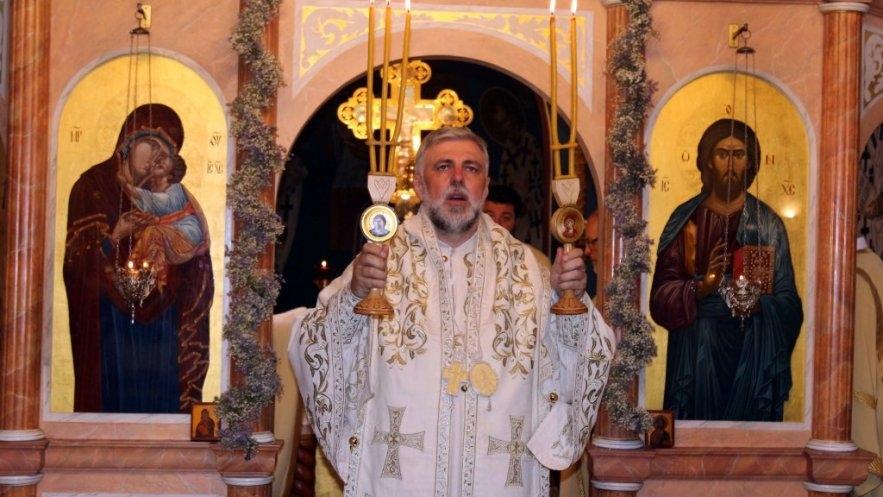
STARTED THE RECONSTRUCTION OF THE TEMPLE: Metropolitan Grigorije
Today, that mission is continued by Bishop Dimitrije Rađenović, who has led the diocese since 2018, continuing the work on the restoration of the Cathedral and the spiritual gathering of the people.
The year 1992 – the beginning of the destruction of the sanctuary
With the beginning of the war in Bosnia and Herzegovina, the Cathedral became a target. On June 15, 1992 — the temple was set on fire.
The flames destroyed the roof, the interior, the icons, and the church books. After the fire, a systematic destruction of the building followed.

FIRST SET ON FIRE, AND THEN MINED: The Cathedral in Mostar
In November 1992 — the Cathedral of the Holy Trinity was mined and almost completely destroyed to its foundations.
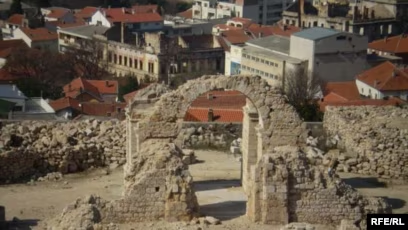
From 1992 to the 2000s, only foundations and ruins remained at the site of the temple. That place became a symbol of suffering, but also of a silent expectation of renewal.
Renewal — the return of the sanctuary
The restoration of the Cathedral officially began at the beginning of the 21st century; more intensive works took place in phases after 2007, with the support of the Church, believers, and donors.
Today, the temple rises again as a sign that destruction is not the end, but a trial.
The destruction of the sanctuary did not destroy the people. The demolition of the temple does not extinguish the hearth. The mining of the church does not erase memory. The destruction of the walls does not destroy identity.
Because the people are not in stone — but in memory.
The words from Mostar, spoken in 1960, remain as a vow:
“Our tribe will not perish, our courts will not remain deserted…”
And indeed — they will not.
Because as long as there are people who remember, as long as there is faith that lasts, and as long as sanctuaries are being built again — nothing is lost.
YOUR HELP IS ESSENTIAL: Hardworking hands have restored the temple, a little more is needed…
Call for renewal
The restoration of the Cathedral is a collective work of all who understand that a sanctuary is not just a building, but also a vow.
How you can help the restoration of the Cathedral:
PayPal: spcmostar1@gmail.com
🔗 www.shorturl.at/rNOSZ
BiH PAYMENTS: SPCO Mostar
ASA banka d.d. Sarajevo: 1340011130023498
ABROAD:
SPCO Mostar, Konak 7, 88000 Mostar
IBAN: BA391340011200740184
SWIFT: IKBZBA2X
MORE TOPICS:
NEWS THE LAKERS ARE WAITING FOR: It is known when Luka Dončić returns to the court!
Author: Velibor D. Milivojević Photo: RFE/RL, Cidom, Wikipedia, Arhiva Sabornog hrama
 Add Serbian Times as your Google source