




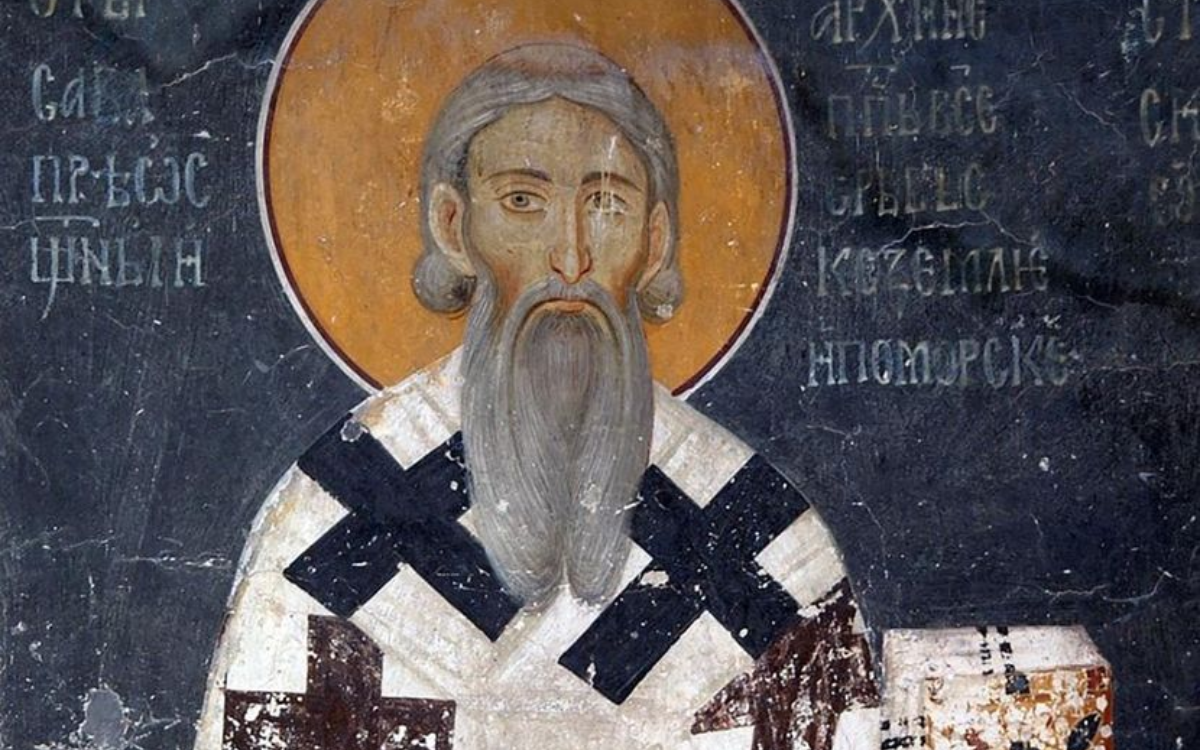
The Serbian Orthodox Church and the faithful observe the day dedicated to Saint Sava, recalling the burning of his remains on Vračar in 1595 and his lasting spiritual legacy.
Saint Sava, the first Serbian archbishop, enlightener, and founder of the spiritual and ecclesiastical identity of the Serbian people, holds a unique place in the prayerful memory of the Serbian Orthodox Church (SPC). His life, work, and feat became the foundation of spiritual tradition, and through the centuries, his name has been spoken as protection, comfort, and a blessing in the most difficult historical moments.
The remains of Saint Sava, which were laid in the Mileševa monastery after being transferred from Trnovo, became a spiritual center and a gathering place for the faithful people. In times of Ottoman rule, Mileševa was more than a monastery – it became a refuge of faith, hope, and spiritual strength, where Serbs gathered seeking comfort and healing before the saint whom they believed was eternally alive in God and in his people.
Precisely that growing cult of Saint Sava, as well as the fact that his grave became a place of gathering and spiritual resistance, caused great concern for the Ottoman authorities. In a time of increased Serbian uprisings and unrest at the end of the 16th century, the decision was made to remove his remains from Mileševa, with the aim of breaking the spiritual vertical of the people who found strength for resistance in them.
According to historical traditions, by order of the Sultan, Sinan Pasha organized the transfer of Saint Sava’s remains from Mileševa to Belgrade in 1595. The procession was accompanied by great suffering, humiliation, and fear, while the monastery remained without its greatest treasure. Although the Turks sought to prevent the spread of news and resistance, the event awakened the Serbian people throughout the country.
On Vračar in Belgrade, as tradition testifies, the remains of Saint Sava were burned at the stake. The flame that rose over the city became a powerful symbol of suffering, but also a testimony that spiritual power cannot be destroyed. Instead of erasing his influence, this act further strengthened the cult of Saint Sava among the people.
However, in that terrible historical moment, not everything was lost. Tradition and historical records testify that the saint’s remains did not completely disappear, because one part of them – his left hand – was preserved and transferred, becoming a symbol of unextinguished holiness and the permanent presence of Saint Sava among his people. In the most difficult times of slavery and suffering, the monks of the Mileševa monastery continued to preserve the memory and what remained of the saint’s relics, persevering in a quiet but persistent mission of preserving the sanctuary. Historical sources testify that through the centuries they also turned to distant Orthodox rulers, stating that the saint’s remains are still in Mileševa, bringing comfort, healing, and spiritual refreshment to the believers. In numerous records from the 17th century, as well as in charters and chronicles, constant attacks, destruction, and suffering of the monastery are mentioned, but also the perseverance of the monks and the faithful people who, despite everything, restored the sanctuary and preserved its tradition. Thus, throughout the centuries, a living thread of testimony about Saint Sava was maintained, as a spiritual foundation and an unextinguished presence in the history and faith of the Serbian people.
On the site where the burning of his remains was carried out, the Memorial Temple of Saint Sava on Vračar rises today, as a permanent testimony of faith, historical memory, and the spiritual resurrection of a people who did not forget their greatest saint.
MORE TOPICS:
POLICE CHIEF MURDERED: Witnesses reveal details of the horrific crime that shook Croatia!
BABY BOOM IN REPUBLIKA SRPSKA: In 24 hours, 14 babies were born, most of them in Doboj!
Source: Kurir, Photo: SPC
 Add Serbian Times as your Google source