



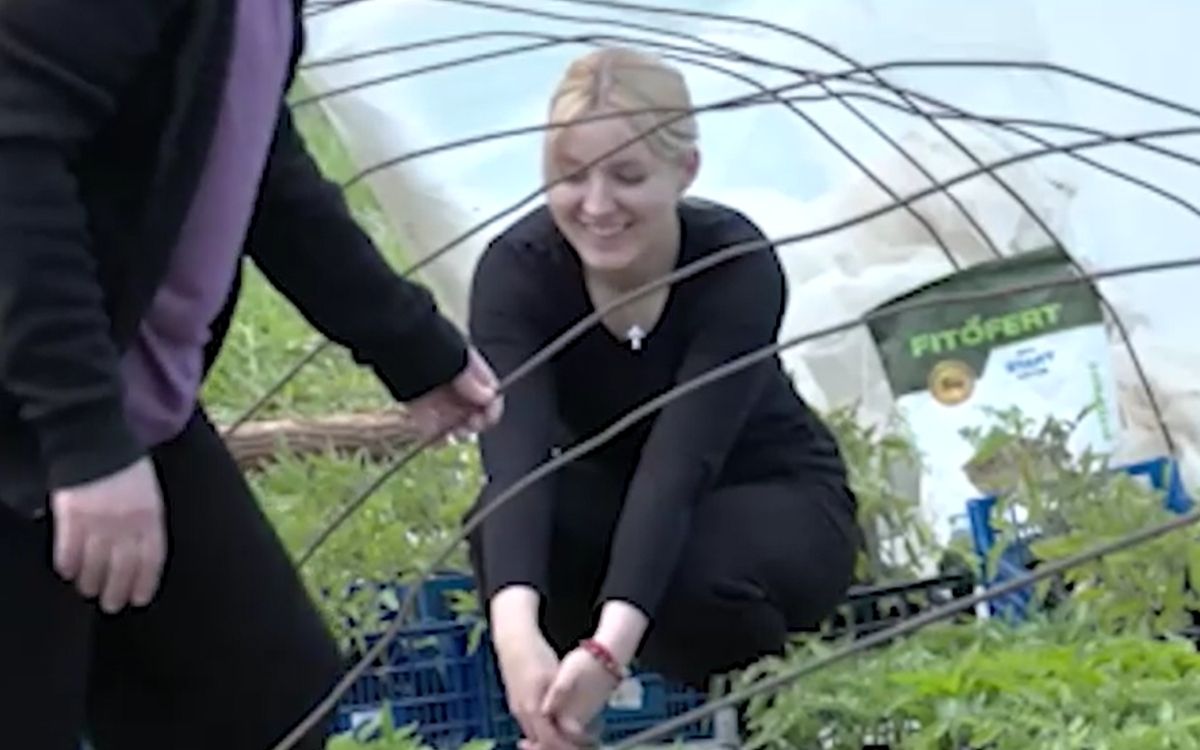
In the village of Kamenica near Leposavic, which today has only about thirty inhabitants, the Markovic family has developed one of the largest greenhouse facilities in the north of Kosovo and Metohija. On nearly a hectare, they produce tens of thousands of vegetable seedlings annually.
From a few acres and family labor, in two decades they have reached modern production. Despite the mountain climate, the Markovics today supply numerous buyers throughout the north of Kosovo and Metohija from Kamenica.
“There are tomatoes, peppers, cucumbers, we also have watermelon, melons, everything the market demands. There are many people who do this for themselves, but they supply themselves with seedlings from us,” says Jovica Markovic.
Work under the greenhouses lasts throughout the year, and the entire family is involved in production. In the season, they say, there is almost no working hours.
“I help as much as I can, but my husband works the most, and the children help. They can’t do much either because of their obligations, but we are mostly together, we help each other, which is the most important thing,” says the wife.
The greenhouses are equipped with a heating system, and the Markovics also have their own cold storage, which allows them stable production throughout the year.
“Currently, we have about 25,000 various plants sown, some in cups, some in containers, now we are starting the production of seedlings outdoors as well,” says Jovica.
In a village that today counts only a few dozen inhabitants, every new greenhouse for the locals also signifies a sign that life in Kamenica still survives.
“They are not only believers but also hardworking people engaged in agriculture; there are also good students from here and craftsmen. Kamenica is small, only about thirty houses approximately, but what is there is truly of high quality,” says Archpriest Bojan Brankovic, the parish priest.
Secure placement and increasing demand have already brought new plans. The Markovics are now preparing to expand production by another half hectare, believing that one can live from working on one’s own land.
MORE TOPICS:
Source: RTS; Photo: Printscreen RTS
 Add Serbian Times as your Google source