




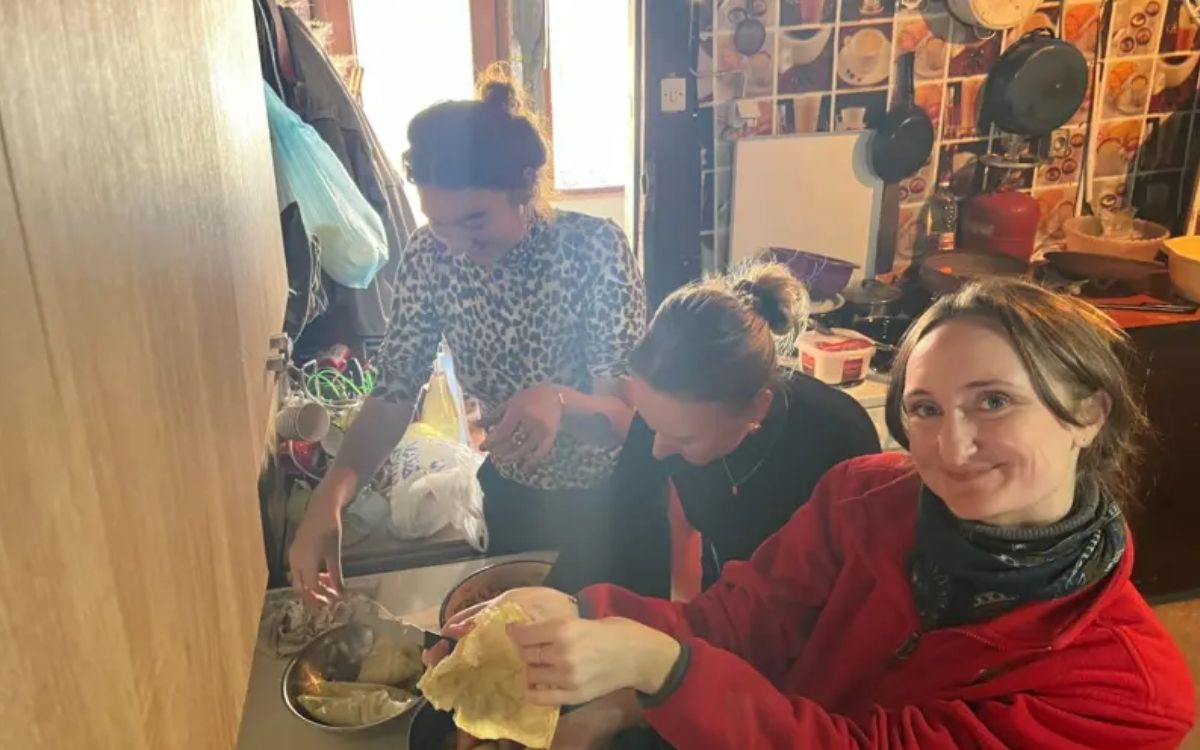
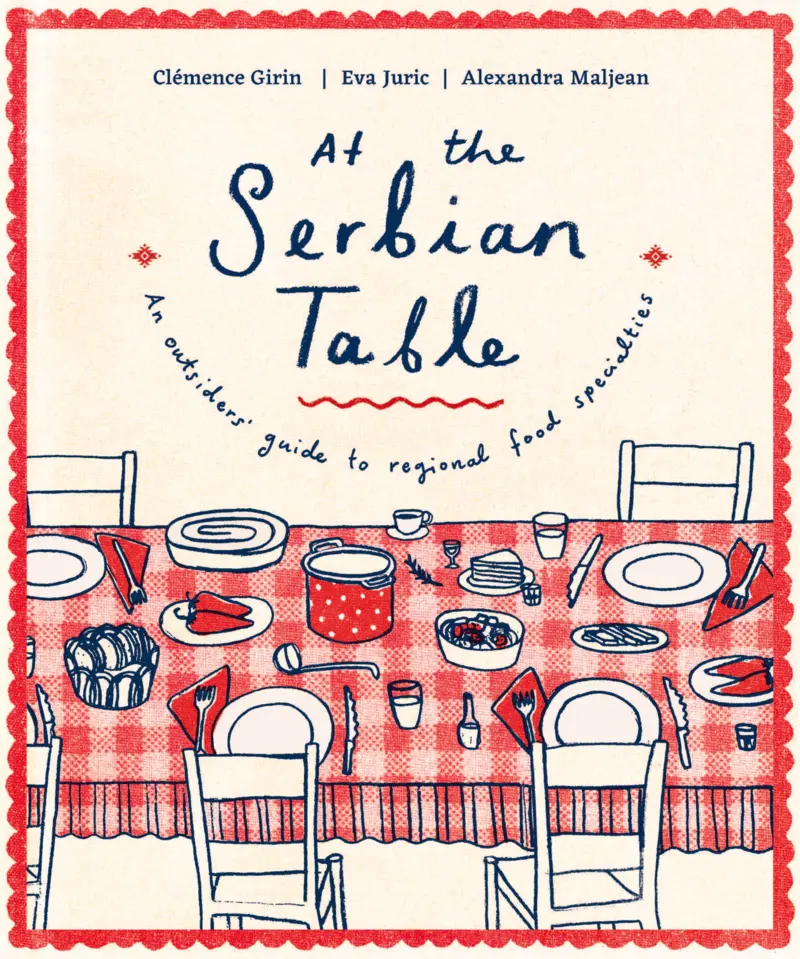
Three Frenchwomen, Aleksandra Malžan, Clemans Žirin and Eva Jurić, decided to get to know Serbia through its cuisine, traditional recipes and the stories of the people who preserve them. Their gastronomic adventure grew into the book “At the Serbian Table – Za srpskom trpezom,” dedicated to the richness of local food and tradition.
Aleksandra, Clemans and Eva met in Belgrade in 2020, and all three spent around three years in Serbia. Although they work professionally in international public policy, they were brought together by their love of food and their desire to discover specialties that are less well known beyond our borders.
Together, they also launched the Instagram profile “Burek Bliss,” inspired by one of the first Serbian dishes they fell in love with.
“Burek was one of the first Serbian dishes we fell in love with, and the word bliss actually describes quite well the happiness a person feels when taking a bite of hot burek accompanied by a glass of cold yogurt,” they told BBC Serbian.
As they explain, Serbian cuisine abroad is generally associated with ćevapi, pljeskavica, burek and sarma, but during their stay in Serbia, they discovered a much greater variety.
“You only have to drive a hundred kilometers or so farther, and you will discover a new cheese in some village, a pie unlike anything you have ever tried elsewhere, or a specific way of distilling rakija,” they explained.
Their curiosity grew into the idea of writing a book that would not be a conventional cookbook, but a story about Serbia told through food, customs and people.
They visited 82 places and discovered 121 specialties
To get to know different parts of the country, they organized four trips across all four seasons. Over a total of eight weeks, they visited five regions, 82 places and discovered as many as 121 specialties.
They traveled from Užice, Vranje, Novi Pazar and Valjevo, across Vojvodina, from Vršac to Sremska Mitrovica, and all the way to Golubac and Bela Palanka.
Although they planned their routes and meetings with hosts in advance, they admit that the best moments often happened spontaneously.
“In Serbia, it is very difficult to stick firmly to a travel itinerary… Especially when someone brings out rakija,” they joked.
Stuffed peppers won their hearts
Of the 121 specialties they tried, the three Frenchwomen unanimously singled out stuffed peppers.
They were particularly delighted by the ones they prepared in Bela Palanka together with their hosts, Lala and Jasmina.
“The peppers in southern Serbia at that time of year are truly incredible: sweet, strong and full of flavor. It is one of those dishes that looks ordinary at first glance, but when the ingredients are that good, it becomes something special,” they explained.
They liked the stuffed peppers so much that they ate them reheated for breakfast the very next morning.
However, not all local specialties left the same impression. They admitted that offal and certain unusual animal parts were a challenge for them, and they particularly remember dried meat made from intestines that they tried in a village near Kragujevac.
That is why they adopted a rule: “Try it first, and ask detailed anatomical questions later.”
The dish that failed to impress them was Valjevo steak, primarily because they expected something similar to Wiener schnitzel.
“Not everything can be to your taste, and after 121 Serbian specialties, surely we are entitled to one miss,” they said.
They learned to roll sarma, but also to cook “by eye”
The Frenchwomen did not just taste local food; they also wanted to learn how to prepare it.
They made two types of sarma: one wrapped in sauerkraut leaves near Čačak and another wrapped in vine leaves on Stara Planina.
They admitted that they were not particularly good at rolling them.
“It took many attempts, and many sarma rolls of questionable appearance, before we managed to roll one or two that our hostesses considered acceptable.”
An even greater challenge was following traditional recipes, as the women cooking often used measurements such as “as much as needed” and “until it is done.”
They realized that many Serbian dishes are prepared through experience, intuition and family tradition rather than precise instructions.
What does a Serbian dinner prepared by them look like?
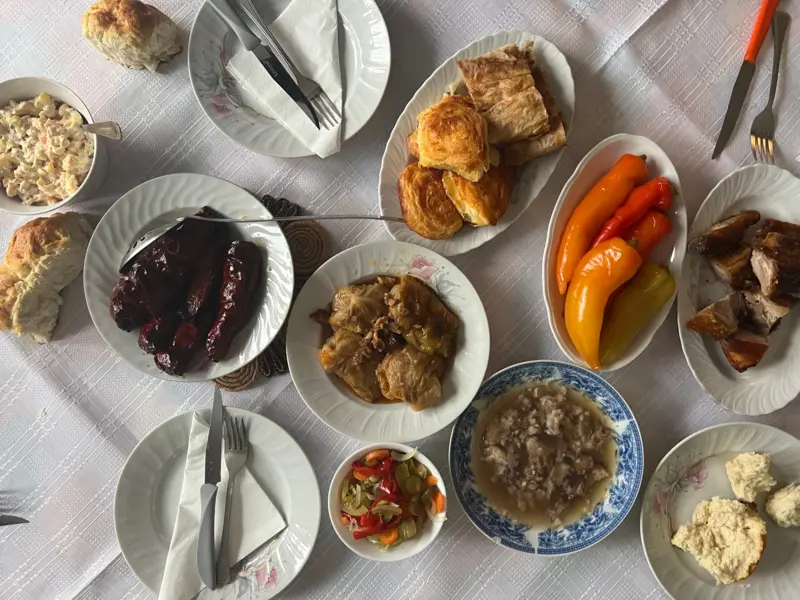
When preparing a Serbian-inspired dinner for friends, they would put ajvar, čvarci, kajmak, kulen and proja on the menu.
In winter, they would serve wedding-style cabbage stew or turkey with mlinci, while in summer they would prepare mućkalica with tomato salad. For dessert, they would choose orasnice or watermelon accompanied by rakija.
They would also serve local wines with the meal, including sparkling wine from the Dalia winery and red wine from the Sajgmajster winery.
They also considered combining French and Serbian cuisine. They would serve Karađorđeva schnitzel with béarnaise sauce, prepare goulash with red wine, and drizzle the dumplings with salted-butter caramel.
Serbia’s greatest treasure is not just its specialties
Although they discovered more than a hundred dishes during their travels, Aleksandra, Clemans and Eva emphasize that the greatest treasure of their experience was the people they met.
They visited family kitchens, farms, wineries, distilleries, taverns and gardens, where their hosts shared recipes, family memories and stories with them.
“We sat in family kitchens, on farms, in wineries, distilleries, taverns and gardens, and people shared recipes with us, opened their family photo albums, debated how something should properly be prepared and, very often, refused to let us leave until they had served us something else.”
That is precisely why their book is not just a collection of recipes, but also a testament to the hospitality and customs of different parts of Serbia.
The Frenchwomen believe that, despite differences in dishes and preparation methods, French and Serbian cultures share a similar relationship with food.
Both countries take pride in their regional specialties, preserve family recipes and see food as part of their identity, memories and sense of community.
“We understand each other perfectly on a spiritual level,” they concluded.
The book “At the Serbian Table – Za srpskom trpezom” was published by Komšhe publishing house.
MORE TOPICS:
Source: BBC na srpskom Foto: BBC Printscreen
 Add Serbian Times as your Google source