





The regime in Belgrade has done everything it can to prevent as many Serbs in the diaspora as possible from voting; it has shut down existing polling stations, failed to open new ones where there was significant demand, and rejected voting applications that were submitted on time…
But alas… Instead of discouraging voters, it has awakened their defiance, and many Serbian citizens will spend election day and the weekend on the road, traveling hundreds or thousands of kilometers to cast their ballots.
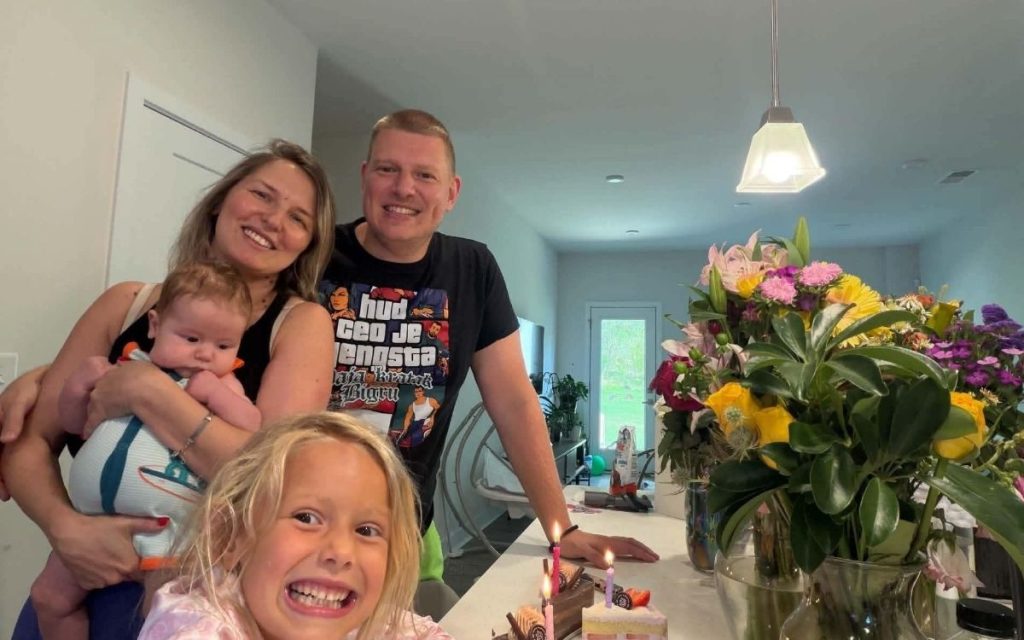
Among them will be Marina Lutovac Lalić, who will set off by car from the city of Charlotte, in the US state of North Carolina, on a long journey to Washington, holding a four-month-old baby in her arms!
“The drive to Washington takes around seven hours without breaks, and my husband and I will be traveling with our four-month-old baby and five-year-old daughter. My mother and her partner, who have come from Serbia to visit us, will also be joining us on the trip,” Marina told Serbian Times.
She added that they had rented an apartment in Washington through Airbnb and turned the trip to vote into a family getaway.
“With two small children, it requires more organization, but it was important to us to make the trip.”
Marina and her husband are from Belgrade, where they studied and built their careers. They moved to America in 2019 for work.
“I run my own marketing agency, and my husband is a programmer. We are raising two children and building our lives here, but we visit Serbia every few months. Our families and friends are there, and it is important to us that our children also grow up connected to their country.
What motivated you to embark on such a long journey with small children?
“We want change. We want an end to corruption, lawlessness, and a system in which the rules apply to some people but not to others. We both completed master’s degrees and had well-paid jobs in Serbia. But just because things were going well for us did not mean we failed to see how the people around us were living. We watched young, educated and capable people who could not find jobs or were losing them, while their positions were being taken by people who had secured jobs through party connections and personal favors. We saw people working but unable to cover their basic expenses, and families collecting money to pay for their children’s medical treatment,” our interviewee said, continuing:
“And when you live in another country and see how a system can function, what you see happening in the country where you grew up becomes even harder to bear. Nothing is perfect here either, but you realize that many things we accepted as ‘the way things have to be’ do not actually have to be that way. Our families are still there. I cannot say, ‘We left, so it no longer concerns us.’ It does concern us, and that is why a seven-hour drive is not enough of a reason for us to stay home.”
Asked how she views the obstacles facing diaspora voters and the failure to open polling stations, she replied:
“When you make it harder for people to vote, they have every right to wonder whether you are afraid of their votes. The state should enable us to exercise our rights, not turn voting into an entire family and financial undertaking. It is particularly difficult to watch those who have been in power for more than ten years play unfairly, while expecting citizens to follow rules that they themselves tailor to suit their own needs.”
She says students are an inspiration to many…
“These young people have reminded us that we do not have to accept everything. They have shown courage and awakened many who had already given up. We left Serbia, but I would like the new generations to have a real choice to stay. That is why I feel a responsibility and a need to support them.”
What do you think of comments that the diaspora should not vote because they do not live in Serbia?
“I grew up, studied and built my career in Serbia. My family and roots are there. Moving to America has not erased that. We still celebrate our family slava, my daughter knows what slava is, speaks Serbian and says she is Serbian. We try to make sure our children know where they come from and feel that connection, even though they are growing up far from Serbia. We have not stopped belonging to our country simply because we moved away,” Marina stressed.
She emphasized that, as a Serbian citizen, she has a constitutionally guaranteed right to vote.
“And here in America, I also have the freedom to vote without fear that I will lose my job or put my family at risk because of it. And that is what saddens me most about Serbia today — seeing someone’s poverty exploited to buy their vote with a kilo of flour, a package of groceries or a promise of employment. I do not condemn someone who can barely make ends meet. I condemn those who exploit their hardship to stay in power. And I condemn our attitude of ‘so what.’ Because it is precisely that ‘so what’ that has brought us to a point where some people do unforgivable things and never face consequences. Looking out only for our own petty interests and staying silent while terrible things happen has led to a lack of accountability, the erosion of moral boundaries and a system that protects those it should be protecting us from.
Can diaspora votes influence the election results?
“Absolutely. When enough people say, ‘My vote changes nothing,’ we end up with a huge number of people who have given up. That is why I think it is important for everyone to do what they can. Among us in the diaspora, there are those who want to return and those who want their families in Serbia to finally live peacefully and with dignity. Even though we live far away, we know very well who back home is waiting for a medical appointment, who is looking for a job and who is wondering whether they, too, will have to leave. I want to speak proudly about where I come from, without having to explain to Americans why there is always some unrest in my country. I love Serbia and want things to get better for the people who live there.”

Who will you vote for, and why?
“I will vote for number 3, for the young people who woke us up and finally said out loud that the emperor has no clothes. For those who refused to act as if all of this were normal. I do not expect anyone to solve every problem overnight. I expect accountability, institutions that do their jobs and a government that understands it can be voted out. I want knowledge and hard work to matter, and I do not want party membership cards to determine who deserves an opportunity.
What would you say to people who are eligible to vote but are still wondering whether to turn out?
“I understand the exhaustion and disappointment. I also understand why people say they no longer trust anyone. But if we all give up, who are we leaving the decisions to? Voting is our right, not a legal obligation. For me, it is also a personal responsibility now — toward the family I have back there, toward the people who are fighting, and toward the children I am teaching that they should not merely recognize injustice but also respond to it. We cannot keep waiting for someone else to do the hard part while we carry on as if none of this concerns us. Some people have already taken on a tremendous burden and risk. The least I can do is support them,” Marina Lutovac Lalić concluded, adding:
“That morning, we will pack up the baby and our daughter and set off on the long journey to the Serbian Embassy in Washington. I would like to be able to tell my children one day, when they ask me, ‘It mattered to us. We did not just talk about it; we actually did something.’”
MORE TOPICS:
Source: Antonije Kovačević Foto: Privatna arhiva
 Add Serbian Times as your Google source