




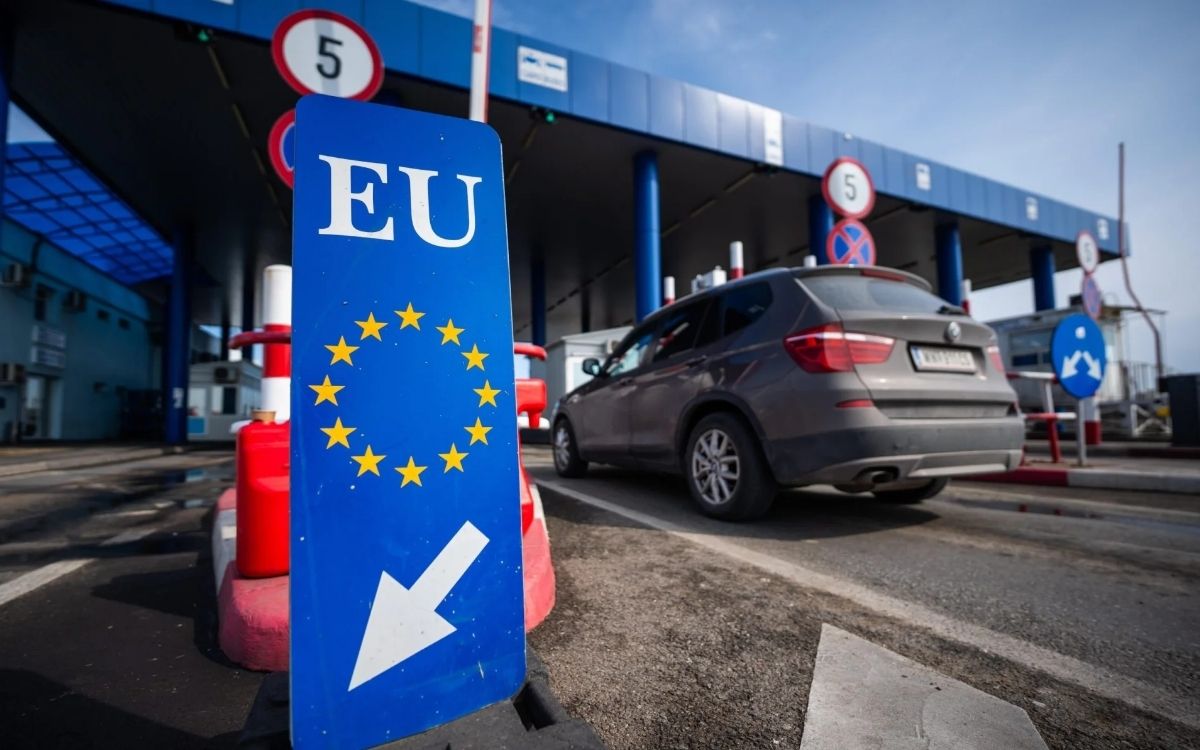
On Friday, April 10, the full application of the EES system begins at the borders of the European Union. Following a partial implementation that lasted since last October, passengers can now expect stricter identification rules, as well as potential delays at crossings that are traditionally the most congested during holidays and the summer season.
The Director of the National Association of Travel Agencies of Serbia, Aleksandar Seničić, told RTS that travelers should adjust their travel plans, especially when returning from the European Union, which implies arriving at the airport earlier than has been the case until now.
Aleksandar Seničić said that one of the most common doubts among citizens relates to departures from domestic airports, but emphasizes that there will be no changes in that part.
“The EES system refers to entry into European Union countries. There is no reason to arrive at our airport much earlier than before,” Seničić emphasized.
All the novelties from April 10 relate to control upon entry into EU countries, where passengers will be registered, biometric data will be taken, and the stay in the EU country will be checked in more detail. It is precisely there that the longest delays are expected, especially on days of increased traffic, Seničić points out.
According to him, passengers will have to adjust their plans, particularly when returning from the European Union.
“When we are returning from European Union countries, we must plan to arrive at the airport somewhat earlier than usual, a couple of hours, an hour and a half earlier than we used to do, so that the procedure for exiting European Union countries is completed on time,” Seničić told RTS.
Given the expected increase in the number of passengers, especially during holidays and summer months, the question arises as to how the system will function in practice and whether it will lead to a collapse at border crossings.
Seničić states that certain members of the European Union have also expressed concern over possible crowds.
“The European Union has made a decision that local authorities can, at a certain moment, if they notice that a collapse or a large crowd has formed at the borders, make a decision to suspend this system for a certain period of time,” said Aleksandar Seničić.
He explains that in those situations, passengers could pass according to the old rules.
The introduction of the EES system is already reflecting on tourist flows, and Seničić emphasizes that a decline in interest for traveling to European Union countries has been recorded.
“Certainly, this system leads to a portion of travelers who do not want to think about traveling to the European Union at all, precisely because of the long waits at border crossings,” Seničić pointed out for RTS.
MORE TOPICS:
DUSKO VUJOSEVIC PASSED AWAY: Legendary basketball coach died at the age of 67!
Source: N1; Photo: EU
 Add Serbian Times as your Google source