




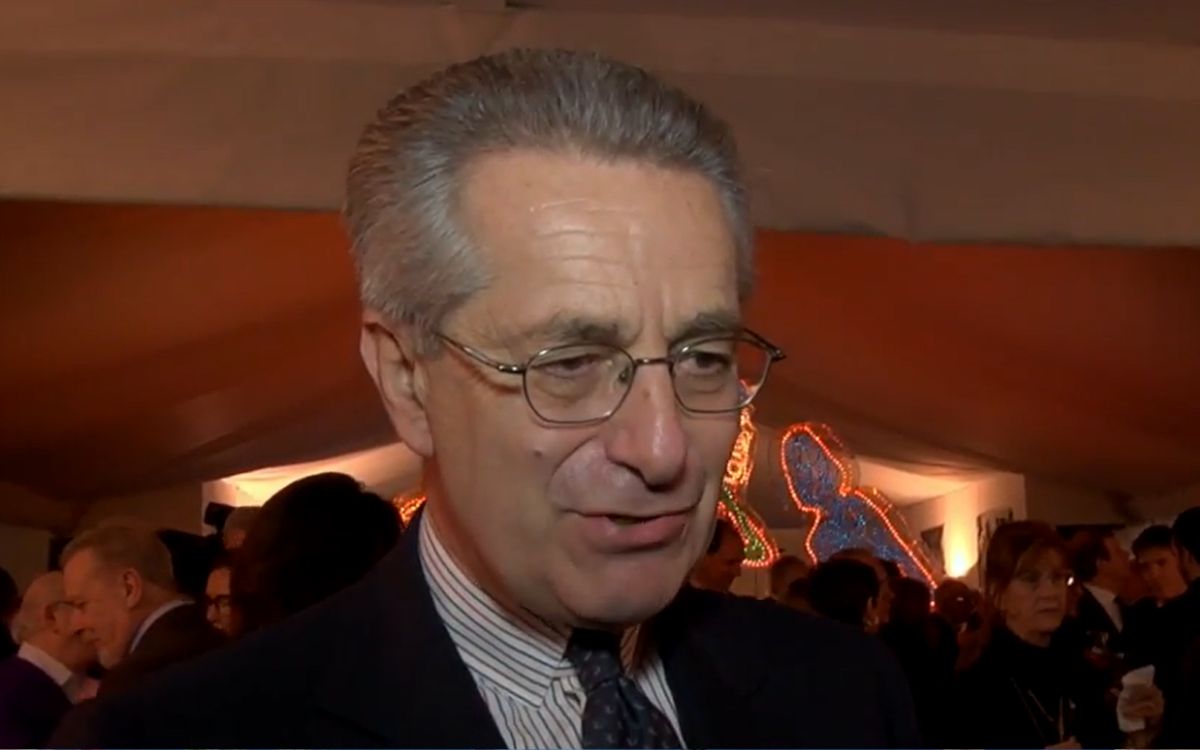
The session of the Peace Implementation Council (PIC) is scheduled for June 3 and 4 in Sarajevo, and during it, according to announcements, the successor to Christian Schmidt should be appointed, while unofficial information indicates that Italian diplomat Antonio Zanardi Landi has the highest chances for that position.
In recent days, the media has been speculating about who the new high representative could be, however, no one yet has a clear picture of who might be proposed, and certain media outlets in the Federation of BiH report that intensive talks are being held regarding this.
“Nezavisne novine” previously published that the USA still thinks the best candidate would be the Italian Antonio Zanardi Landi, while on Friday the portal politicki.ba published that his name has been officially proposed. However, it seems that Europeans are skeptical towards that name and are trying to push forward Rene Troccaz, the special envoy of France for the Western Balkans, for that position. As things stand now, Antonio Zanardi Landi has the most chances for the appointment. He was born in 1950 in Udine, graduated in law from the University of Padua, and began his diplomatic career at the end of the seventies. He was the first Italian to attend the prestigious French school ENA in Paris, an institution through which numerous European statesmen and diplomats passed.
During his multi-decade career, he served in Ottawa, Tehran, London, the Vatican, Serbia, and Russia. From 2004 to 2006, he was the ambassador of Italy to the then state union of Serbia and Montenegro, while from 2010 to 2013, he performed the function of ambassador to the Russian Federation and Turkmenistan. After that, he became a diplomatic advisor to the president of Italy, and today he performs the function of ambassador of the Sovereign Military Order of Malta to the Holy See. Expectedly, the appointment of the future new high representative caused completely different reactions in Republika Srpska and the Federation of BiH. Milorad Dodik, the president of the SNSD, said that the PIC is not part of the Dayton Peace Agreement and nothing good can be expected from it in the future either.
“The only good decision would be to allow the peoples to separate peacefully,” Dodik told reporters on Sunday in Banja Luka. He said that bureaucrats sit in the PIC who convey the views of distant offices that have nothing to do with the reality in BiH, that the PIC imposed itself as an expression of the political will of a part of Western countries, that Russia is not in it today, and that the consensus of decision-making has been collapsed.
“That council acquired power for itself precisely on the positions of policies that were not based on common sense. Is it common-sensical that in one country for 30 years you try to implement one thing? Maybe it isn’t time to give up and try something new?”, asked Dodik. On the other side, in the SDA, the largest Bosniak party, they say that the OHR must remain with full powers and that it is unacceptable to talk about reducing the powers of the high representative while the citizens know nothing about it. They requested from the PIC to communicate to the public whether and what kind of changes are being planned in the functioning of the OHR and present an assessment of how this will reflect on the stability of BiH. “A high representative with full powers has never been more needed. The weakening of his role would additionally encourage anti-Dayton forces and lead to the deepening of the crisis,” the SDA stated.
We remind you, the Office of the High Representative published that Christian Schmidt is leaving the function of high representative, but that he will remain in the position until the appointment of his deputy. This confirmed the writing about the preparation of Schmidt’s departure. According to the information that we published, Schmidt insisted on going into retirement and that he should remain until the next general elections are conducted. A few days ago, former high representatives Carl Bildt and Wolfgang Petritsch called for the abolition of the function of high representative in Bosnia and Herzegovina, considering that international supervision over the country has become an outdated solution that no longer contributes to stability, but maintains political stagnation.
They said then that Bosnia and Herzegovina, three decades after the Dayton Agreement, is a formally sovereign state that still remains under strong external management, which, in their opinion, hampers the development of domestic political responsibility.
MORE TOPICS:
“CYBER WATCH” HAS STARTED OPERATING: Police presented a platform for reporting high-tech crime!
Source: Nezavisne novine Photo: Antonio Zanardi Landi printscreen
 Add Serbian Times as your Google source