




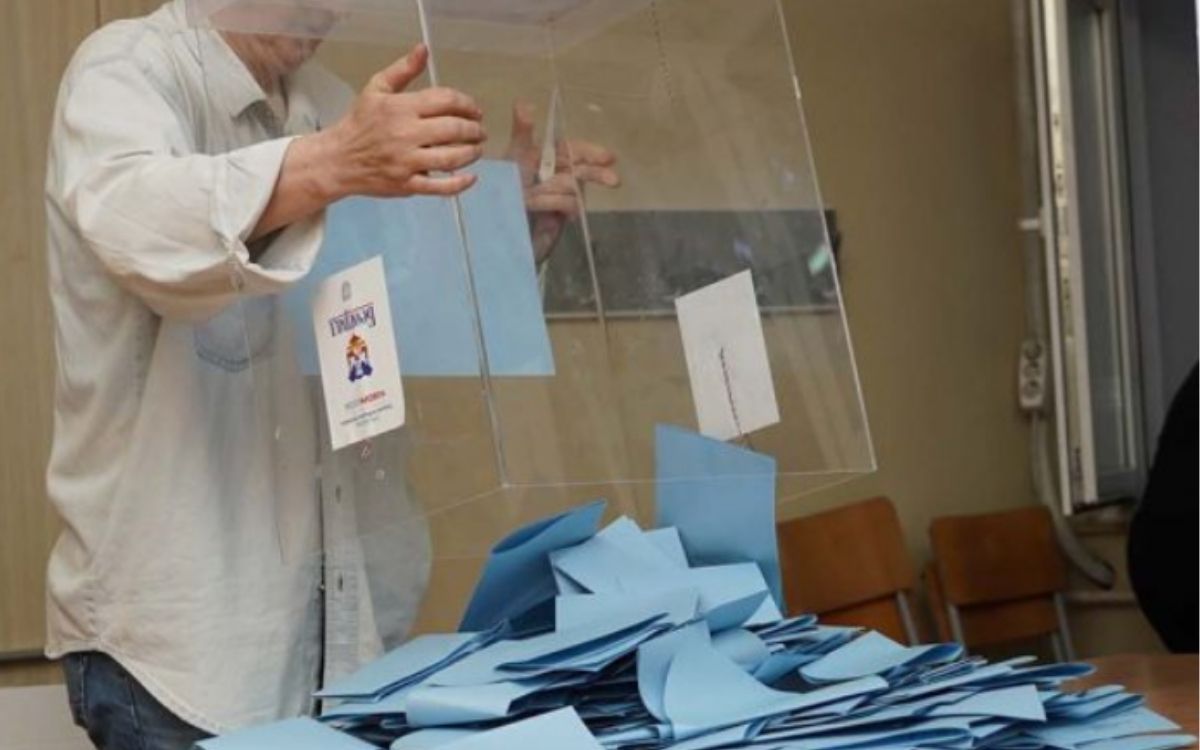
Serbia is heading into parliamentary elections on October 25 with a voter roll that has not only failed to be cleaned up, but which, according to estimates by some members of the Republic Electoral Commission (RIK), the Voter Roll Review Commission and public opinion researchers, contains at least 200,000 people who should not be on it. Cleaning up the voter roll was one of the key recommendations of ODIHR, which is why the Review Commission was established. Its members warned that this had created room for potential election fraud, while Commission member Ognjen Rašuo told Nova that there are around 250,000 registered voters in just six municipalities in Kosovo for which the Ministry of Public Administration and Local Self-Government does not publish data.
Of the 25 recommendations published by ODIHR in February 2024, following the 2023 parliamentary elections, one of the key ones was a review of the voter roll. In an attempt to create the impression that the authorities were working to solve this problem, in February this year, nearly two years after the Working Group for the Improvement of the Electoral Process was established and three months after amendments to the Law on the Unified Voter Roll were adopted, the Commission for the Review, Verification and Control of the Accuracy and Updating of the Voter Roll was formed. It consists of representatives of the authorities, the opposition and civil society.
To be fair, the Commission has held meetings, but opposition members have repeatedly warned that the regime is sabotaging their work, as well as the review of the voter roll, which is a necessary prerequisite for holding free and fair elections.
New information is now emerging that once again raises doubts about the credibility of the number of people registered on the voter roll.
900,000 more than in the 2022 census
Republic Electoral Commission member Sofija Mandić stated that there are as many as 900,000 more voters on the voter roll than there were people recorded in the 2022 population census.
“The number of voters on the voter roll is the same as in 2023, so we have that figure of around 900,000 adult voters that differs from the data in the population census. There is still no effective oversight or effective mechanism to clean up the voter roll. We know that ODIHR stated in its recommendations that a significant review of the voter roll is necessary. That will not happen before these elections,” Mandić told N1.
Similar information is coming from the Voter Roll Review Commission.
Ognjen Rašuo warned that as many as 42 municipalities have more registered voters than residents.
“The record holder is Mali Zvornik. The main reason is people from Republika Srpska who register fictitious residences in order to obtain documents. Our concept of residence is terribly outdated and must be changed,” Rašuo wrote on X.
all in all, 42 municipalities have more voters than residents according to the census. the record holder is Mali Zvornik. the main reason is people from Republika Srpska who register fictitious residences in order to obtain documents.
our concept of residence is terribly outdated and must be changed. https://t.co/Bk767kv5I0 pic.twitter.com/gW6VeUXUvr
— Ognjen Rašuo 🇷🇸 (@ORasuo) September 21, 2026
According to the chart showing the change in the number of registered voters that he shared, Mali Zvornik has 16,136 registered voters, while according to the 2022 census, the municipality has 11,219 residents. It is followed by Preševo with 44,612 voters and 33,449 residents, and Kučevo with 15,262 voters and 11,806 residents.
“Another major problem is municipalities from which large numbers of people work abroad. This is also a problem caused by the outdated concept of residence, under which people can live in Germany for 40 years but still maintain their registered residence in Serbia,” Rašuo added.
Political consultant Dušan Milenković also pointed to the increase in the number of voters.
“In the 2023 parliamentary elections, there were 6.5 million voters on the roll, while now there are 6.7 million. Serbia may lose the population of one Jagodina every year due to negative natural population growth, or one Čačak due to a combination of emigration and negative natural growth, but at the same time we gain that same Čačak in voters every year,” Milenković wrote on X.
Parliamentary elections 2023 — voter roll 6.5 million.
Current voter roll — 6.7 million.
Serbia may lose one Jagodina in population every year due to negative natural growth (NPG), or one Čačak due to a combination of emigration and NPG, but at the same time we gain that same…
— Dusan Milenkovic (@dmilenkovic) September 20, 2026
Political scientist Aleksandar Ivković responded to Milenković’s post and explained that the figure “counts six municipalities in Kosovo where voting never takes place and which are not included in the total number published by RIK.”
“Without them, currently around 6.44 million, but in recent weeks we have had a growing trend…,” Ivković wrote.
The number of voters registered in those six municipalities was published by Ognjen Rašuo, a member of the Voter Roll Review Commission from the Green-Left Front, although the Ministry of Public Administration and Local Self-Government does not publish that data.
What is happening with voters from Kosovo
“In Glogovac, 36,815 voters are registered, in Dečani 31,182, in Đakovica 83,684, in Štimlje 18,095, in Kačanik 32,817 and in Suva Reka 45,442, around 248,000 in total. No polling stations are opened in these municipalities, no voter lists are printed, but these people exist on the voter roll,” Rašuo wrote.
Regarding this, Ognjen Rašuo told Nova that the data published by the Ministry is missing the aforementioned six municipalities in Kosovo, with a total of 248,000 voters.
“When we noticed this, we asked the Ministry why this was the case, but we did not receive an answer. That is one of a hundred things they have not answered us about,” Nova’s source claims.
According to him, some of those registered in these municipalities are internally displaced persons, while some are Albanians who remained on the voter roll because it has never been cleaned up.
“Some of these voters are people with Serbian names who are listed as residing in Serbia and vote where they have their residence as internally displaced persons, which is perfectly fine. People have citizenship and have the right to vote. But there are also a large number of Albanians. This is a consequence of the fact that the voter roll for these six municipalities is not in order and has never been cleaned up, since 1999,” Rašuo says.
Asked whether these voters are removed before elections, Rašuo responds:
“They are not removed; rather, the voter lists for those locations are not published or printed. These people do not vote, and theoretically they cannot even turn out for elections. Polling stations are not opened, neither in Đakovica nor in Kačanik, nowhere,” Nova’s source explains, adding that he does not understand why these people are registered at all.
“I assume this is a legacy that no one wants to touch. We did not receive an official answer from the Ministry to that question, although we should have. Basically, the list from some old period remained. No one can say, ‘Okay, we’ll delete the entire Đakovica from the voter roll,’ so they found some kind of solution to leave them all on it.”
When it comes to the overall increase in the number of voters, Rašuo says that around 60 percent can be explained by the registration of minors who will turn 18 by the time of the elections.
“All minors who will turn 18 by October 25 have already been registered. That is the practice and that is fine, I have no objections to it. This can partially explain such a large increase in the number of voters, some 60 percent of it,” Rašuo points out.
As for the remainder, he says the Commission does not yet have an answer, but is monitoring suspicious registration patterns.
“There are quite a lot of people who simply register because they want to vote. Whether there is manipulation there, I don’t know. But we are looking at whether they appear at suspicious addresses, whether several people are registered at the same address, and on the same day, and then register to vote abroad on that same day. That is already a signal to us that we are dealing with a voter who has a fictitious residence,” Rašuo concludes.
RIK member Tanasije Marinković also pointed to irregularities in the voter roll and stressed that the authorities are acting irresponsibly toward the issue.
We are heading into the elections with an uncleaned voter roll
“This is a very serious undertaking, and in itself it speaks to how irresponsibly this government approaches such an issue. Elections are a way of exercising citizens’ sovereignty, and we do not know, since the unified voter roll is not in order, who the citizens of the Republic of Serbia actually are, who those people exercising sovereignty are,” RIK member Tanasije Marinković told TV Nova.
According to him, the voter roll must first be electronically reconciled with other records, and then “there must be a field check to determine whether these people actually live at the addresses where they are supposedly registered,” which requires cooperation with the Ministry of Internal Affairs.
“Unfortunately, this is a chronic problem, and we will once again reach these elections without a properly maintained unified voter roll,” Marinković stressed.
As a reminder, in February 2024, ODIHR published 25 recommendations for improving electoral conditions in Serbia, and a review of the voter roll was among the seven priorities. The authorities subsequently established the Voter Roll Review Commission, whose members were elected by Parliament on January 28 this year.
Opposition members of the Commission have warned from the outset that it has no real power. In August, Ana Gođevac and Marko Dimić, members of the Commission from the Freedom and Justice Party, appealed to ODIHR because the Ministry of Internal Affairs had not provided them with the requested data on addresses where people who do not live there had been registered in large numbers.
The Ministry of Internal Affairs also did not respond to Nova’s request for data on the residences of 133,114 people who obtained citizenship between 2020 and 2025. The amendments to the electoral laws adopted in May also did not include a review of the voter roll, and ODIHR itself noted that many priority recommendations remained unresolved.
The authorities, on the other hand, claim that ODIHR’s key recommendations concerning the voter roll were incorporated into amendments to the Law on the Unified Voter Roll, which have been in force since November last year, while the May amendments to four electoral laws, proposed by SNS MP Miroslav Petrašinović, were presented as fulfilling another five recommendations.
MORE TOPICS:
Source: Nova.rs, Foto: ATA images
 Add Serbian Times as your Google source