




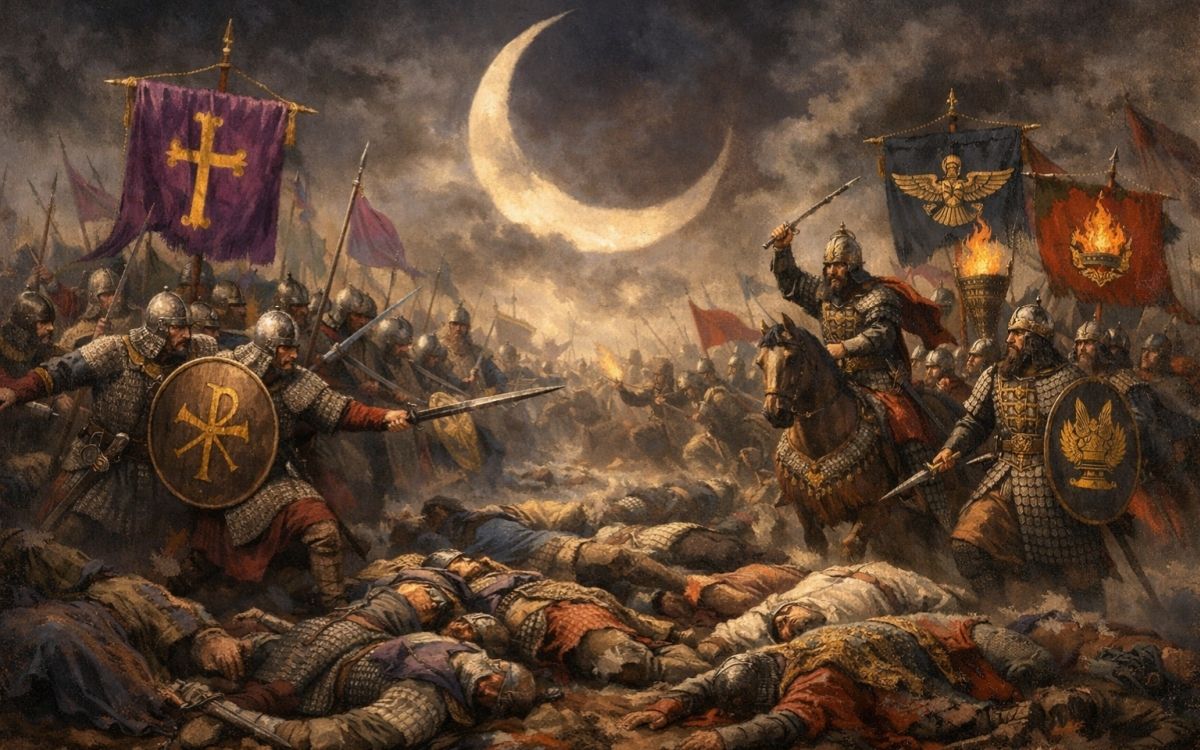
The fates of great empires often break in parallel with the lives of individuals. Few stories from late antiquity illustrate this claim better than the incredible story of the Byzantine emperor Maurice and the Persian shah Khosrow II. At one moment they were extremely close allies and almost friends, only for their relationship a few years later to result in one of the most devastating conflicts between the Byzantine Empire and Sasanian Empire—a war that exhausted both empires so much that they eventually ended up defeated by Arab tribes and the new religion, Islam, which had just spread across the Arabian Peninsula.
Maurice ascended the Byzantine throne in 582, at a time when the empire was exhausted by wars and internal problems. He was a soldier by origin, known for discipline and frugality, but also for his ability to stabilize the empire’s borders.
To the east of the Byzantine Empire stood the greatest long-time rival of the Romans—Persia. Precisely during Maurice’s reign, a drama was unfolding in the Persian Empire that would forever link the destinies of the two rulers. The Persian prince Khosrow II was overthrown from the throne in a military rebellion and was forced to seek refuge with Persia’s old enemies—in Byzantium, at the court of Emperor Maurice.
Although they fought many wars against one another, the Romans and Persians respected each other as two bastions of civilization, and there was mutual recognition of equality in diplomatic relations, in contrast to others who were viewed as “barbarians.”
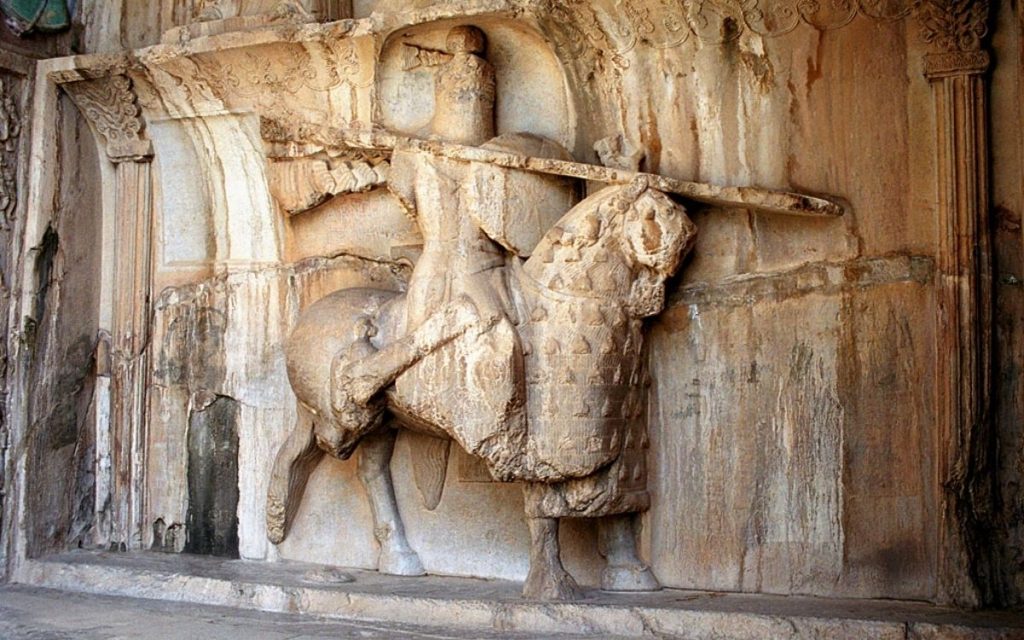
At a crucial historical moment, Emperor Maurice decided to help the deposed prince. The Byzantine army intervened in Persian internal conflicts and helped Khosrow return to the throne in 591. In gratitude and as a sign of friendship and alliance, the shah ceded parts of territories in Armenia and the Caucasus to Byzantium, and a period of peace reigned between the two empires.
It seemed that the two ancient superpowers had finally found a way to stop their frequent clashes. Maurice and Khosrow maintained close diplomatic relations, and some sources even state that Khosrow regarded Maurice as a kind of protector and political father.
However, history sometimes plays in the cruelest way. In 602, dissatisfied soldiers in the Balkans launched an uprising against Maurice, and a soldier named Phocas stood at the head of the rebellion. The Byzantine emperor was overthrown, captured, and brutally executed together with his sons.
News of his death echoed at the Persian court as well. Khosrow II used the death of his former protector as a pretext for war against Byzantium. Claiming that he wanted to avenge Maurice and restore “legitimate authority,” he launched a major military campaign that would grow into one of the longest and bloodiest wars of late antiquity.
The Persian army quickly penetrated deep into Byzantine territories. Damascus, Jerusalem and Egypt fell, and it seemed only a matter of time before the Romans would have to surrender. By an irony of fate, the war that began under the pretext of avenging Maurice would turn into a struggle for the survival of both great empires of antiquity.
The conflict lasted almost three decades and exhausted both empires to the limit. In the end, the Byzantine emperor Heraclius managed to turn the course of the war and defeat Persia, but the price was enormous. Both empires emerged from the conflict weakened and exhausted.
Fate was equally cruel toward Khosrow II. After the defeat, he was overthrown by his own son, and the shah was soon executed. Thus both rulers—Maurice and Khosrow—ended their lives violently and tragically.
The story of Maurice and Khosrow II remains one of the most striking examples of historical irony. Two rulers who tried to end the centuries-long conflict between their empires ultimately became symbols of their collapse.
Only five years after Khosrow’s death, while Byzantium and Persia were emerging from a long and exhausting war, a new force appeared in the south of the Arabian Peninsula. United under the banner of Islam, Arab tribes began a series of conquests that within just a few decades changed the map of the Middle East.
The Persian Empire, already weakened by internal turmoil and war with Byzantium, fell relatively quickly to Arab armies in the mid-7th century. Byzantium managed to survive, but it lost enormous territories: Syria, Palestine and Egypt. Thus the lands that had for centuries been the battleground between two great empires became part of the new Islamic world, while the old order represented by Maurice and Khosrow II disappeared forever.
MORE TOPICS:
Source: Serbian Times; Foto: Chat GPT prompt by Serbian Times
 Add Serbian Times as your Google source