




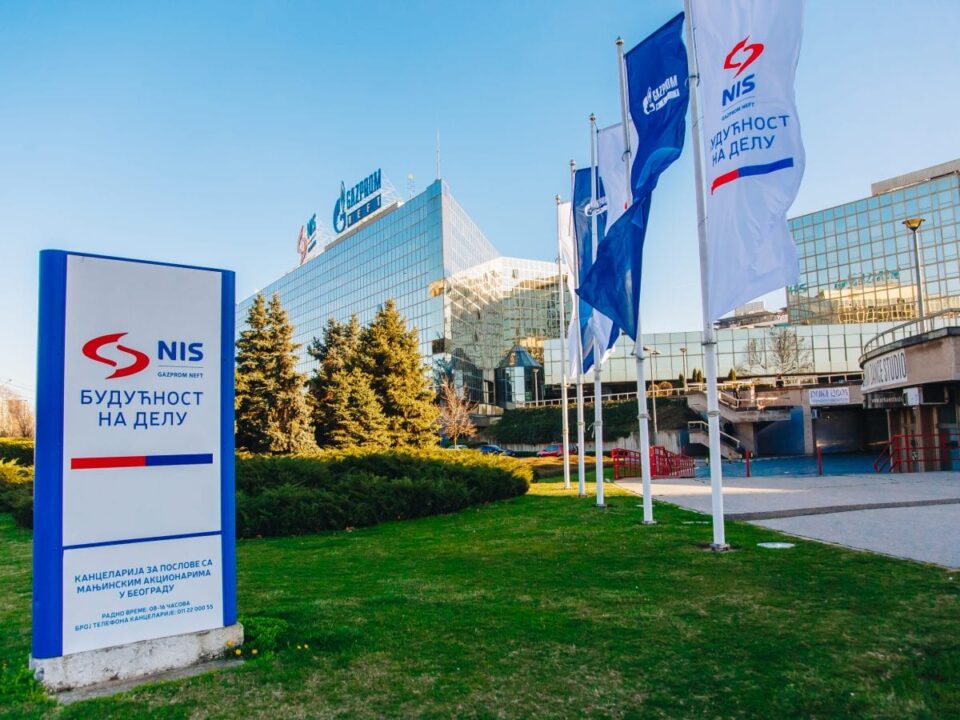
According to the announcement of Serbian President Aleksandar Vučić, the US is imposing sanctions against the Serbian Petroleum Industry (NIS) from the New Year, which could lead to significant economic and political consequences for our country. The official document has not yet reached the doors of the Serbian authorities, and according to information from “Blic Biznis,” not even to the address of NIS, so one can only speculate about its contents.
This is a document adopted in mid-November, on the eve of the US presidential elections, and could prohibit Serbia, more precisely NIS, from importing oil because this company is majority-owned by Russia.
One option is to cancel SWIFT for NIS, i.e., block payments for crude oil and if it manages to procure it somewhere. Another, perhaps more likely version, is to ban transportation via JANAF, or the Croatian pipeline through which it arrives at the Pancevo refinery. This is especially so since the two-year contract concluded between NIS and JANAF expires on December 31, so it is logical to assume that it will not be extended.
Under that contract, NIS reserved JANAF’s capacities for the transport of 6.2 million tons of crude oil (plus or minus 10%) on a “full for empty” basis. Moreover, the least amount of Russian oil was transported through this pipeline, but mostly, two-thirds, from Iraq and Kazakhstan.
In such a scenario, if no additional time is given for Serbia to cope with this situation, the problem could have significant economic consequences, as from January, NIS could only rely on the reserves it has and those that the Serbian state has in its reserves. This could jeopardize the functioning of the economy, and for this reason, Serbia is urgently seeking a solution because otherwise, raw materials will not reach the Pancevo refinery for processing. One solution would certainly be an attempt to reduce the stake of the majority owner, Gazprom Neft and Gazprom, which is currently 56.15%, to below 50%. However, the question is whether and under what conditions the Russian partner will agree.
President Aleksandar Vučić himself does not yet know in which direction this could go and how much it would cost Serbia.
– This is probably the toughest sanction. We have to wait for the final act. We will have talks with Russia to see if (ownership) can be reduced just below 50%, so that we can buy one part. Or we can’t at all, I don’t know. I will talk to the Americans as well – Vučić told Informer.
According to the data of the Central Registry of Securities, Gazprom Neft and Gazprom own 56.15% of the former state giant, while 29.87% is owned by the Republic of Serbia, and the rest is in the hands of minority shareholders and citizens. In 2008, Serbia sold 51% of the shares of the Serbian state-owned oil company NIS to the Russian company Gazprom Neft without a tender for 400 million euros as part of the oil and gas arrangement between Serbia and the Russian Federation.
It is uncertain what will happen in such a scenario with Petrochemistry, or the strategic agreement that was signed last year. This loser could again fall on the backs of Serbian taxpayers, and planned investments could also fall through. There is also the gas agreement that was bundled in 2008 when NIS was sold, which means the fate of Srbijagas as well. Gazprom is the sole supplier of gas to Serbia and the majority owner of both pipelines through which gas from Russia is supplied to households and industry in Serbia.
FIND OUT MORE IN SERBIAN:
Could “Druzhba” be a salvation?
The Serbian government anticipated that such a situation might occur, so it announced the construction of a new oil pipeline with Hungary between Novi Sad and the town of Alđa, through which the energy source would be transported overland directly from the Druzhba pipeline, the longest in the world, which stretches for 4,000 kilometers between Russia and Germany.
The agreement on the pipeline was signed on June 21 last year, and the investment is worth more than 150 million euros. Construction should take between 12 and 24 months.
The situation is extremely complicated, and if SWIFT is also canceled, then NIS, even if it managed to buy crude oil on the world market, would not be able to pay. At the same time, that option raises the question of who would sell black gold to a company that America has imposed sanctions on. NIS already has problems with some world companies that do not want to do business with a company that has a majority Russian capital.
NIS: Business currently unaffected
NIS told Blic Biznis that business is currently operating without interruption.
– The company remains focused on continuing the implementation of the initiated investments and on maintaining stability in the domestic market of petroleum products. The supply chain of NIS gas stations is regular and the Pancevo Refinery is operating in normal mode, and is supplying the market with all necessary petroleum products. NIS continues to monitor the current situation and analyzes all possible scenarios and potential consequences for the company’s business and currently there are no legal restrictions on the activities of the company and our partners – they say in NIS.
MORE TOPICS:
Izvor: Blic, Foto: NIS
 Add Serbian Times as your Google source