




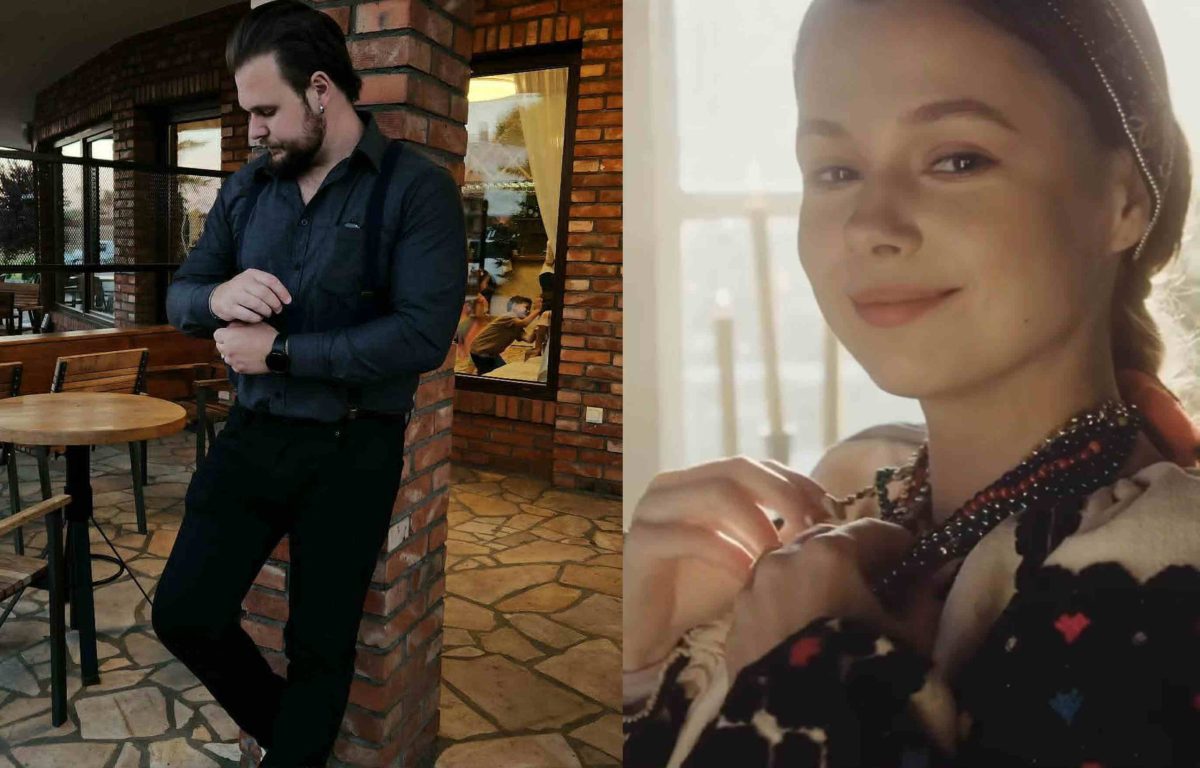
In recent days, tens of thousands of people across social media have liked and shared the first-ever musical adaptation of “Jela,” a poem by Aleksa Šantić. The verses of the great Serbian and Yugoslav poet, wrapped in a breathtaking, delicately crafted musical arrangement, have resonated throughout the Balkans. The editorial team at Serbian Times tracked down the man behind the project.
We found Damir Mrkaljević, a native of Jagodina, somewhere between Germany and the Brčko District—a route he frequently travels while working as a project manager for an international company.
But it wasn’t his day job we wanted to discuss. Instead, we wanted to talk about his passion: music and poetry. Damir has dedicated his life to researching sevdah, old songs, and forgotten stories, a subject he is currently exploring in a book titled “Following the Trail of Sevdah.”

FOLLOWING THE TRAIL OF SEVDAH: Damir Mrkaljević Devotes His Life to Preserving Musical Tradition
Mrkaljević doesn’t just love sevdah and traditional sevdalinka songs—he creates them as well. He is the founder of Strigoi Studio, a project through which he has arranged and set to music numerous centuries-old poems and lyrics in the spirit of the past while using cutting-edge technology, including artificial intelligence, which also helps him create accompanying videos for the songs.
“I launched the Strigoi Studio project about four months ago with the goal of exploring old, forgotten songs, stories, and texts. I decided to turn them into music in the hope of preserving them and introducing them to younger generations. Of course, I also wanted to do something for people who still love sevdah, which is becoming increasingly rare—to give them a place where they can still enjoy it, even if our mainstream media no longer offers much of it. Especially today, when so much modern music, in my humble opinion, has gone to extremes,” Damir told Serbian Times.
Mission accomplished. By following his own passion, Damir has inspired countless others.
“Honestly, I’m still amazed by how much positivity and love this music awakens in people. My audience literally comes from every country of the former Yugoslavia, as well as from abroad. Members of the diaspora contact me from all over the world—including you from distant Chicago. Alongside the music, I’m also working on a book that explores the stories behind some of the most famous sevdalinka songs—how they came to be, the history behind them, and much more. The book will be titled ‘Following the Trail of Sevdah.’ More information about the project, the music, and the book can also be found on the Strigoi Studio website.”
Although it may not be immediately obvious, Damir relies on artificial intelligence in a highly sophisticated way while composing.
“I play the piano, compose music, and develop it digitally. Of course, it’s all on an amateur level because I’m an IT professional by trade, and music has always been something I do for the soul. But the arrival of AI has allowed me to take it to a much more serious level. Since modern times have given us all these technologies, why not use them? As for the vocals, I use a combination of AI-generated voices based on my own voice and voice samples from my girlfriend. I write and prepare all the music myself, so every song represents a tremendous amount of work.”
Aleksa Šantić’s Poetry Is a Constant Source of Inspiration
“Whenever someone mentions sevdah, Šantić is the first person who comes to mind. His life and his poetry embody the true, authentic spirit of sevdah for me. His verses already contain music within them—that longing, emotion, Mostar, love, but also a unique charm and elegance of expression. His work strikes a delicate balance: on one side there is beauty and warmth, and on the other a seriousness and depth that isn’t always immediately apparent,” our interviewee said before concluding:
“And sevdah is a story unto itself. To me, it is the music of the Balkans—longing, love, sorrow, pride, separation; music that never expires. Unfortunately, I believe we’ve neglected it somewhat because of commercial music that often lasts only one season before being replaced by the next trend. Sevdah, on the other hand, endures. It has a soul. It has roots. That’s why I believe it’s worth preserving and introducing to new audiences in a way they can truly connect with,” Damir Mrkaljević concluded.
Text: Antonije Kovačević Foto: Privatna arhiva
MORE TOPICS:
 Add Serbian Times as your Google source