




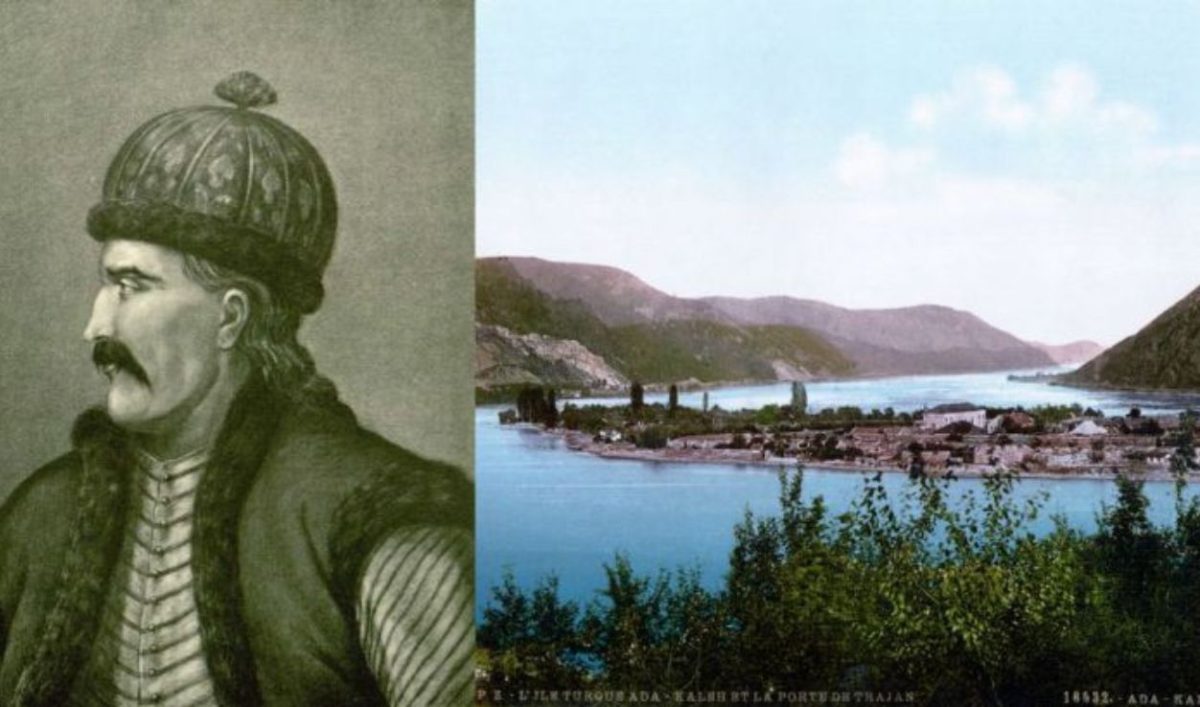
The history of Serbia is often filled with stories that resemble mythology more than reality. Yet, some can be said to be true despite testimonies that seem truly impossible. Such an episode is the story of the island of Ada Kale and Duke Milenko.
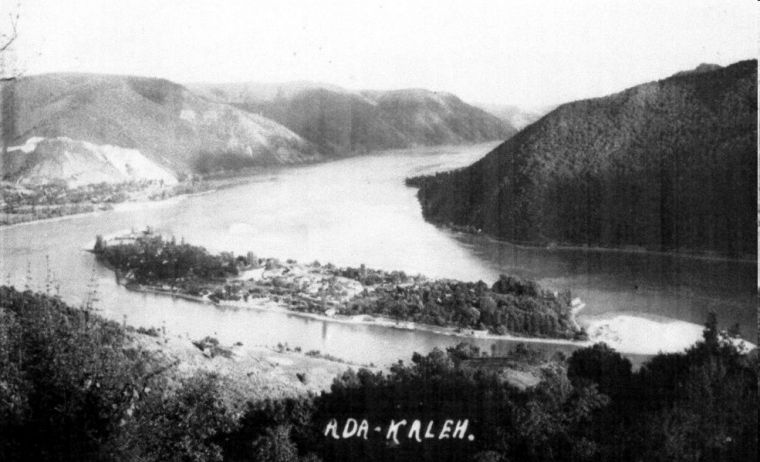
Ada Kale was a former island and settlement on the Danube, near Kladovo, on the Romanian side of the border. It was 1750 meters long and 500 meters wide, and it disappeared more than 40 years ago. Although the water swallowed it when the Iron Gates hydropower plant was built, the island of Ada Kale is more than present in historical records.
The ancient Romans were the first to build a fortification on this island, and others were built on their foundations, so it almost always served military purposes. Ada Kale was strategically crucial because control over the island allowed control of navigation through the Iron Gates.
It was here, on July 25, 1804, during the First Serbian Uprising, that a pursuit led by Milenko Stojković captured and executed the four Belgrade Dahias: Aganlija, Kučuk Alija, Mula Jusuf, and Fočić Mehmed-aga. What followed resembles a myth more than historical reality.
THE LOST ISLAND
In the summer of 1804, during the mission of Bećir Pasha, a decision was made to execute the Turkish Dahias, whose cruel rule had caused popular discontent. Milenko Stojković was designated by both Serbian and Turkish authorities, from whom the Dahias had rebelled, to carry out the sentence.
With a company of 27 chosen men and 10 men assigned by Redžep-aga, the commander of Ada Kale island, Stojković set off for the island where the Dahias had hidden.
Disguised, during the night, Stojković went to Redžep’s uncle Ibrahim and handed him a written order from Bećir Pasha and Redžep’s letter, explaining why he had come and who sent him. A frightened Ibrahim revealed to him the house where the Dahias were hiding, and on the same night, between July 25 and 26, Milenko attacked them. The battle reportedly lasted eight hours without interruption.
When the Dahias were liquidated and their heads, except Aganlija’s which was dropped into the Danube during washing, were brought to Belgrade, they were first handed over to Redžep-aga, the Ada Kale commander.
Milenko Stojković then established his reputation as a fearless hero, which he confirmed in later battles – he allegedly lost no battles, only achieved victories.

Milenko Stojković achieved great military success in the Battle of Ivankovac, after which the rebellion against the Dahias grew into a general popular uprising against Turkish rule.
In the first days of January 1806, Milenko and the insurgents penetrated the Negotin Krajina and captured the fortified Poreč on the Danube, and the following year, leading fierce battles at Štubik and Malajnica, he created conditions for the Russians to cross to the right bank of the Danube on June 17/18.
The battle for liberation lasted three weeks. The arrival of Karađorđe with reinforcements allowed the besieged Serbs at Štubik to be freed. After that, Milenko Stojković, together with Vožd Karađorđe, met the Russian commander Michael Isayev on Veliko Ostrvo (Big Island). There, Karađorđe proclaimed Stojković a Duke.
THE LEGEND OF THE HAREM
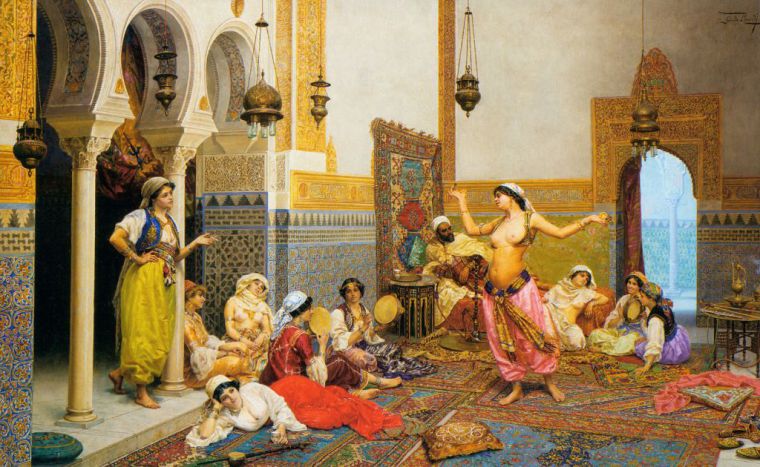
When he conquered the Turkish fortress in Ram, on the bank of the Danube, Milenko captured several women from the city commander’s harem and established his own harem. Before that, he converted all the women to Orthodox Christianity.
After the defeat of the Turks in Belgrade in 1807, many women became widows and children orphans. A large number of them lived on the streets of Belgrade, begging for survival. Serbs organized boat transport for these people back to Turkey, but Duke Milenko awaited the boats in Poreč on the bank of the Danube, where he had his fortification.
Among the passengers, he chose the most beautiful girls and women, with whom he “supplemented” his harem. Somewhere around that time, his lawful wife, who lived in Kličevac, died, so he remarried Milena, the widow of the Krajina district prince.
The Turkish women from the harem served and attended to him, and he often took them with him on his travels.
According to legend, when he “tired” of some, he would find them a husband among his servants or soldiers and give her a dowry. At the same time, he allegedly gave Serbian childless women children that some of the women “brought with them into the harem.”
Records from that time note that the total number of women in his harem amounted to about 42.
However, Milenko’s glorious days did not last long, as after the defense of Deligrad only two years later, he quarreled with Karađorđe, after which he was deprived of command of the insurgent army.
By 1811, the rift between the two deepened further as Stojković advocated for limiting the Vožd’s supreme authority and decentralizing administration. Stojković came into direct conflict with both Karađorđe and the elders, and when he refused to accept the duty of Minister of Foreign Affairs, it cost him exile from Serbia.
The conflict with Karađorđe was the reason for Milenko to flee across his beloved Danube, which had brought him so much glory. Before leaving Serbia, he disbanded his harem, not allowing any of the women to face an uncertain fate.
He allegedly gave each of them freedom and enough money to choose the life they would lead. Stojković went to Russia, where he was retired with the rank of colonel. According to some written documents by Vuk Karadžić, Milenko Stojković died in a small town in Crimea on the Black Sea coast in 1831.
About 140 years later, the island of Ada Kale, which first inscribed Duke Milenko Stojković in history, also disappeared.
MORE TOPICS:
THE WORLD PAID TRIBUTE TO THE SERBIAN PHOTOGRAPHER: Pavel won three medals in Portugal!
Source: Dnevno.rs; Foto: Wikipedia Creative Commons
 Add Serbian Times as your Google source