



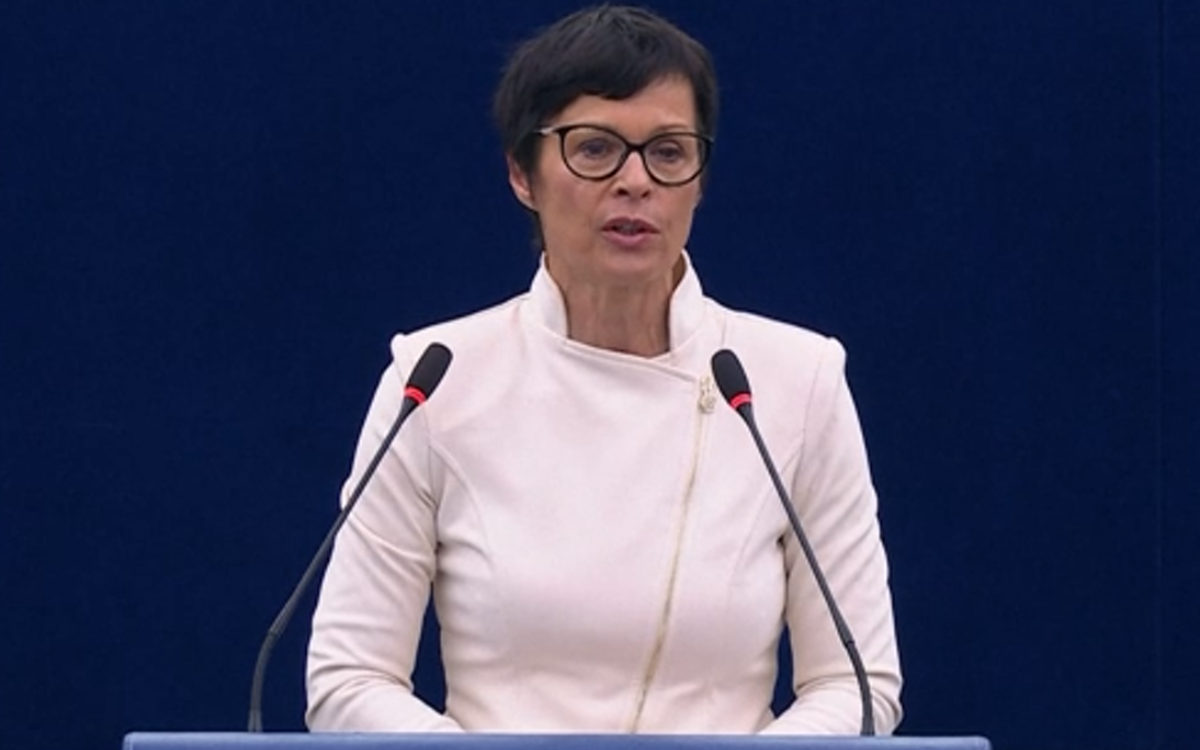
The collapse of the canopy in Novi Sad has become a tragic symbol of systemic corruption, nepotism, and inadequate control mechanisms that should protect citizens but do not, said the Rapporteur for Serbia, Tonino Picula, in his first report on Serbia in the European Parliament. He described the political situation in Serbia as one where the media are mostly not free or accessible to all, REM (Regulatory Body for Electronic Media) is not functioning, the judiciary selectively administers justice, and those who point out problems are exposed to public attacks.
Picula said that he wrote his report in conditions that implied undiplomatic practices, unfounded accusations, manipulations, and personal attacks.
“Despite this, I approached this task professionally, with the best intentions, firmly believing in the openness of the common European project, the transformative potential of joining the European Union, and the benefits it brings to the citizens of member states, as well as candidate countries,” he said.
Tonino Picula presented his analysis of the current political reality in Serbia.
“And that political reality has been extremely complex for a long time, especially in the last six months. The collapse of the canopy in Novi Sad, when 16 citizens lost their lives, became a tragic symbol of systemic corruption, nepotism, and inadequate control mechanisms that should protect citizens. Today, we are discussing the situation in a country where the electoral legislation has serious shortcomings. The media are mostly not free or accessible to all, the regulatory body for the media is not functioning, the judiciary selectively administers justice, and those who point out problems are exposed to public attacks,” said Picula.
Likewise, the personal data of those who protest is published publicly.
“Unidentified illegal means are used against them, which are then investigated by the Russian services. European Union citizens are being detained and expelled from the country due to their status on social networks, and member states of the European Union and their representatives are accused of being behind the so-called colored revolution,” he said.
In addition, Serbia persistently refuses to align itself with the geopolitical orientation of the European Union and to impose sanctions on Russia, he added.
“Despite some progress, primarily in the area of the competitiveness and inclusive growth cluster, Serbia still faces major obstacles that it must overcome. Improving internal political dialogue, the rule of law and the fight against corruption, reaching a comprehensive agreement on the normalization of relations with Kosovo, and full alignment with the European Union’s foreign policy are needed. There is a lack of assurance of the independence of key institutions, including REM, and the full implementation of all OSCE and Council of Europe recommendations on electoral reform, in a transparent and inclusive process. Certainly, before new elections, which would be of key importance, all of this is also emphasized by the Commission in its reform plan,” he said.
Picula predstavio izveštaj o Srbiji u EP: Pad nadstrešnice postao simbol sistemske korupcije i nepotizma | TV N1 06.05.2025. #EU @n1srbija @TPicula pic.twitter.com/WqjOTuMvTq
— Jeremija (@4nbgd) May 6, 2025
Economic data, even if improved, cannot be the only measure of success, because the European Union is not just a common market, Picula said.
“In the last decade, the EU has invested billions of euros in Serbia, but public perception, and even the communication of Serbia’s leaders, mostly does not reflect this. Often, economic growth is also based on non-transparent contracts that are exempt from the application of the public procurement law. Such contracts, in addition to economic impact, also have a direct political influence,” he added.
For this situation, the European Union must also assume its, certainly smaller, share of responsibility, Picula said.
“From political messages about the progress of the rule of law, bilateral trade agreements of the largest members, to very low rates of investment of European money where it brings the greatest transformational benefit, strengthening the judiciary and the fight against corruption,” he assessed what the EU needs to do.
He addressed Marta Kos and said that she had sent some important messages to Serbia.
“At the same time, the statements of Serbia’s leaders about formal commitment to European integration sound truly unconvincing, while this week they are planning a trip to Moscow and new energy agreements with Russia, and there are no necessary reforms in sight that are key to a successful European path. After all, joining the Union is primarily the responsibility of the member state, not an alibi to avoid its own responsibility for the problems in the country,” Picula said.
He addressed the Serbian students who are running to Strasbourg, and then to Brussels.
“I appreciate their dedication and struggle. I have clearly heard their messages from the very beginning, and in the report, I emphasize the same goals they advocate for. Since they, as young people, represent the future of their country, the government’s attitude towards them speaks much more than any party programs about the future. The European Parliament, as the institution that ultimately votes on the accession agreement, will remain the loudest speaker of enlargement. But we want that process to be based on merit, real reforms, and clear alignment with European values and the geopolitical positions of the European Union,” he concluded.
FIND OUT MORE IN SERBIAN:
Address by Marta Kos
“The European Commission is committed to supporting Serbia on its EU path. Accession is more than a technical process; it is a decision to embrace a future rooted in democracy and dignity, and this is only possible if the whole society participates in it,” said European Commissioner for Enlargement Marta Kos.
“During my visit to Serbia, I spoke with political leaders, students, representatives of civil society, university professors, women who shape public life. At all meetings, with everyone, I conveyed the same message – Serbia has a historic opportunity to join the European Union. Accession negotiations will require determination and leadership. Reforms are necessary, and not because of Brussels, but for the well-being of Serbian society, and this is the same thing that citizens have been demanding on the streets for five months,” Kos said in the European Parliament.
She stated that Serbia needs to accelerate its efforts and provide concrete results in the fight against corruption and strengthen the rule of law.
“The independence of the judiciary must be protected, the media must be independent, electoral reforms must ensure that every citizen can vote with confidence in the system. These reforms are not only crucial for Serbia’s progress on the European path, but they are imperative for overcoming the current political crisis and divisions in Serbian society. Civil society must have space to operate, independent voices must be heard and protected, and we must work together to be resilient to disinformation and manipulation that weaken the social fabric and undermine democratic trust,” the Commissioner said, adding:
“Intimidation cannot be tolerated. I welcome the launch of elections for new members of the REM Council, and this process should include all relevant stakeholders. If this were done, it would be a key step in restoring trust. We must reunite all political actors, civil society, all together, to fulfill all the obligations that Serbia committed to last December, which is the election of REM, the adoption of other media laws, and the adoption of recommendations for judicial reform. Being in the EU does not only mean sharing benefits but also responsibility. The Union is based on common values, including foreign policy. At a time of Russian aggression on the European continent, interaction with Russia cannot continue as if nothing had happened; it cannot be business as usual. Silence calls into question the very principles that are key to security and peace, and these are also key values of the EU. We face great challenges, and we can only deal with them together. Together,” said Marta Kos.
She also stated that the EU wants to focus on a common future in a more united and secure Europe.
“Serbia’s progress also implies improving relations with Kosovo; this is important for regional stability and the path towards European membership. Constructive leadership in the region is very important for our cooperation. We want a democratic and prosperous Serbia within the EU. This was also the vision of Zoran Đinđić, who dreamed of a Serbia that would be in the family of democratic and developed European countries, and therefore I count on your support,” said European Commissioner for Enlargement Marta Kos in the European Parliament.
MORE TOPICS:
“SERBS IN KOSOVO ARE NOT FORGOTTEN”: After a 10-day march, students from Belgrade arrived in Zvečan!
Source: N1, Photo: N1