




According to Politika, Hungary’s latest attempt to disrupt aid to Ukraine is not about the money; it would penalize the EU. It involves forming a friendship with Donald Trump.
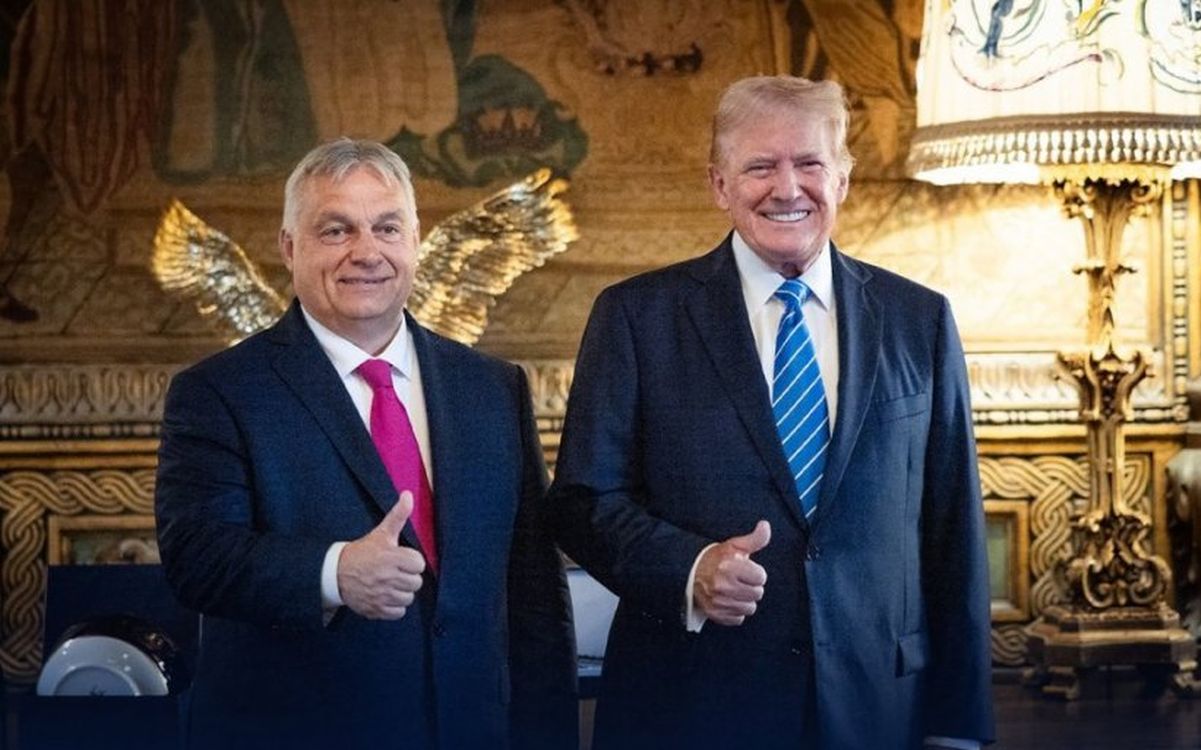
Hungarian Prime Minister Viktor Orbán is preparing to deliver a significant political gift to his best friend across the Atlantic, former U.S. President Donald Trump.
He has devised a way to allow Trump, if he successfully returns to the White House for a second term in November, to escape a $50 billion loan offered to Ukraine by the U.S., the European Union, and G7 leaders to support its fight for survival against Russia.
This would enable Trump to tell Republican voters that if elected, he would not give Ukraine a cent.
FOLLOW US ON FACEBOOK:
Hungary states that it will not agree to a rule change that would allow Washington to play a major role in the loan until after the U.S. elections.
The loan would be fully repaid using unexpected profits from over $250 billion in Russian assets that have been immobilized across Western countries following Russia’s attack on Ukraine in February 2022.
Washington insists that the EU should extend the sanctions renewal period to at least 36 months. Under current rules, EU sanctions are renewed every six months, increasing the likelihood that a country might unfreeze assets, forcing national governments to use taxpayer money to repay the loan.
While every other leader supports extending the sanctions period to 36 months as requested by the U.S., Orbán rejects it. According to EU rules, all 27 member states must approve any changes to sanctions rules.
Ukraine urgently needs new financial resources from its Western allies to keep its government functioning and prepare for what is expected to be a brutal winter as Russia targets the energy infrastructure of the war-torn country.
Now, thanks to Orbán, it is unlikely that the U.S. will significantly participate. However, Europe will likely move forward.
“If we do not resolve this by extending the duration of sanctions, it will cost the EU, including Hungary, more money,” said one unnamed EU diplomat.
The costs for European countries, including Hungary, would be higher than if the U.S. had been part of the program. However, for Orbán, this is a small price to pay. The advantage for him is that he will gain much-needed goodwill from his Republican friend.
“Hungary does not care if Europe has to pay more. It’s about helping Trump,” said another EU diplomat.
If Brussels and Washington jointly take on the €35 billion loan, a reelected Trump would be tied to servicing it for years. But if the loan is approved without the U.S., he would not have such an obligation.
Orbán’s blocking of the loan is the latest example of alignment between Trump and the Hungarian prime minister, who met just in July at Mar-a-Lago. Speaking to reporters in Brussels, Orbán stated he would drink “a few bottles of champagne” if Trump defeats Kamala Harris in November. The two seem to be marching in step regarding Ukraine.
What appears to be a technical dispute is a critical consideration for Washington and could be enough to fracture transatlantic unity on support for Ukraine, at least on the financial front.
While Orbán threatens to use his veto in Brussels, the U.S. has signaled that it is considering participation in the loan, albeit with a significantly lower amount, even if the EU cannot extend the sanctions period, said a third EU diplomat and European Commission official.
One option involves Washington contributing $5 billion, roughly equivalent to the amount of Russian assets held in the country, while still leaving Europe to bear the lion’s share of the bill.
The Commission official believes that the U.S. does not want to arrive “empty-handed” at the G7 finance ministers meeting in Washington at the end of October, which is likely to decide the fine print of the $50 billion loan.
Perhaps more importantly, Japan has recently signaled that it might withdraw from the loan if the U.S. does not participate.
For now, all eyes are on the EU leaders’ summit this week in Brussels.
If Hungary refuses to budge on the sanctions duration, the EU will likely finalize the loan on its own terms, as its budgetary rules significantly facilitate obtaining payment approvals from national capitals before the end of the year.
The EU is rapidly planning to pay up to €35 billion to Ukraine, covering the U.S. share of the loan, and this should be finalized by the end of October. However, governments in the EU seeking funds do not want to increase their contributions to cover the shortfall from the U.S.
READ MORE:
Source: Kurir
Photo: Profimedia
 Add Serbian Times as your Google source