




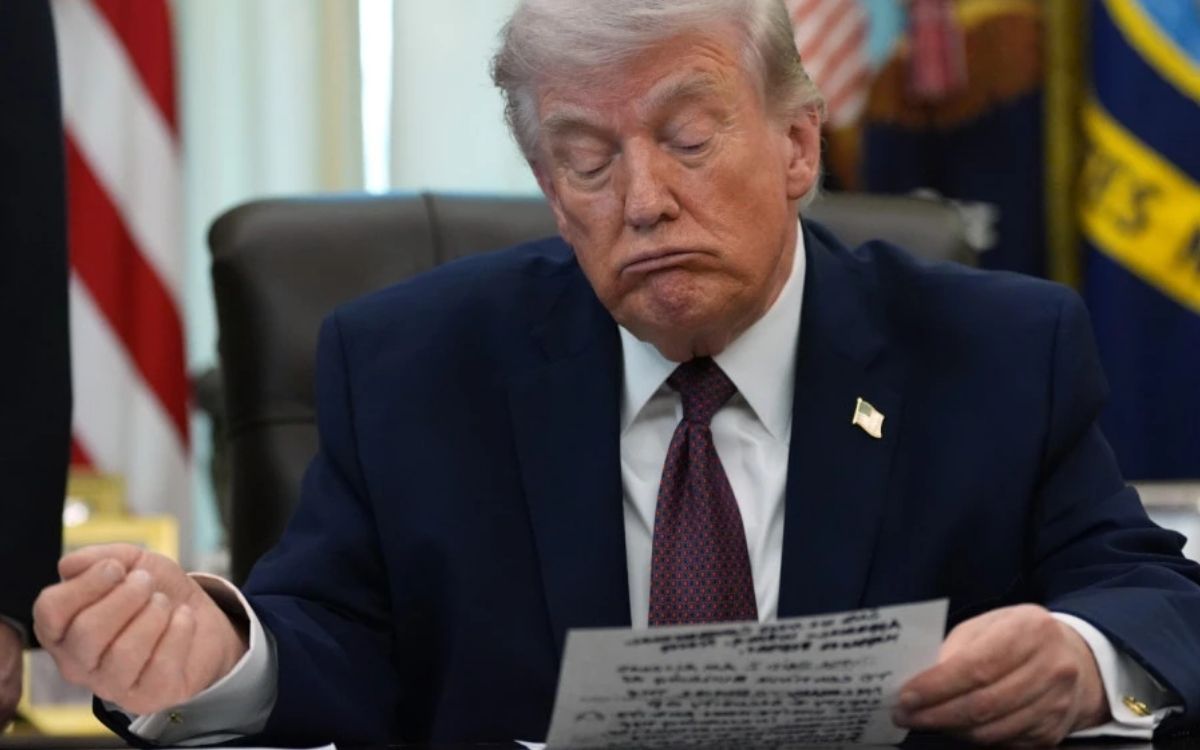
The US midterm elections, popularly known as Midterm Elections, taking place tomorrow, will be a crucial political test for Donald Trump’s administration and will determine the direction the United States takes over the next two years.
Americans will vote tomorrow for all 435 members of the House of Representatives, who serve two-year terms. They will also elect 35 of the 100 members of the US Senate, and the results will determine whether Trump spends the second half of his term as an all-powerful leader or faces another impeachment proceeding — the process of removing a president from office.
Republicans currently control both chambers of Congress. Historically, the party of the sitting president loses an average of around 26 seats in the House of Representatives and several seats in the Senate during midterm elections, but all indications suggest that Republicans, led by Trump, could lose even more than that.
Democrats have a strong chance of taking control of the House of Representatives, which would give them authority over legislative committees and federal spending.
The Senate race is somewhat less certain because only one-third of its seats are being contested, mostly in traditionally Republican states. However, polls indicate that Democrats have a realistic chance of challenging this majority as well.
The election results will directly determine how much power Trump retains until the end of his term.
Under the first scenario, which most analysts are also anticipating, Democrats take control of at least one chamber of Congress, making it extremely difficult for Trump to pass any federal legislation or budget without reaching a compromise with the opposition. However, he would still retain the right to veto bills proposed by Democrats.
Democrats would take control of congressional committees, allowing them to launch official investigations into White House decisions, allegations of corruption and the administration’s conduct. Furthermore, as anticipated, a Democratic majority in the House of Representatives could once again initiate impeachment proceedings against Trump.
By losing control of the Senate, Republicans would give Democrats the power to block Trump’s nominations for federal judges, who are appointed for life, as well as members of his Cabinet. This would have long-term political consequences.
Key Issues at the Center of the Campaign
The candidates’ campaigns in recent months have revolved around several divisive issues that deeply divide American society:
The economy and the cost of living come first. This is by far the most important issue for the average voter. Rising prices and inflation have caused widespread public dissatisfaction, and voters are unlikely to forgive Trump for this.
As for foreign policy, along with fuel prices, which are closely connected to it, the key debate centers on whether the war in Iran is justified and the closure of the Strait of Hormuz, which has led to a sharp increase in fuel prices in the United States and directly affected Americans’ wallets.
On the other hand, border security and immigration policy remain among the main campaign issues for Republicans, as they have achieved some tangible results in these areas.
In their campaign, Democrats have placed strong emphasis on protecting democratic institutions and the rule of law, presenting these as key reasons why voters should turn their backs on Republicans and vote for them.
What Will Determine the Election Outcome, According to Analysts?
Analysts believe that the outcome will depend on three key factors:
The first is what is known as a “referendum on the president.” Midterm elections are traditionally viewed as an assessment of the sitting president’s performance. Trump’s currently low approval rating, which stands at around 30% in some polls, is pushing moderate and undecided voters toward the Democrats.
Voter turnout and mobilization in “swing states” is the second important factor, with many believing that the outcome will be decided in a small number of highly competitive districts. CBS News has identified 10 key Senate races, including those in Iowa and New Hampshire, and 42 House races, including those in Arizona and Ohio, that will determine which party gains the upper hand.
The third factor is the drawing of electoral maps, known as gerrymandering. Both parties have attempted, ahead of the elections, to redraw district boundaries in states where they hold power in order to give their candidates an advantage, making the House of Representatives races even more unpredictable.
Elections in Illinois: Pritzker Seeks Historic Third Term
1.
In these elections, Illinois will choose one of its two representatives in the US Senate for a six-year term. The seat became vacant following the retirement of longtime Democratic Senator Dick Durbin.
Illinois residents will also elect the state’s chief executive, the governor, for a four-year term.
Illinois is considered one of the Democratic Party’s safest strongholds in the Midwest, but this year’s elections have brought sharp ideological polarization through two key races:
The first is the gubernatorial race, in which incumbent Democratic Governor J.B. Pritzker is seeking an historic third term. Pritzker has built a national profile as a defender of workers’ rights, abortion rights and the state’s fiscal stability.
On the other side is Republican Darren Bailey, a farmer from the southern part of the state who has received Donald Trump’s explicit endorsement. Bailey is focusing almost exclusively on economic dissatisfaction — high taxes in Illinois, the cost of living and crime rates in urban areas — while deliberately avoiding issues such as abortion in order not to alienate moderate voters in Chicago’s suburbs. Independent candidate Collin Corbett is also on the ballot.
1.
Analysts point out that Pritzker has a considerable advantage in campaign funding and support in densely populated Chicago. Bailey, however, is appealing to the “silent majority” and economic discontent outside Chicago. The outcome of this race will show whether Trump’s brand of populism has managed to break through Illinois’ blue wall.
Chicago Also Holds the Fate of the Senate in Its Hands
The US Senate race, in which Juliana Stratton, the incumbent lieutenant governor, faces Don Tracy, a lawyer and former chairman of the Illinois Republican Party, is one of the most important contests because it directly affects the balance of power in Washington. Stratton is also the first African American woman in the state’s history to hold that position.
2.
This race has become an arena for direct ideological clashes. Stratton is calling for progressive reforms and a reassessment of the role of the US Supreme Court, while Tracy accuses Democrats of causing high inflation and advocates strict border controls and the continued existence of the ICE agency. Although polls give Stratton an advantage, Dick Durbin’s retirement has introduced an element of uncertainty, as the strength of a new generation of Democratic candidates is being tested.
Chicago is not electing a mayor in these elections. The next regularly scheduled Chicago mayoral election will not take place until spring 2027, when a major battle is expected between the white and Black wings of the local Democratic Party.
MORE TOPICS:
Source:: Serbian Times Foto: AP Photo / Alex Brandon
 Add Serbian Times as your Google source