




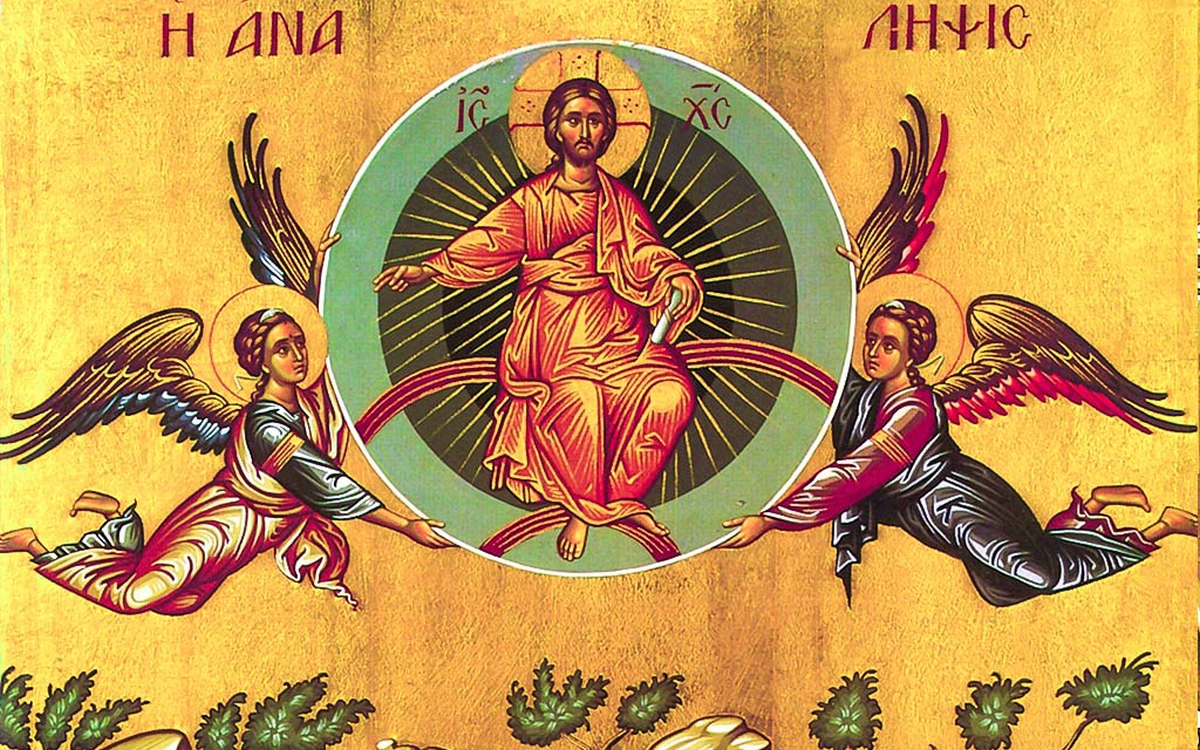
The Serbian Orthodox Church and its faithful are celebrating one of the greatest Christian holidays today: the Ascension of the Lord.
Spasovdan is a major and significant Christian holiday, and it was once also celebrated by Muslims and Catholics.
It always falls on the sixth Thursday after Easter. It is one of the 12 great holidays and eight of Christ’s holidays.
It was highly revered even in pre-Christian times, and traditionally, it was exceptionally valued and respected during the reign of Emperor Dušan. It is considered no coincidence that the famous Dušan’s Code was promulgated in 1349 on Spasovdan, and supplemented on the same holiday in 1354.
No heavy work is done on Spasovdan, as it is a great holiday that, according to belief, can save a house from trouble and children from illness.
According to folk tradition, on Spasovdan, God saved himself from wicked people and ascended to heaven, and there is also a story that God fled to heaven from evil and mischievous people.
Since ancient times, Spasovdan has been a spring holiday for livestock breeders and farmers. It is considered a very lucky and auspicious day to start everything, which is why it is also called Spasje.
Where the name Spasovdan (Salvation day) comes from
According to Christian belief, Christ showed he was stronger than death through his resurrection, and 40 days later, his disciples were at a meal.
On that day, Christ appeared to them again and said: “Go into all the world and preach the Gospel to every creature. Whoever believes and is baptized will be saved, but whoever does not believe will be condemned.”
Thus, they could spread Christ’s faith throughout the world and thereby save people through faith—hence the name Spasovdan.
Customs on Spasovdan
Before dawn on Spasovdan, cross-bearers visit sacred trees, most often oaks or some fruit trees, mainly wild pears, carrying banners and a cross, while people gather under the sacred tree, decorating it with wreaths of flowers and offering various delicacies.
These processions are held for the progress of crops and a better harvest. The cross-bearers walk in a circle around the sacred tree, praying and singing while the priest officiates. Formerly, in some places, it was customary for the priest to place a “record” in a bored tree to “protect the village from worms.”
On Spasovdan, no work is done to prevent lightning strikes, and in the Leskovac region, it is believed that work should be avoided so that “bad luck” does not befall a person and insects do not devastate the fields.
A particularly widespread custom was to plant hazel crosses (to bless the harvest) in fields, forbidden areas, sheepfolds, beehives, and gardens on Spasovdan, if it hadn’t been done on Đurđevdan. A hazel stick was also planted and cut at the top, at chest height, and a shorter rod was placed in the cut, creating a cross that could be seen from all sides.
In some regions, it was customary to save the jawbone of a dried pig and eat from it on Spasovdan so that “all future pigs would be sweet-fed,” meaning they would enjoy everything they “graze in the mountains and drink from the troughs.”
The bones of the gnawed jawbone are not separated but are hung with all their teeth in the apiary so that the bees would thrive in swarms.
Thus, in some regions, people went early to pick strawberries, and on Spasovdan morning, nothing was eaten until strawberries were tasted. In some places, however, it was customary to taste the first annual fruits and foodstuffs on Spasovdan (milk, meat, fruit).
In some areas, it was even believed that it was not good to taste new fruit if someone’s children had died, until they first distributed some of that new fruit to the poor for the souls of their children. Otherwise, in the afterlife, the children would be without that meal and would gnaw their fingers instead of eating, saying that their parents had eaten it.
It was also customary to bathe in the river or sea before sunrise on Spasovdan. Believers do not drink milk from that year’s milking until Spasovdan, so this first tasting of milk was accompanied by a series of customs to increase milk yield and better cream, along with sprinkling with milk and pouring water down the neck, to have milk like water.
In some villages around Požega, a thick oak bark was placed on a vessel with water containing many various herbs. The bark was then pierced, and a little milk was strained through it, so that the cream would be as thick as oak bark.
On Spasovdan, it was believed in Šumadija, vampires could be seen at dawn.
This holiday is the patron saint day of the city of Belgrade, and in many places in Serbia, it is also a zavetina—a holiday for the entire settlement.
MORE TOPICS:
DONALD TRUMP DECLARED: I really love Serbia, I hope to come and visit one day!
SERBS ORGANIZED A LARGE PROTEST IN LEPOSAVIC: Police blocked access to the Sports Hall! (VIDEO)
ALL FOUR DENIED GUILT: SNS activists who beat students in Novi Sad questioned!
Source: Kurir; Photo: Printscreen YouTube