




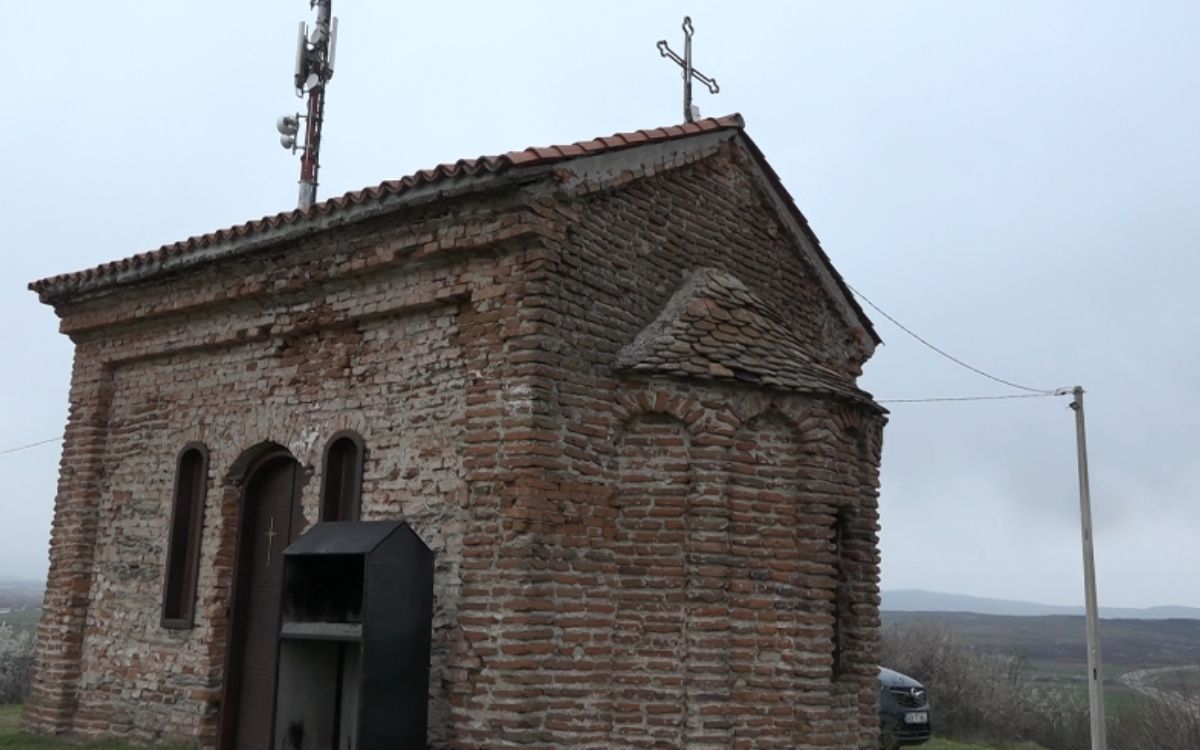
On Komiga hill, above the village of Orljane near Niš, lies the Church of St. John—a holy site that has resisted destruction for centuries but continues to live through the faith of the people. According to tradition, its foundations date back to the time of the Byzantine Emperor Justinian, making it one of the most significant historical and spiritual places in this part of Serbia.
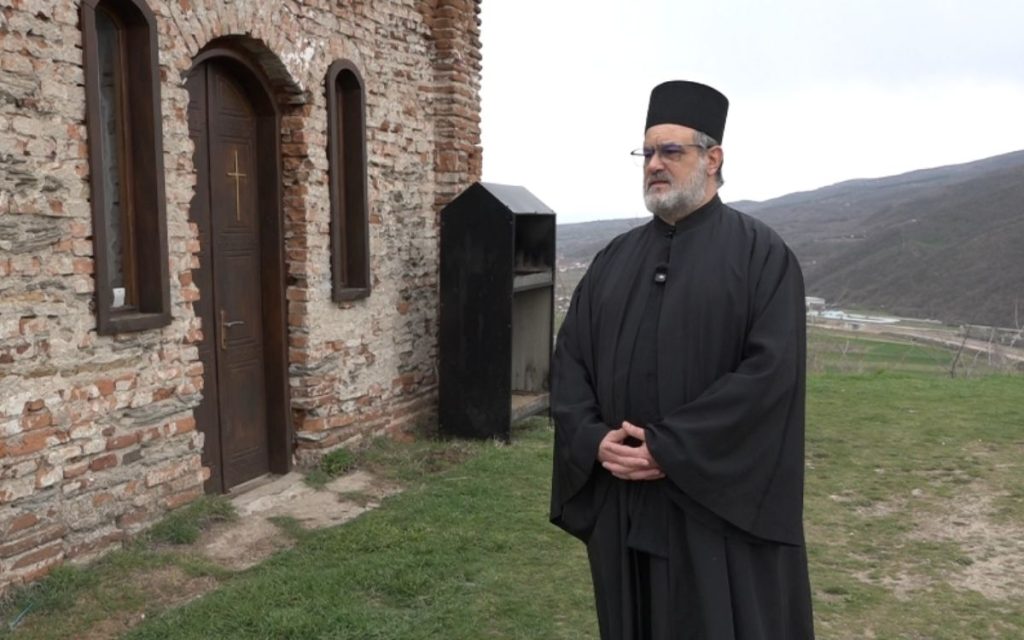
As Priest Dragan Stanković explains, this church held not only religious but also strategic importance.
“This is a place built by Emperor Justinian so that the Morava Valley, through which an important imperial road passed, could be defended from this point. At the same time, it served as protection for Justiniana Prima against bandit raids,” says Stanković.
Throughout its turbulent history, the church was damaged multiple times. It was restored as early as the 11th century, and traces of different eras are still visible on its walls today.
“Even today, we can see the difference in the bricks—the thinner ones date from the time of Emperor Basil, while the larger ones are from the 19th century. This clearly shows how many times it has been restored,” explains Stanković.
It suffered particularly during the Serbian-Turkish wars when it was directly on the front line.
“The Serbian position was here, while the Turkish cannons were below. The southern part of the church was shelled, a wall was demolished, as well as the dome that once existed,” he states.
The vow of the soldier who restored the church
One of the most interesting stories related to this holy site is the story of the soldier Živojin.
“He stood guard here during the shelling and prayed to God to survive. He vowed that he would restore the church if he remained alive. And indeed, after surviving, he began the restoration which lasted from 1885 to 1892,” says Stanković.
It is believed that the church was then re-consecrated, and the tradition of gathering believers continues to this day.
“Even today, a large number of believers gather here on the eve of the feast of the birth of St. John. This is a special event for this region,” he adds.
A place that heals
Near the church is the so-called “hollow stone,” a place where monks once retreated for prayerful silence.
“Through their prayers, they consecrated this space, which is why many believe that this place is special and healing. When we pray to God, we consecrate the space around us,” explains Stanković.
He also emphasizes the importance of faith throughout the history of the Serbian people, recalling the roles of Stefan Nemanja and Saint Sava.
“Saint Sava brought his father’s relics to Studenica and reconciled the brothers. That should be an example for us – only through faith and unity can we survive,” he says.

The Romanian woman who painted the icons and found her peace
Danijela Stanković, originally from Romania, has a special connection with this holy site. She now lives in Serbia, is married to Father Dragan, and actively participates in the restoration of the church.
“Twenty years ago, I married a priest and came to Serbia. I was delighted by this holy place,” she says.
She points out that churches this old rarely exist elsewhere.
“I can say that in Romania, I don’t know of a church this old existing. Here in Serbia, such a holy place can be found almost everywhere,” Danijela states.
As an iconographer, she made a personal contribution.
“I studied at the faculty of theology in Iași, specializing in iconography. I painted five icons that were missing from the church,” she says.
She adds that a special feeling binds her to this holy site.
“A great grace is felt here. It is a place of prayer and peace. That spirit left by our ancestors is something we must pass on to future generations,” Danijela emphasizes.
One of only two churches from the Byzantine period in Serbia
The historical significance of this church is confirmed by Prof. Dr. Miša Rakocija, a historian and archaeologist.
“In Serbia, there are only two preserved churches from that Byzantine period – the Latin Church in Gornji Matejevac and the Church of St. John in Orljane,” says Rakocija.
He explains that the church dates from the end of the 11th and the beginning of the 12th century and represents a typical example of Middle Byzantine architecture.
“It is a single-nave church with elements of an inscribed cross and it once had a dome. Parts of the frescoes are preserved, such as the medallions of St. Spyridon and St. Acacius,” he notes.
Rakocija warns that it is necessary to further protect this holy site.
“This is an exceptionally significant church and it is necessary to carry out conservation and restoration work to preserve it and eventually return it to its original appearance,” he concludes.
Despite centuries of destruction, this holy place still lives today—through prayer, faith, and the people who return to it. The Church of St. John in Orljane thus remains not only a witness to the past but also a place of hope for future generations.
MORE TOPICS:
Source: Glas Juga; Photo: Glas Juga
 Add Serbian Times as your Google source