




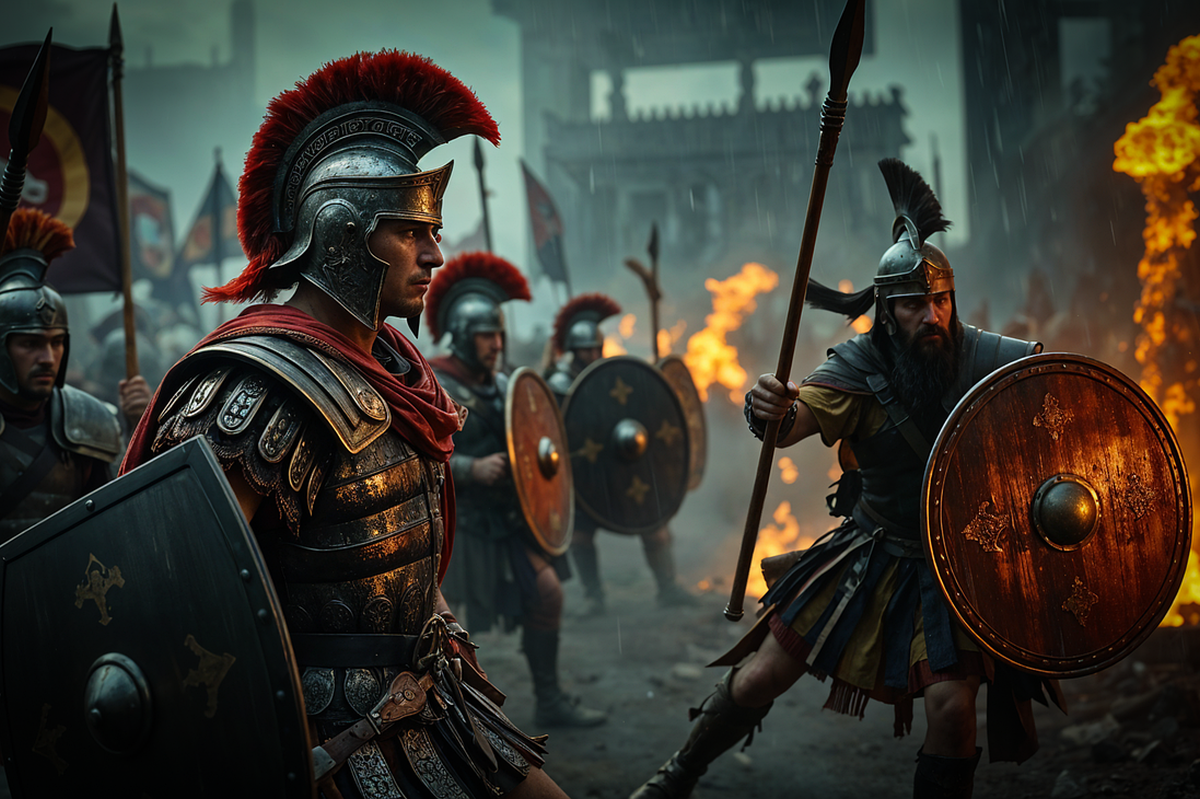
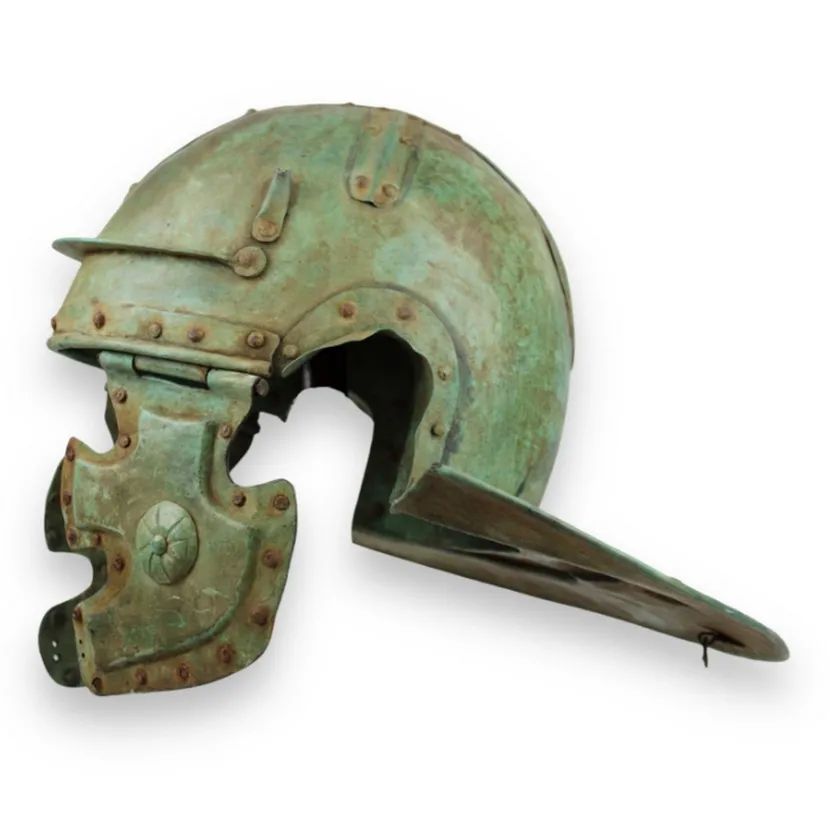
A unique archaeological find, a Roman legionary helmet from the 2nd century AD, recently attracted the attention of experts and collectors. This exceptional artifact, made of bronze and of the “Weisenau” type, bears the name of the Roman legionary Appius, a member of the Fourth Legion, which was stationed in Singidunum, today’s Belgrade.
This helmet, which is considered a museum rarity, testifies to the presence of Roman troops in these areas and provides valuable insight into the military history of ancient Belgrade. Its extraordinary preservation and clear dedication to Appius make it one of the most significant finds from the period of Roman domination.
Experts point out that it is an artifact of the highest quality, which could rightfully be placed in the collection of any world museum. The discovery of this helmet not only enriches our knowledge of the Roman army but also emphasizes the importance of Singidunum as a strategic center of the Roman Empire in the Balkans.

This find is expected to further stimulate interest in the archaeological heritage of Belgrade and Serbia.
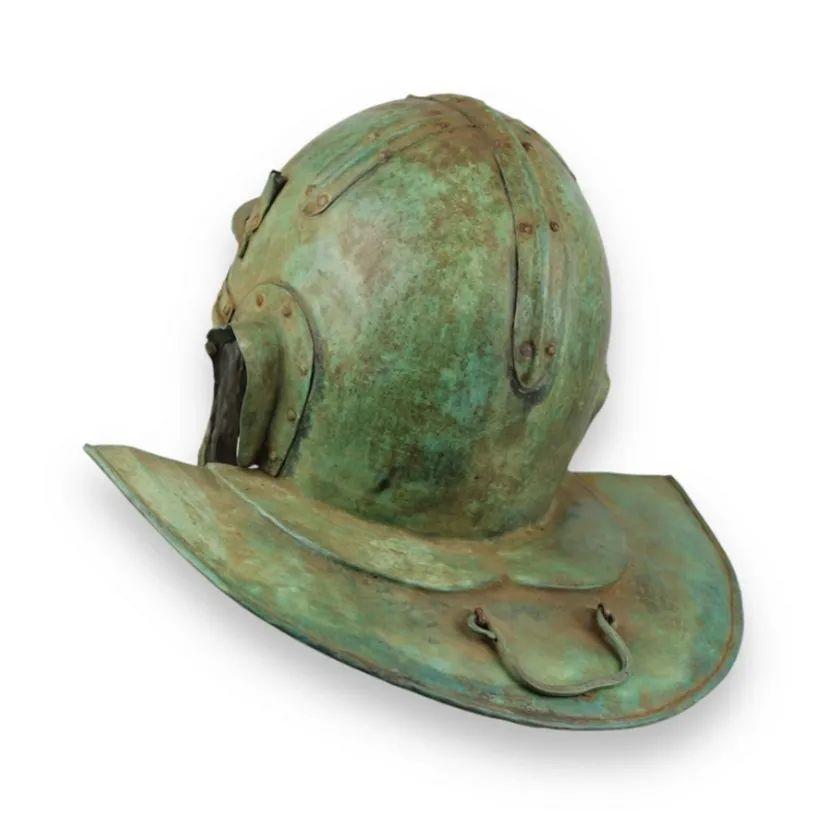
This helmet is made of bronze and dates from the 2nd century AD. It has an extended neck guard and movable, decorated cheek guards, which makes it ideal for protection and agility in combat. However, what distinguishes it from all similar finds is the carved dedication on the back of the head: “APPIVS°LEG°IIII°FL”. This abbreviation is deciphered as “Appius of the Fourth Flavia Felix Legion”, which makes it the personal helmet of the Roman legionary Appius.
Links with Belgrade and Sremska Mitrovica
The helmet was reportedly found with a metal detector near Sirmium, today’s Sremska Mitrovica. Sirmium was the capital of the Roman province of Pannonia, and at one time one of the four capitals of the entire Roman Empire.
An even more significant connection is with Belgrade, or ancient Singidunum. Legio IV Flavia Felix, of which Appius was a member, was an elite Roman legion stationed precisely in Singidunum. This legion, founded in 69 AD by Emperor Vespasian, played a key role in defending the northern border of the Roman Empire from the invasion of barbarian tribes.
Testimony to the history of the region
The discovery of the helmet is of immeasurable importance because it provides a direct link to a single Roman warrior. The helmet has been professionally cleaned and preserved with protective wax, which allowed its excellent form and patina to be preserved.
The historical value of this item is enormous. It is not only a rare museum piece but also a unique testimony to the military past of these areas. During Roman rule, Singidunum was a strategic stronghold, and later the birthplace of Emperor Jovian, until the Huns plundered it in 441, and then the Avars and Slavs in the 6th century, which ended the period of Roman domination in this part of Europe.
This personalized legionary helmet, with the historical story of the legionary Appius and his service in Singidunum, represents an exceptional exhibit that transcends archaeological frameworks and becomes a direct link to the ancient past of Serbia.
MORE TOPICS:
SERBIA, BE PROUD! Adriana Vilagoš won first place at the meeting in Lausanne! (PHOTO)
Source: Telegraf; Photo: bidsquare.com
 Add Serbian Times as your Google source