




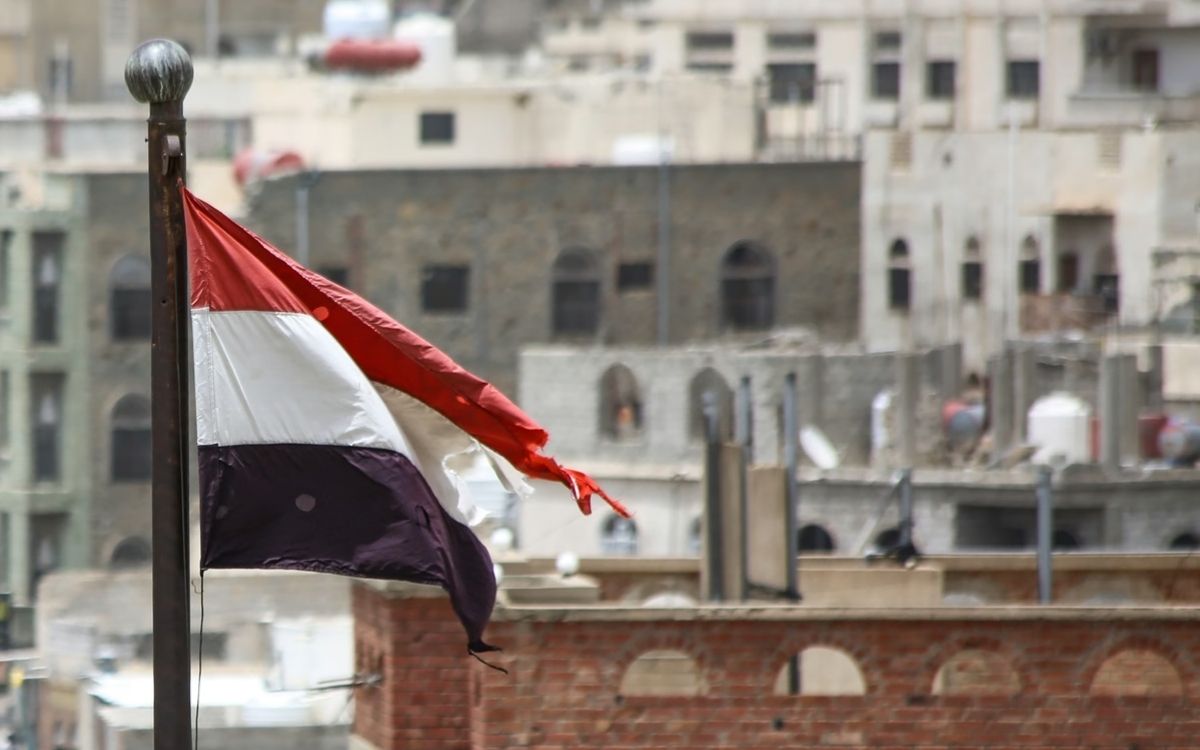
Yemen’s internationally recognized government has once again appealed to world leaders to help it fight the Iran-backed Houthi rebels, warning that their new foothold near one of the world’s busiest waterways poses a risk to the global economy.
The Houthis, who have controlled Yemen’s capital Sana’a and much of the north of the country for more than a decade, this month advanced along the Yemeni coast and seized the key port city of Mocha, as well as important islands in the Red Sea. This has given them greater control over ships passing through the Bab el-Mandeb Strait, at the southern entrance to the Red Sea. Around 12 percent of global trade normally passes through this waterway.
The rebels have declared a blockade of Saudi maritime traffic. Although they claim that commercial shipping in the Red Sea faces no other threat, they have warned other countries against intervening.
However, the vice president of the council of Yemen’s internationally recognized government called on world leaders at the UN General Assembly not to believe the Houthis’ assurances and to look at the broader picture of the conflict surrounding this strategic strait.
“Using maritime security as a means of blackmail threatens not only Yemen. They are effectively holding the entire global economy hostage,” said Vice President Abdullah Abdulkader al-Alimi-Bauzer.
Emphasizing that protecting the strait is “the responsibility of every economy that depends on secure supply chains, energy security and freedom of navigation,” he called on the international community to prevent weapons and technology from reaching the rebels.
The UN Security Council has for years imposed an arms embargo on the Houthis, as well as asset freezes and travel bans on their leaders and senior officials.
Iran denies arming them, but smuggled Iranian weapons and weapons components have been seized in numerous shipments bound for Yemen.
A 2024 report by the UN experts also documented extensive military ties between the Houthis, Iran and its other allies. Al-Alimi-Bauzer said in New York that the Houthis would not have been able to maintain their positions over the past 12 years without Iranian weapons, expert assistance and military technology.
The Houthis said yesterday that they had fired dozens of ballistic missiles and drones at Saudi Arabia’s Jazan Province in the southwest of the country. Saudi military spokesman Major General Turki al-Malki said that Saudi Arabia, which supports the Yemeni government in the war, had intercepted six ballistic missiles aimed at the Red Sea port of Yanbu and the southwestern city of Taif, blaming the Houthis for the attack.
In Yemen, the latest clashes are increasing the risk of a full return to civil war, in which more than 150,000 people have been killed, while millions have been forced to flee their homes. Nearly 130,000 people have already been displaced since the latest escalation at the beginning of the month, and hundreds have been killed, as the humanitarian crisis in the Arab world’s poorest country deepens.
Fighting near the key maritime corridor in the Red Sea, as well as the Houthis’ efforts to impose a blockade on Saudi Arabia, the world’s largest oil exporter, have also caused concern in global markets. The Bab el-Mandeb Strait has become even more significant since Iran established control over the even busier Strait of Hormuz, off its coast, after the U.S. and Israel attacked Iran in February.
After the Houthis seized Sana’a and northern parts of Yemen in 2014, Saudi Arabia formed a military coalition to intervene on the side of the Yemeni government. However, fighting continued, and the Houthis managed to maintain their positions.
A ceasefire came into effect in 2022. However, following Israel’s aggression in the Gaza Strip the following year, the Houthis began attacking ships in the Red Sea. The attacks continued until the U.S. bombing campaign in 2025.
Al-Alimi-Bauzer thanked Saudi Arabia and praised the United States for what he described as a “decisive approach.”
Saudi Arabia recently again requested military support from its allies, but the United States has not resumed direct military engagement. U.S. Secretary of State Marco Rubio has repeatedly said that the U.S. will fulfill its commitments regarding the defense of Saudi Arabia, but has not specified how.
Saudi Foreign Minister Prince Faisal bin Farhan told reporters at the UN that his country “continues to work with partners in the U.S. to resolve this conflict.”
Despite the Houthis’ latest advances, he indicated that his country was not concerned about the possibility of them taking control of southern Yemen. The Yemeni government, he said, is “very capable of defending the territory it controls.”
READ MORE:
MORE TOPICS:
Source: N1 ; Foto:Shutterstock/akramalrasny
 Add Serbian Times as your Google source