




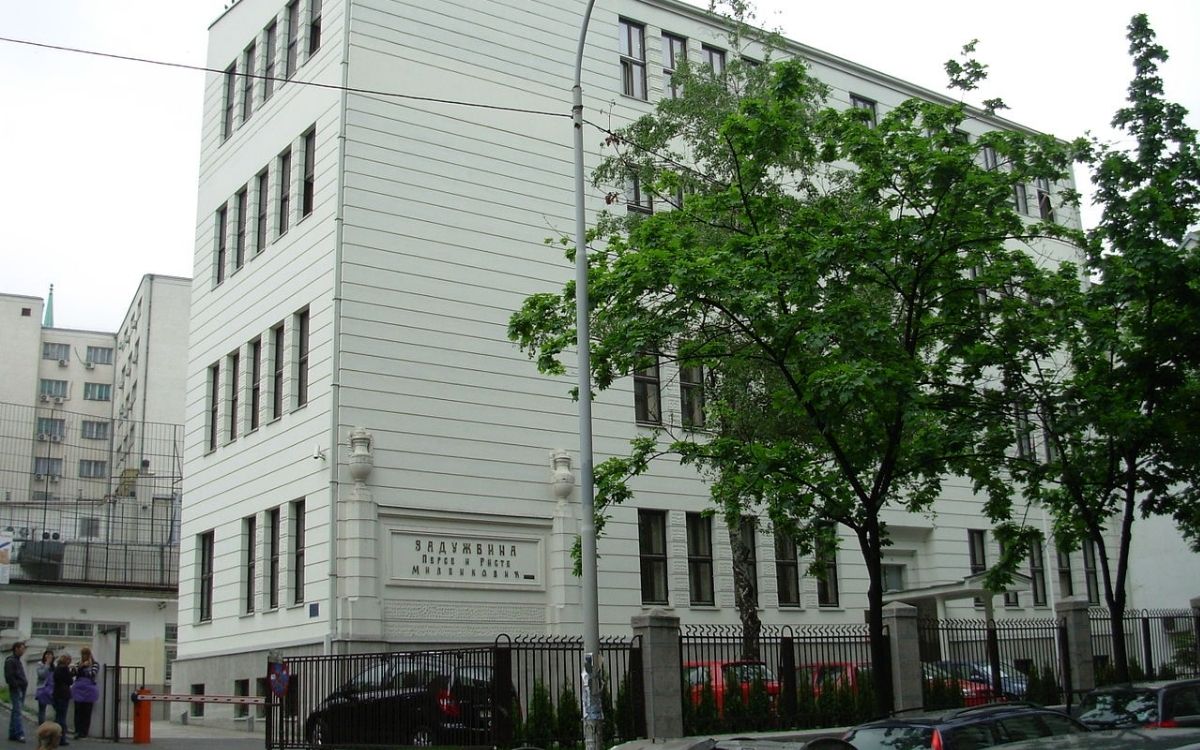
Knowledge, talent, perseverance – that is how the Mathematical Grammar School could be described in short. For 60 years, medal winners have been educated in it. It was created on this day modeled after the Moscow school of mathematics. The institution of special national importance is attended by about 500 students annually.
Professor Zoran Kadelburg is the first generation of students enrolled in the Mathematical Grammar School back in 1966. He gladly remembers his school days, hanging out, and the Olympiad in Moscow from which he brought the first diploma to this school.
“There was a six-day work week in the entire country, including in schools. We went only in the morning. Mathematical subjects were taught like at universities. As far as literature is concerned, there were practically no textbooks,” says professor Zoran Kadelburg.
From a work permit through the first textbooks and students to education reforms and temporary abolition – this school has traveled a long path over 60 years, explains Srdjan Ognjanovic, who was a student, a teacher, and a director of the Mathematical Grammar School.
“People in the world heard about our school to such an extent that people from many countries visited us. A director from Sweden calls me, a completely unknown man, and says we could come to your school to see how you achieve that. From Cambridge, their dean came to see which school it is where so many students apply and succeed and are admitted to the University of Cambridge,” Ognjanovic points out.
Young geniuses won about 3,000 awards
In 60 years, the Mathematical Grammar School has educated about 40,000 students; the young geniuses have gifted about 3,000 awards to this institution over all those years.
“From the perspective that this country currently has between six and seven million inhabitants, then those numbers, everything that we have managed over these 60 years, give completely another dimension, that our successes in world frameworks are imposing,” says Mirjana Katic, director of the Mathematical Grammar School.
FIND OUT MORE
How successes are achieved
For world successes, the best young ambassadors of Serbia prepare every day.
“Five hours of competition is more significant than 50 hours of practicing itself at home, as much as we try to simulate that situation, it is impossible. It is important to us exactly how things play out precisely in those moments when the pressure is perhaps the greatest,” emphasizes Andrej Drobnjakovic, a student of the Mathematical Grammar School.
In Serbia, this is the first school that bought a computer on credit in the seventies, formed the programming subject, and whose student won the first medal at a competition in artificial intelligence.
The grammar school, which they also call a nursery of talents, promises the next 60 successful years as well.
MORE TOPICS:
Source: RTS; Photo: Wikimedia Creative Commons
 Add Serbian Times as your Google source