



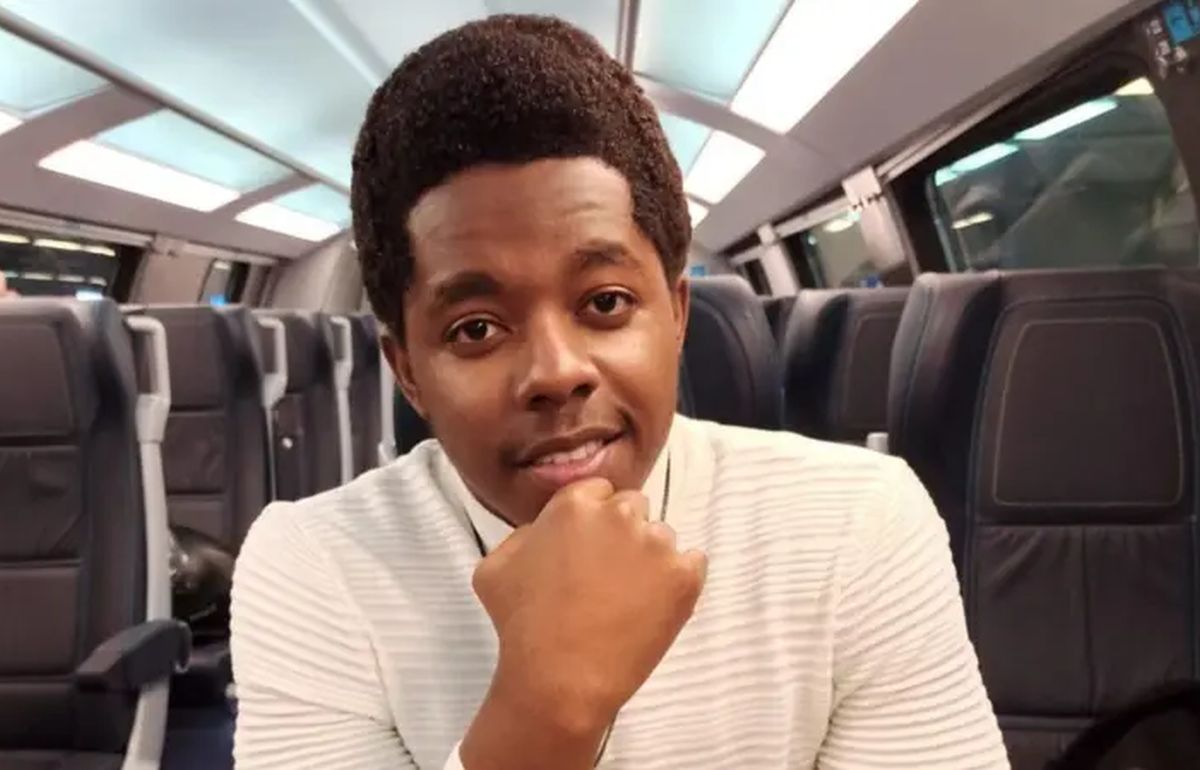
Glodi Beja Bakulikira is 27 years old and has been living in Belgrade for the past ten years. He was born in eastern Democratic Republic of Congo (DRC), a country plagued by three decades of conflict over mineral resources, with multiple armed groups vying for dominance.
Since early February, a new wave of violence has erupted as the M23 rebel group captured Glodi’s hometown of Bukavu, along with the city of Goma, where he had lived with his family as a teenager.
“My entire family is there,” Glodi told BBC Serbian.
Describing how he feels when reading the news every day, he says it is “hard to put into words.”
“My mornings start peacefully—I study for exams, go to work, visit church—it seems like a normal life, while the lives of the people I love are in danger.”
To raise awareness about the situation in his home country, Glodi and his friends organized an informational event in mid-March at Student City in Belgrade.
Despite being separated by more than 5,000 kilometers, Belgrade and Kinshasa, the capital of the DRC, share long-standing cultural and political ties that flourished during the Non-Aligned Movement in the era of socialist Yugoslavia.
Reminders of this connection can still be seen today—a street and a student dormitory in Belgrade bear the name of Patrice Lumumba, the first Congolese prime minister elected after decolonization in 1960.
FIND OUT MORE:
What Is Happening in the Democratic Republic of Congo?
A renewed conflict between the Hutu and Tutsi ethnic groups, who have lived in DRC, Burundi, and Rwanda for centuries, reignited over a month ago. The Tutsi-led rebel group M23, supported by Rwanda, launched an armed offensive in early February, seizing control of the two largest cities—Goma and Bukavu.
Glodi’s mother, brothers, and sisters remain in Bukavu, and he communicates with them daily.
**”My mom tries to stay strong for me, telling me everything is fine, but I know that’s not true.
“I get most of my information from my siblings, who say there are frequent power outages, and they’ve been advised not to leave their homes because armed rebels are on the streets,”** Glodi explains.
Hospitals in Goma have been overwhelmed with patients, while lifeless bodies have been seen lying on the streets.
The United Nations has urgently dispatched $40 million in humanitarian aid to address food, water, and power shortages, as well as the growing refugee crisis in Burundi, where tens of thousands of Congolese have fled.
Around 70,000 people, including entire families, are crossing the Rusizi River—the natural border between DRC and Burundi, reports BBC News. At least 20 people have drowned, with many more feared lost in the waters, though their deaths have not been officially recorded.
The ethnic tensions between Tutsis and Hutus have existed for so long that they seem everlasting. These divisions intensified during Belgian colonial rule over Burundi, Rwanda, and Zaire (former name of the DRC), when the Tutsis were considered superior.
Armed conflicts have plagued the DRC since the mid-1990s. The First Congo War ended in 1997, a year before Glodi was born. That same year, the country’s name changed from Zaire to the Democratic Republic of Congo. The following year, in 1998, Glodi was born, and the Second Congo War (1998–2002) erupted. This conflict, also known as the “Great African War,” involved Burundi and Rwanda on one side and DRC supported by Zimbabwe, Namibia, Chad, Libya, Sudan, and Angola on the other.
“Like the Balkans, Congolese people have spent the last three decades either at war or in its shadow,” Glodi observes.
“It’s hard to ever truly get used to something like that,” he adds.
FIND OUT MORE:
A Congolese Student in Serbia
Glodi moved to Serbia to study at the Faculty of Economics in Belgrade.
“I received a scholarship, and I spent my first year learning the language,” says the 27-year-old, now a graduate student.
There are about 400 foreign students studying in Serbia, mostly from Ghana, Angola, Nigeria, and Palestine—countries with which former Yugoslavia fostered close ties through the Non-Aligned Movement.
Like most foreign students, Glodi lived in a student dormitory for years. After becoming a graduate student a little over a year ago, he found a job as a sales agent and rented an apartment in New Belgrade.
“Most of my friends are fellow African students, but I also have friends from Serbia,” he adds in fluent Serbian.
In Congo, Glodi attended a Jesuit primary and secondary school. When he moved to Belgrade, he found a community within the Jesuit church, located in the city center, which BBC Serbian has previously reported on.
“I’ve always been religious, and during this time, I find great comfort in going to church and praying for my family,” he says.
Family, he admits, is what he misses the most.
**”We have a culture that is very similar to a tribal structure, where relationships between people are much closer than in Serbia.
“I grew up in an extended family setting, and I see all of my relatives not just as cousins but as brothers and sisters,”** he explains.
Despite the ongoing war in his homeland, Glodi hopes to return to Congo one day and live in his own country.
“Life in Serbia has its advantages, but Congo has a unique beauty,” he says.
“I don’t think I will ever feel a true sense of belonging anywhere else or experience the same closeness I still have with my family, even though we are so far apart,” he adds.
MORE TOPICS:
Source: BBC News na srpskom, Foto: BBC News na srpskom (Privatna arhiva)
 Add Serbian Times as your Google source