




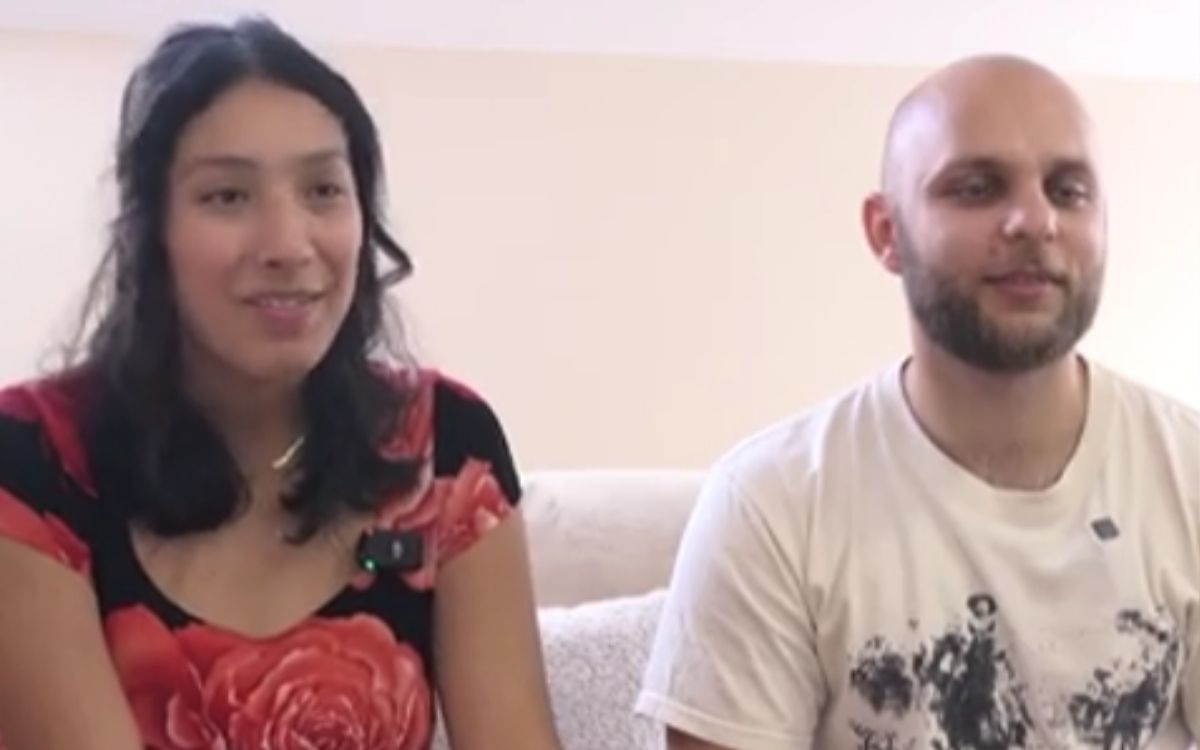
A love story that crossed more than ten thousand kilometers takes us to Pančevo. Ivanna Andrić arrived in Serbia from distant Mexico, bringing with her the warmth of Latin America, but also the willingness to embrace a new culture, customs and language.
The fateful encounter happened during a student exchange, when Ivanna and Aleksandar realized that they were connected by much more than just a spirit of adventure. Distance and cultural differences were not an obstacle – on the contrary, they became the foundation of their relationship. Today, they have already been married for a year, and the reactions of their families confirm that true love knows no borders. Both in Serbia and Mexico, the newlyweds were welcomed with enthusiasm and open hearts.
Although many believe that the Balkans and Latin America are two completely different worlds, it did not take Ivanna long to notice the incredible similarities in the mentality of the people. Loud conversations, strong emotions and openness toward others made her adaptation go without stress. The only real difference, as she points out, lies in the historical circumstances and the burdens that nations have carried through the centuries.
“Mexicans are very similar to Serbs, both of us are extremely loud, expressive and warm-hearted. That is why I felt at home from my very first visit. If I had to point out one difference, it would be history. Serbs have gone through a lot, while Mexico’s historical path was different,” Ivanna begins her story.
When she first mentioned that she was moving to Serbia, Ivanna’s family could not have imagined that it would become her permanent home. Serbia was unfamiliar to them, so they did not research it much. However, everything changed when they crossed the ocean and personally experienced the beauty of the country and the hospitality of its people.
“My family initially did not expect me to stay here, so they did not research Serbia much. However, when my parents and friends came to visit, they saw what kind of country this is and were amazed. They changed all their assumptions and got to know the real Serbia,” she told Telegraf.
From pear brandy to sarma: An expert in Serbian specialties
Adapting to a new environment is easiest through food, and Ivanna embraced Serbian cuisine as if she had grown up in Banat. Although peppers in Serbia are nowhere near as spicy as those in her native Mexico, that did not stop her from mastering recipes that are the pride of every Serbian household. Traditional Serbian drinks and visits to kafanas quickly became part of her new lifestyle.
However, she most often eases her nostalgia for home in the kitchen, where, with small adjustments, she manages to recreate the flavors of her childhood.
“I tried rakija and I really like it, it reminds me a lot of tequila, and my favorite is pear brandy. Going to kafanas is extremely interesting to me! When it comes to food, I have become a true expert: I know how to make sarma, mućkalica and stuffed peppers. What I miss the most from Mexico are desserts and cakes that my grandmother used to make. Here I find substitute ingredients, so I am happy because I can still prepare my favorite Mexican dishes,” Ivanna says.
Mexican flavors in Pančevo: A workshop that delighted neighbors
Ivanna and Aleksandar did not keep their love for Mexican specialties only to themselves.
Wanting to bring the authentic tastes of her homeland closer to the people of Pančevo, they organized a Mexican food preparation workshop. The interest exceeded all expectations – more places were requested, and the positive reactions of Pančevo residents confirmed that cuisine connects people faster than any language.
“Brate” – her favorite Serbian word
Learning the Serbian language is a serious challenge for most foreigners, and Ivanna has the best possible ally in that mission – her husband. Aleksandar took on the role of teacher, while friends from their surroundings also provide great support. Today, Ivanna is proud of the progress she has made, as well as the fact that she has adopted the word that is most often spoken in Serbia and carries a special meaning.
“Serbian is extremely difficult, but I have the best teacher – my husband. Besides him, my friends help me a lot. I am extremely proud of how far I have come with the language! And my favorite Serbian word is, of course – ‘brate’,” says Ivanna.
Telenovelas as a shared passion and safety as the biggest difference
When it comes to pop culture and everyday habits, Serbia and Mexico have another thing in common – a love for telenovelas. However, one topic brings a more serious tone to the conversation. Personal safety is the area where Ivanna sees the biggest difference between life in Mexico and the peaceful everyday life in Pančevo.
“In Mexico, everyone watches telenovelas, it is a huge thing there, just as it used to be popular in Serbia. On the other hand, the security situation in Mexico is very sad. Cartels control certain parts of the country and that is the harsh reality we live with. I cannot walk alone at night there, I would be too afraid. We all hope things will get better,” she says.
Novak Đoković and football fever
When you come to Serbia, one name is impossible to avoid – Novak Đoković. Ivanna admits that she did not follow tennis in Mexico, but that she quickly learned, with the help of her husband and friends, who Serbia’s greatest ambassador in the world is. On the other hand, she brought with her a passion for football from her homeland, where the sport has the status of a religion.
“I learned who Novak Đoković is. My friends in Mexico followed his career, but I only truly got to know him here. In Mexico, however, football is the number one sport, a lot is invested in it and we all live for the World Cup,” Ivanna concludes.
In Pančevo, with pear brandy, sarma and the occasional Mexican specialty, Ivana has found her second home – preserving her Mexican soul while being welcomed with the warmth characteristic of people in Serbia.
MORE TOPICS:
FROM AMMUNITION TO DRONES: How Serbia became one of Israel’s most important partners in Europe!
Source: Telegraf.rs, Foto: Printscreen Telegraf
 Add Serbian Times as your Google source