




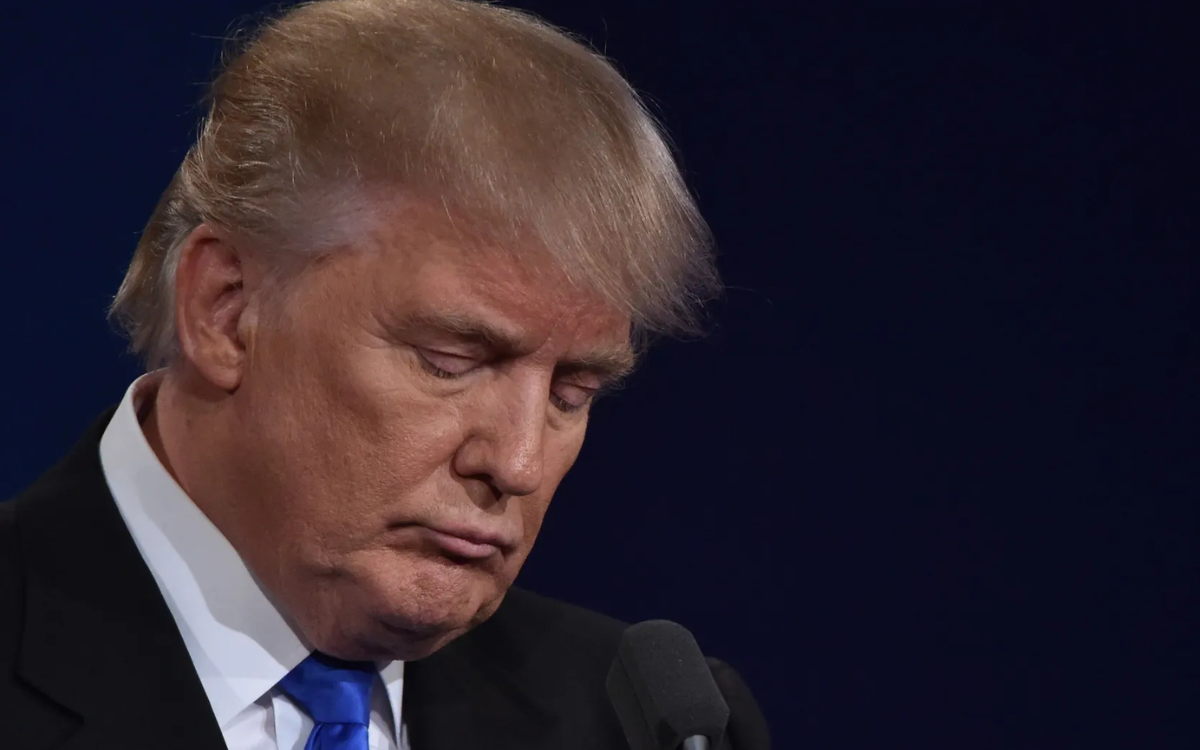
Just days after Republicans suffered a series of major defeats in congressional elections, President Donald Trump stood by his positions on economic management and the war with Iran. However, he acknowledged that his administration had failed to communicate its economic achievements effectively to the public and admitted that its immigration policy had been too harsh in some cases.
In an interview with Ross Douthat for the program “60 Minutes,” the president also hinted at possible changes among senior administration officials. Just an hour later, he announced that Susie Wiles was leaving her position as White House chief of staff and that Stephen Miller would replace her.
Here are the ten most important takeaways from the interview.
Why did Republicans lose the elections?
On Tuesday, Republicans lost more than 40 seats in the House of Representatives and at least seven seats in the Senate, while the results in several races were still pending. Defeats were recorded even in districts where Trump had won by double-digit margins two years earlier.
According to CBS News exit polls, approximately 63 percent of voters disapproved of Trump’s performance, while 44 percent said opposition to the president was one of the reasons they had voted.
Asked how he explained the Republican defeats, Trump said voters “didn’t like the war” with Iran, nor the sharp rise in gasoline prices caused by the conflict.
Nevertheless, he argued that the main reason for the losses was that he himself had not been a candidate in the elections.
“I don’t think they voted. I really don’t think they voted. I think in some cases they didn’t like the candidates. And that’s their right,” Trump said.
The president argued that his endorsements and campaign rallies had helped Republicans come close to victory.
However, he personally backed several candidates. Among them were Texas Attorney General Ken Paxton, whom he supported against incumbent Senator John Cornyn in the Republican primary, and Senator Darlin Graham, who was appointed to fill her late brother’s seat in the South Carolina Senate.
Trump claimed that “Cornyn would have lost, too.”
The economy is “phenomenal,” but the message failed to reach voters
The president defended the results of his economic policies during an interview conducted just hours after the release of better-than-expected employment figures.
“The numbers are phenomenal,” Trump said.
“We’re achieving results that have never been recorded before. 401(k) retirement accounts have reached an all-time high, by a wide margin. Under other presidents, they were a disaster. Those accounts have made people rich,” he said.
When told that not all Americans have substantial sums in their retirement accounts, he replied:
“But many do.”
Nevertheless, exit polls showed that three-quarters of voters considered the state of the American economy to be poor or not particularly good. As many as 70 percent of those voters supported Democratic candidates for the House of Representatives.
Voters were particularly concerned about the prices of gasoline, food, utilities and healthcare. Two-thirds believed that Trump’s tariffs were harming the American economy.
The president acknowledged that his administration had failed to get its message across to the public.
“I think the communication was bad, maybe because of me. But I’ve been talking about it all the time. So I don’t know, how much more can I talk about it?” he said.
He predicted that Americans would begin to see the results of his policies over the next two, three or four months, particularly through a recovery in manufacturing employment.
Trump does not want an escalation of the war with Iran
The day after the elections, Vice President JD Vance wrote on social media that the main reason for the Republican defeats was obvious to almost everyone: a widely unpopular war with Iran.
Trump said Vance had informed him about the post beforehand and that he had replied:
“Write whatever you want.”
The president added that he largely agreed with the vice president’s assessment, but said there was one important difference.
He was asked whether he would have attacked Iran if he had to make the decision again.
His answer was an emphatic “yes.”
Trump claimed that Iran’s conventional military capabilities had been significantly weakened and that its nuclear program had been set back.
“I think historically this will be seen as a very good decision. Is it good for today and tomorrow? Maybe not. But I have to do what’s right for our country,” he said.
He added that he would have faced much harsher criticism if Iran had acquired nuclear weapons during his presidency.
During a later visit to the Oval Office, Trump repeated that historians would assess the war with Iran more favorably than voters do today.
He pointed to a portrait of former US President Ulysses S. Grant, whose historical reputation has improved over time.
“The fact that I took nuclear weapons away from Iran may not be good in the short term, but in the long term I think it will be very important,” Trump said.
Since September, Iran and the United States have largely refrained from major attacks, although American forces carried out limited defensive strikes against Iranian targets earlier this week.
Qatar is meanwhile mediating diplomatic efforts between the two countries.
Trump said he believed Iran was close to reaching an agreement, but that the results of the US elections had given Iranian authorities renewed hope.
Asked whether he planned to intensify military operations now that the elections were over, he replied:
“I don’t plan to. I don’t think there’s any reason to.”
Trump admits his deportation policy was too harsh
Trump’s victory in 2024 was partly driven by voter dissatisfaction with the immigration policies of Joe Biden’s administration.
However, this year’s exit polls show that 58 percent of voters believe Trump’s administration has gone too far in enforcing immigration measures.
In states such as Texas, many Latino voters who supported Trump two years ago have now returned to the Democrats because of concerns over deportations.
The president said his immigration policy had both helped and hurt him.
“I think I deserve the highest grade for closing the border,” he said.
He explained that the public had supported deporting people who had committed serious crimes, but problems arose when individuals who were working and had only one violation—illegal entry into the country—were also deported.
“There’s a large part of the country that thinks those people should be deported. And there’s also a large part of the country that thinks they should be allowed to stay if they’re good people working for landscaping companies, hotels or doing other jobs, and in some cases paying taxes, too,” he said.
He then admitted:
“I think that was too harsh.”
Nevertheless, the future direction of immigration policy remains uncertain.
Trump appointed Stephen Miller as his new chief of staff. Miller is known for his hardline views on immigration and his role in designing the administration’s restrictive measures.
Last year, Miller demanded that US Immigration and Customs Enforcement (ICE) carry out at least 3,000 arrests per day.
Trump said he would like to reach an agreement with Democrats in Congress on immigration issues.
“I hardly think about my wealth at all”
Trump is the wealthiest person ever to serve as president of the United States, and his fortune has grown by several billion dollars in recent years, partly thanks to his family’s cryptocurrency ventures.
Polls show that many voters believe the president prioritizes his personal business interests while in office.
Asked about a Forbes report indicating that his wealth had increased significantly since his return to the White House, Trump replied:
“Well, everybody’s gone up.”
When Douthat pointed out that his own wealth, unlike Trump’s, had not increased by nearly $3 billion, the president told him:
“Well, you should have had stocks.”
Trump then stated:
“I spend almost no time thinking about my wealth. I don’t care. I have a lot of money, much more than I ever thought I would have. I guess it’s gone up. I don’t even know.”
He denied putting his own financial interests first, saying that his investments were spread across broad stock market indexes while his company was being run by his sons.
“I have a company. My sons run it. It’s hard to tell them to do nothing for four years because I’m president,” he explained.
He added that every president faces the potential conflict-of-interest problem when officials leave the administration and move into the private sector.
Trump hints at possible changes in his administration
Trump spoke with the “60 Minutes” team shortly before announcing that Susie Wiles was leaving her position as chief of staff.
During the interview, he hinted at personnel changes.
Asked whether he expected to fire anyone following the Republican election defeats, he replied:
“Yes, I do. A little bit.”
He added that he liked his Cabinet but might “make a few changes.”
According to CBS News, Wiles submitted her resignation on Thursday evening.
CBS also reported that Trump had asked his advisers whether Defense Secretary Pete Hegseth should remain in his position.
During the interview, the president expressed confidence in Hegseth and dismissed Democratic calls for his impeachment.
“They want to impeach him. Very unfairly. We’ve had two wars and we won both. We won in Venezuela, we won in Iran,” he said.
Trump will “probably” endorse a successor, but is not certain
The 2028 presidential election is still two years away, and Vice President JD Vance and Secretary of State Marco Rubio are considered potential successors to Trump’s political movement.
Asked whether he planned to endorse anyone in the Republican primaries, Trump said:
“Probably, but not necessarily.”
He said the Republican Party had a large number of strong candidates and that he had excellent relationships with many of them.
Alongside Vance and Rubio, he also mentioned several senators.
“Maybe I’ll get involved, maybe I won’t. I don’t know. Maybe it’s better if I don’t get involved. I think my endorsement would carry a lot of weight, because I’ve been very successful in endorsing candidates,” he said.
Trump plans to issue a huge number of pardons
The president announced that he would continue to make extensive use of his pardon powers before the end of his term.
“I don’t want good people who serve this country and do an excellent job to spend the rest of their lives defending themselves against radical left-wing lunatics, as I had to do for four years, and against very vicious people. I intend to issue a huge number of pardons,” he said.
He jokingly added that anyone who had been within a thousand miles of the Oval Office might qualify for a pardon.
Trump said he did not expect to try to pardon himself, a legally untested question, but described such a possibility as “certainly not unreasonable.”
He also spoke about people convicted in connection with the events of January 6, 2021, when Trump’s supporters stormed the Capitol.
“I pardoned the January 6 people. I don’t think any group has been treated more unfairly than they have. Even today, when they see me, they cry,” he said.
Asked about rioters who had attacked police officers, the president claimed that “some were rough, but the police officers were rough with them, too.”
Trump on UFOs: Pilots have told me some very strange things
Trump said that one of the questions he is asked most frequently concerns unidentified flying objects, or phenomena that the US military calls unidentified anomalous phenomena.
Earlier this year, he signed an executive order directing the release of classified documents concerning such phenomena.
The Pentagon subsequently released photographs, videos and investigative reports about unusual objects spotted in the sky.
“I’m not a big believer in it, but I’ve sat in the Oval Office, during my first term and a little bit during my second, and talked to Air Force pilots who are really good, serious people,” he said.
He explained that these were not people prone to conspiracy theories.
“They’re great pilots. Young, handsome. They have wonderful, neat haircuts. I wish I had hair like theirs. They look perfect, like Tom Cruise. They’re skinny, very skinny, and everything else. They’re real professionals. And they told me some very strange things,” he said.
Can Trump forgive his enemies?
Toward the end of the interview, Douthat asked Trump, who has survived several assassination attempts, what he thought would happen when he died.
“Well, I hope people will miss me,” he replied.
However, the journalist was referring to the question of the afterlife.
“Well, I’m a religious person, so theoretically I should go to heaven. I hope so. I don’t want to go to hell,” the president said.
Douthat then asked whether Trump could forgive his political opponents in order to get into heaven.
Trump replied:
“The answer is no. I want to be honest, no.”
When the journalist pressed him on the issue, the president acknowledged that the easiest thing would be to say he could forgive them, but that would not be sincere.
“I probably can’t do that, no, because I really hate some of my enemies and I will always hate them,” Trump concluded.
MORE TOPICS:
Source: CBS News Foto: Getty
 Add Serbian Times as your Google source