




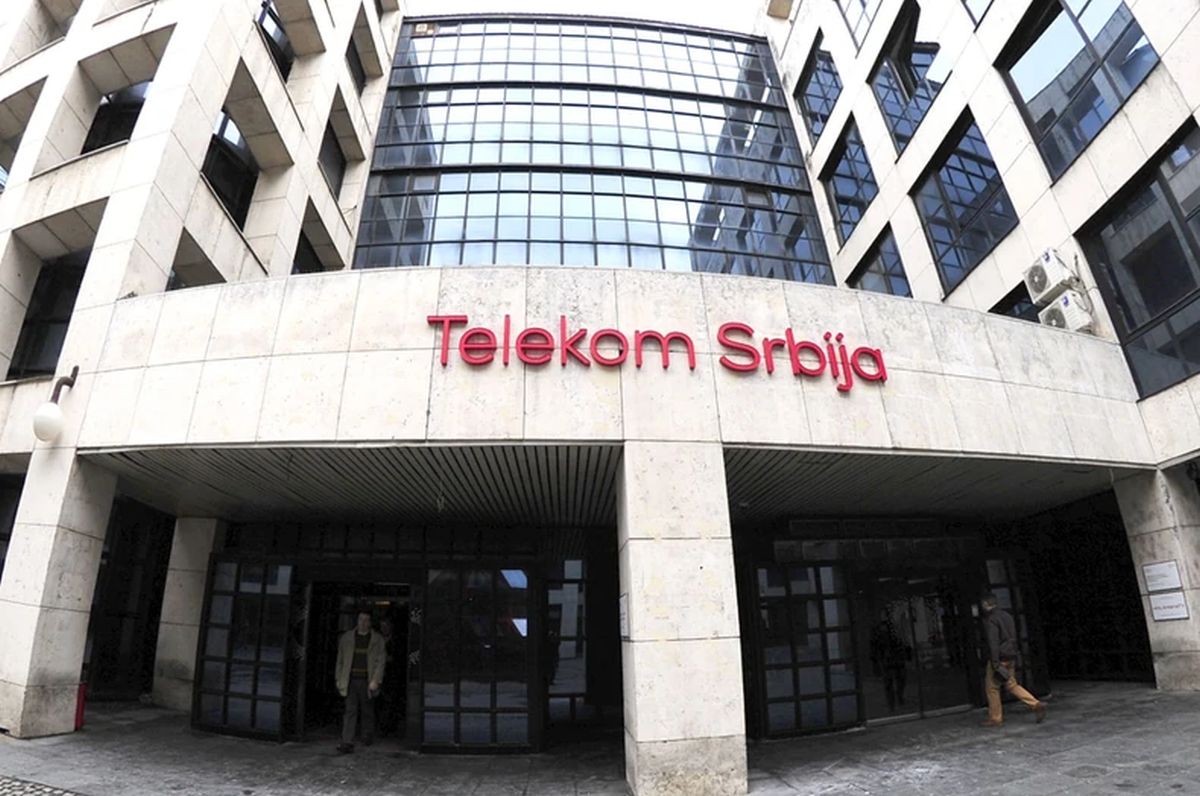
Telekom has enabled users who receive their television signal via antenna to watch channels that are normally part of its offering, including Kurir and Informer. However, according to Rodoljub Šabić, the problem is not only which channels are available and what content they broadcast, but above all the way in which the programming is distributed.
Šabić believes that, in the narrow legal sense, the situation is quite clear: broadcasting terrestrial television programming requires an appropriate license from the regulatory body.
“So, it comes down to the fact that some entities that do not have a license to broadcast terrestrial programming are broadcasting. This is unquestionably illegal. Not only do Kurir and Informer and some of the other entities you mentioned – Blic, Euronews and so on – not have such licenses, but neither does Telekom itself. Therefore, in my view, there is absolutely no question that this constitutes a violation of the Electronic Media Act,” he adds.
According to his interpretation, the fact that Telekom has a business or technical explanation for its move does not change the legal nature of the procedure. If terrestrial programming is being broadcast without the necessary license, the way the decision is presented does not eliminate the problem.
“Someone who does not have the necessary licenses is broadcasting the programming, terrestrial programming. A license from REM is required to broadcast such programming, whether national, regional or local, but in any case it is necessary. Without that license, the programming should not be broadcast, and what Mtel is doing, regardless of the explanations and reasons it gives, does not call into question the illegality of that procedure.”
It is not just a technical issue
However, both interviewees warn that the debate does not end with the question of technical or regulatory legality. The timing of Telekom’s move gives it particular significance: elections have been called, and the campaign is a period in which control over the media space becomes particularly important.
Šabić therefore separates two aspects of the problem. The first is legal, while the second concerns motives and the political context.
He points out that another move in the electronic communications sector occurred almost simultaneously: Yettel removed N1 and Nova S from the packages of a certain number of users. In both cases, according to him, commercial explanations were offered.
“Whatever those explanations may be, regardless of the motives behind them, I stand by this: it is unacceptable for terrestrial programming to be broadcast by someone who does not have a license to do so. As far as the motives are concerned, it is very difficult to believe the ones that have been given. And even if they are true, the timing chosen to begin implementing them is extremely inappropriate,” Šabić emphasizes.
For Šabić, the problematic timing takes on additional significance because of the institutional context in which the elections are being held.
It is not just a technical issue
However, both interviewees warn that the debate does not end with the question of technical or regulatory legality. The timing of Telekom’s move gives it particular significance: the elections have been called, and the campaign is a period in which control over the media space becomes particularly important.
Šabić therefore separates two aspects of the problem. The first is legal, while the second concerns motives and the political context.
He points out that another move in the electronic communications sector occurred almost simultaneously: Yettel removed N1 and Nova S from the packages of a certain number of users. In both cases, according to him, commercial explanations were offered.
“Whatever those explanations may be, regardless of the motives behind them, I stand by this: it is unacceptable for terrestrial programming to be broadcast by someone who does not have a license to do so. As far as the motives are concerned, it is very difficult to believe the ones that have been given. And even if they are true, the timing chosen to begin implementing them is extremely inappropriate,” Šabić emphasizes.
For Šabić, the problematic timing takes on additional significance because of the institutional context in which the elections are being held.
But Veljanovski, like Šabić, does not limit the issue to the regulatory question. He directly links the move to the upcoming elections.
“Of course, it is clear that Telekom has done this now because of the upcoming elections, because it wants to increase the possibility of exerting influence through the television programs in its offering, to increase the possibility of influence by the authorities, that is, the regime, and to ensure that information important to the regime reaches as many viewers as possible. There is now no doubt that this is what it is about.”
Veljanovski also views the move in the context of previous changes to the legal framework governing media ownership. As he notes, at the end of 2023, a provision was added to the Law on Public Information and Media allowing state-owned or partially state-owned companies to be founders and owners of media outlets.
“That is just the tip of the iceberg, because it has been known for years that this strategy of increasing the authorities’ influence over public communication through Telekom was being prepared. Above all, when a provision was added to the Law on Public Information and Media, adopted at the end of 2023, allowing a state-owned or partially state-owned company to be the founder and owner of a media outlet. Now we can see why they wanted that at the time and what the goal was,” Veljanovski says.
READ MORE:
Unlocked Kurir and Informer, locked N1 and Nova S: How television reality is being shaped ahead of the elections
The Yettel move appears in the conversation as the other side of the same picture, as, according to Veljanovski, the company removed N1 and Nova S from the packages of a certain number of users as part of a so-called pilot project.
For Veljanovski, the simultaneous timing of these two processes is not accidental. While one move increases the availability of television content he considers close to the authorities, the other, in his assessment, reduces access to content from independent television channels.
“And what Yettel did with the so-called pilot project is part of that same strategy. So, Telekom is increasing the possibility of delivering information that is in the regime’s interest to as many people as possible because of the elections, while on the other hand Yettel is reducing the possibility of objective and professional information, which can generally be heard and seen on the independent television channels N1 and Nova S, reaching end users,” Veljanovski says.
Veljanovski believes that the political function of communication infrastructure is best seen precisely through the combination of these moves.
“So, all of this is so transparent and completely obvious, and it is clear that the regime, in a completely unscrupulous manner, in collusion with its companies that are loyal to it and work for it, is increasing its viewership, visibility and influence on public opinion ahead of the elections,” he adds.
Both Veljanovski and Šabić emphasize that Telekom’s move should not be viewed separately from the electoral moment.
For Šabić, the key question is whether terrestrial television programming is being broadcast without the appropriate license, but also why such a move is being implemented precisely as the election race begins. For Veljanovski, meanwhile, expanding the availability of certain channels is part of a longer-term strategy aimed at increasing influence over public opinion.
In that sense, the question of who can broadcast, who can distribute and who can watch certain television content becomes particularly significant precisely at the moment when the election campaign has officially begun.
MORE TOPICS:
Source: Mašina Foto: Printscreen X
 Add Serbian Times as your Google source