




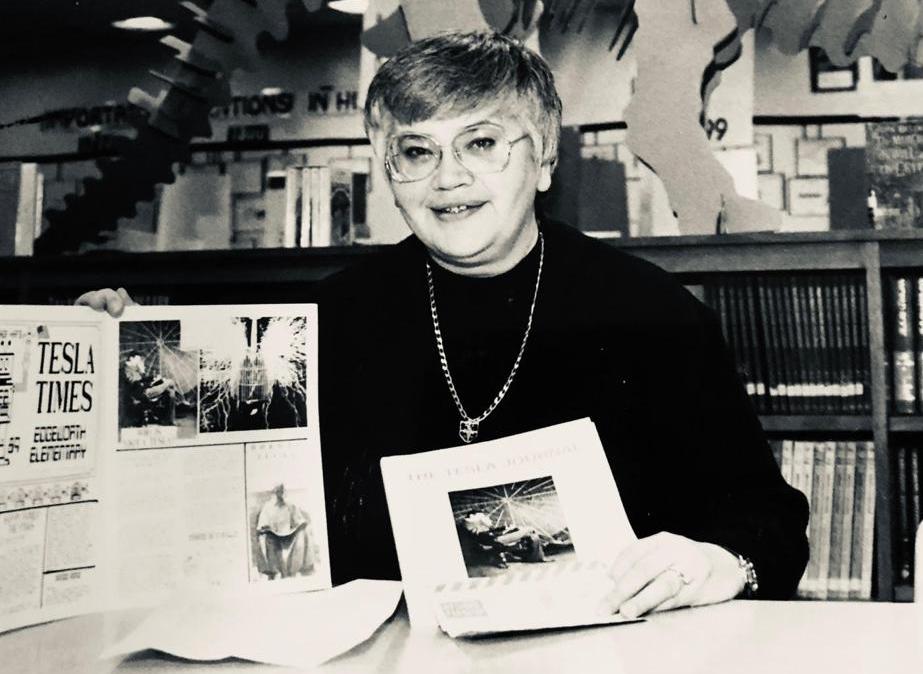
Newly arrived Serbs, those who came to the US in recent years and decades, are often critical of members of earlier generations of immigrants, American-born individuals whose ancestors arrived on this continent over 100 years ago. They are typically criticized for speaking Serbian poorly or not at all and for losing all contact with their homeland.
Milana Mim Bižić (79) is a living example that even third-generation Serbs born in America still feel a strong sense of belonging to the people from whom they descended, that they cherish memories, faith, customs, and teach their children and grandchildren about the homeland of their ancestors. Baba Mim, as she is called by the expatriate community from the East and West Coasts of America, was born in Pittsburgh, but the blood of her Lika and Kordun ancestors, who sought a better life in a distant world, still runs through her veins.
This modest but incredibly energetic grandmother is still full of enthusiasm for everything Serbian. She maintains a website where she publishes texts related to Serbian culture and her family’s traditions, and on social media, she is a true treasure trove of knowledge for those who want to learn more about the people and events that have marked the history and life of our colony on this side of the Atlantic.

In the first part of her exclusive interview for Serbian Times, we touched upon her ancestors, the arduous struggle for survival they waged working from dawn to dusk in steel mills and factories, as well as her childhood spent in a Serbian neighborhood in southern Pittsburgh, where even Jewish shopkeepers and butchers learned Serbian to accommodate their customers.
Her illustrious academic career, during which she served as an education advisor in two US departments (Energy and Commerce), was marked by computers, which the ambitious and visionary Mim recognized as a powerful tool that would help her students learn faster and better and broaden their horizons.
By the late 1970s, everyone had heard about the experimental computer departments that Milana had established in Pennsylvania, where she educated both students and her colleagues, the professors. Word reached California, to “Apple,” then the largest and most advanced computer company in the world. The co-founders of “Apple,” the two famous Steves, Wozniak and Jobs, decided to engage the Serbian woman from Pittsburgh as a “creative expert” to help “Apple” develop educational programs.

“At that time, they were interested in introducing their software into public schools and had heard about me. They decided to contact me, and Steve Wozniak was assigned the task. Soon, I became their collaborator and one of the first shareholders of ‘Apple.’ Those were wonderful times.”

“Woz, as we called him, was the reason Apple succeeded. He was the innovator, the brains of the operation. Not only was he a genius, but he was also a kind person who helped people wherever he went. Later, he left Apple because he was frustrated with the constant pursuit of money and continued to research and innovate to make people’s lives easier. He also became involved in humanitarian work. Over time, we became great friends, and he visited Pittsburgh several times because of me. The last time he was here was when I retired as a professor. John Sculley, the first and most famous CEO of Apple, also came to congratulate me and give me a kiss whenever I won awards,” recalls Baba Mim of the “good old days.”

With her students, she won first place three times at the national “Apple Computers” competition in 1976, 1987, and 1988. Eventually, she was inducted into the Apple Hall of Fame. However, computer geniuses were not the only ones to recognize her talent and enthusiasm. The renowned Smithsonian Institution commissioned Mim to write a textbook entitled ‘Beyond Borders: Flying in the Age of Computers,’ which became a bible for those seeking to use computers in educational programs.
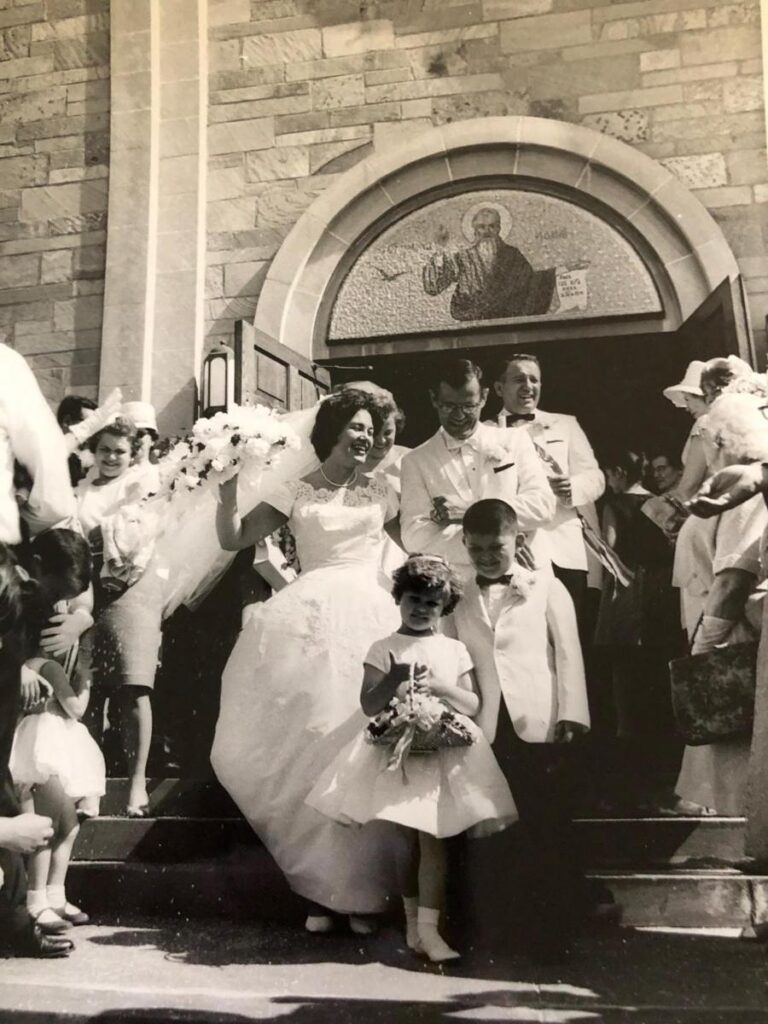
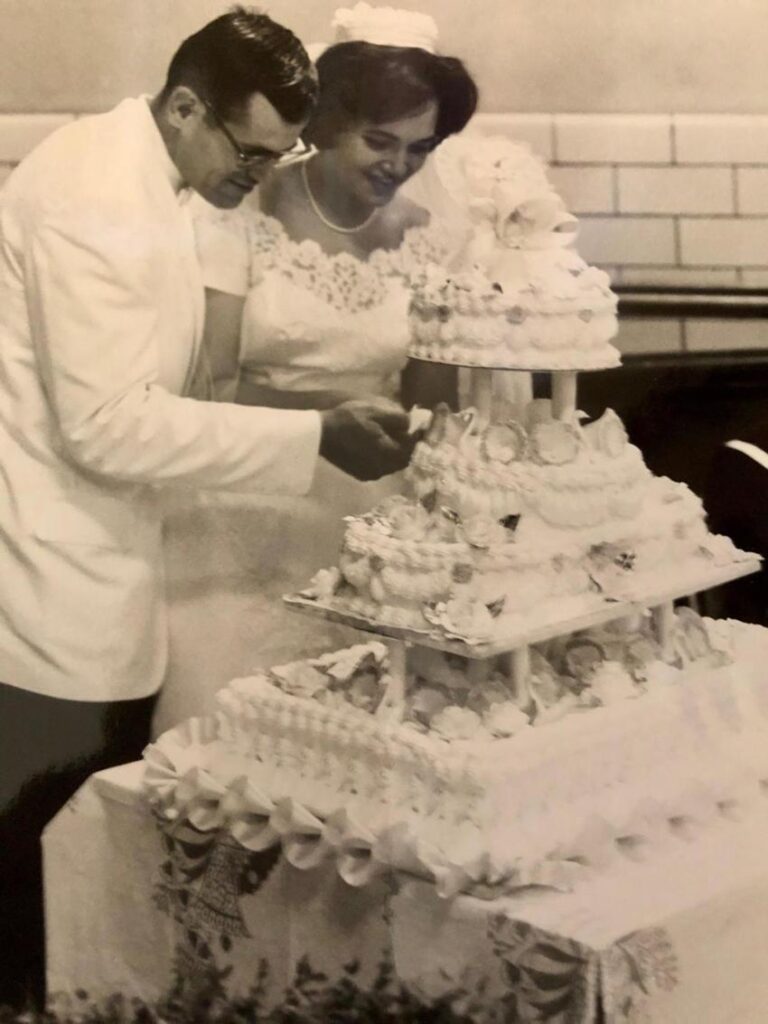
“I loved what I was doing, so nothing was too difficult. In addition to my regular job, I always worked on several projects simultaneously. Even after marrying my husband, Gas, and having our son, Nikola, that ‘current’ still ran through me. I’ve always been drawn to knowledge; I had this insatiable thirst for it. I believed that a person is the master of their own destiny and has the power to do anything they want, but that they should never wait for someone else to do their work. I tried to motivate and inspire others because it was more fun for me when someone joined me in my work, whether it was at school, on a church board, or in a Serbian association,” explains Milana Mim Bižić, whose life credo can be summed up in a quote by Walt Whitman:
“Keep your face to the sun and the shadows will fall behind you.”
Mim has guided generations of students who, under her leadership, won countless awards in national and state competitions. Today, enjoying her well-earned retirement, she often flips through yellowed photographs because, as she says, it does two beneficial things: it nourishes her heart and exercises her mind.

“Her archives also contain numerous personal awards, recognitions, and honors, both American and Serbian. In 1992, she was featured in the book ‘Who’s Who in American Education,’ and she was further honored in 1995 when she was named in the edition of ‘Who’s Who Among American Women,’ among the most prominent women of that year. ‘I’m particularly fond of being named “Woman of the Year” and “Citizen of the Year” in my beloved county because it came from people who know me and who had the opportunity to work with me or teach their children,’ she says.
My mother, my hero
“My mother was my hero. I learned many things from her, but most importantly, about courage and caring for ‘our own blood’. Then, in 1943, my mother officially became a hero, and all the newspapers wrote about her… That year, I spent a long time in the children’s hospital, two whole weeks. I almost died from double pneumonia. When I got out, my mother and father were worried that the pneumonia would return, since we didn’t have a stove in our apartment, so they decided to temporarily move me to the house of my grandmother Andja and grandfather Nikola Mamula, which was just around the corner.”
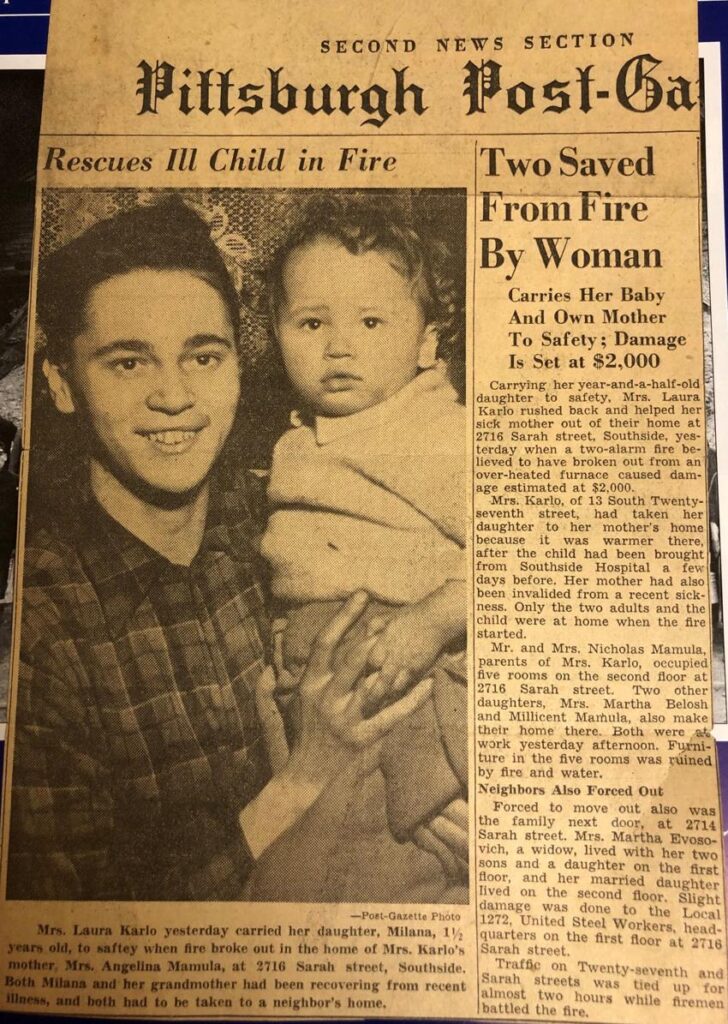
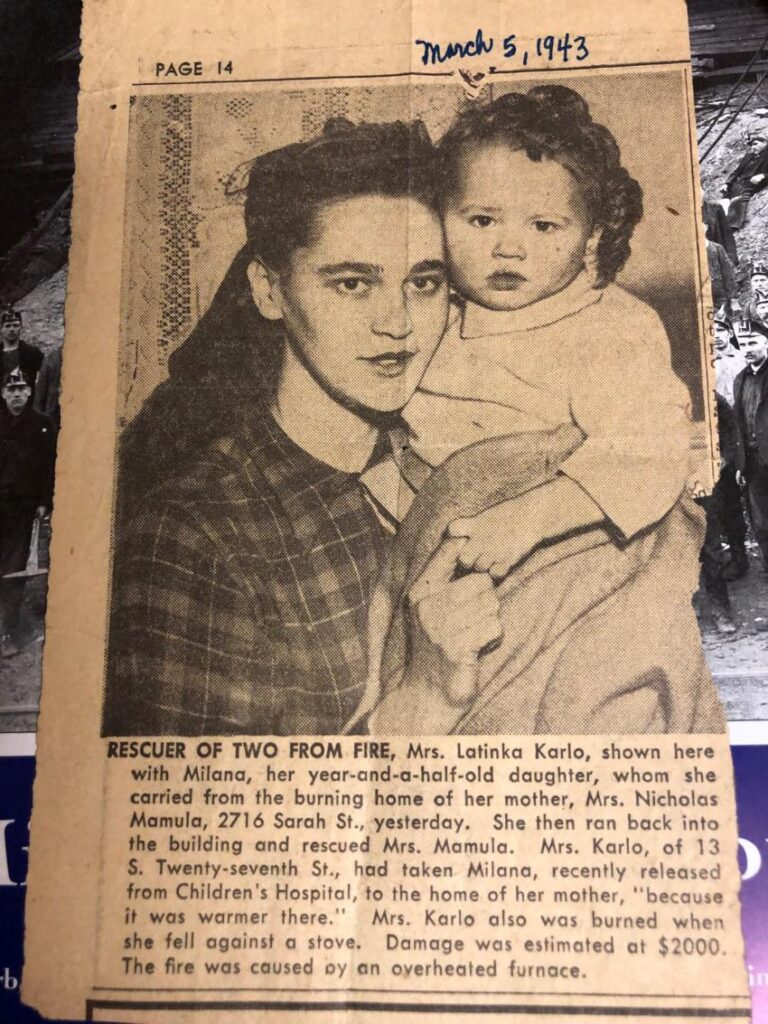
“One day, while my mother was working as a secretary for the Metalworkers’ Union downstairs, and my bedridden grandmother, who was also recovering from an illness, and I were sleeping upstairs, a fire broke out. When she saw what was happening, my mother realized there was no time to wait for the firefighters and instinctively rushed into the room that was already filled with smoke. She first carried me out, then returned for Grandma Andja. Soon, journalists and photographers arrived at the scene, and my mother and I ended up on the front pages of local newspapers, under the headline ‘Saved sick child from fire.’
“Although it was reported that the fire started from an overheated stove, we think our grandfather Nikola, who was experimenting with a pipe-thawing battery in the basement during those days, was the cause. Fortunately, everything turned out without major consequences, and the damage was estimated at $2,000, as stated in the newspapers”, Mim notes.

“I am excited by everything related to Serbian history and tradition. I strive to pass this on to new generations, to explain to them how important it is to know who they are and where they come from. Our grandchildren are already the fifth generation, they speak Serbian poorly, but they feel like Serbs. I would like to see more connections and relationships between those of us who have been in America for a long time and those families who have arrived here more recently.”
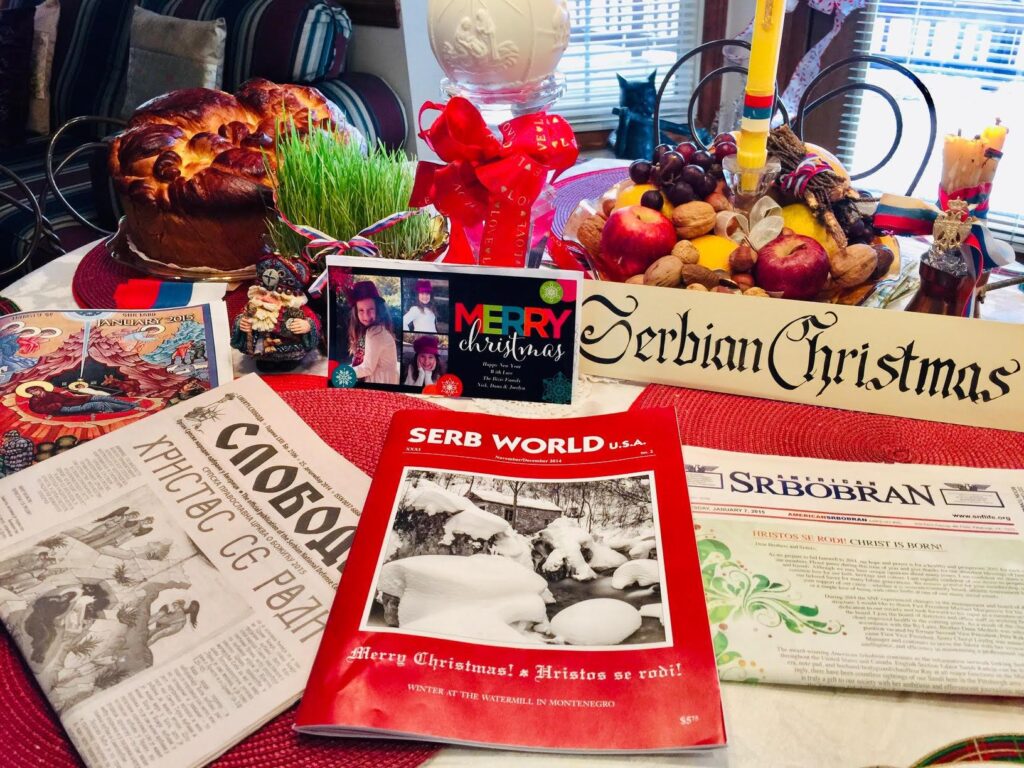
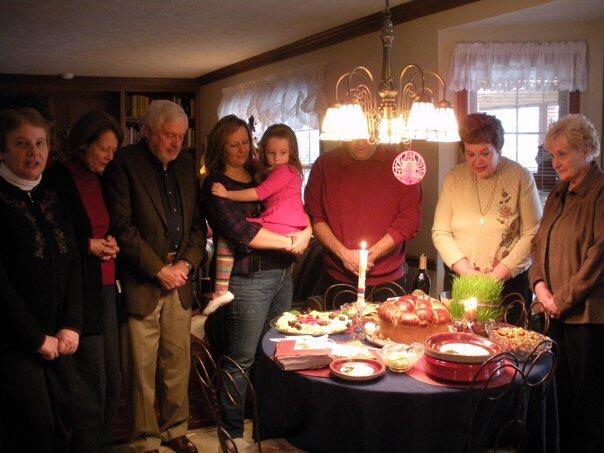

“We must be connected and organized to be strong and to fight for what is rightfully ours. If we were all to come together, unite, all of us who have arrived in the last 130 years, we would realize that we are many and that we have much to be proud of. The Serbian people may not be as large as some others, but they have disproportionately done great things for this country, contributing to America’s greatness and power. From Tesla and Pupin to the scientists of Apollo 7, our war heroes, to today’s brilliant artists and athletes”.

“People often ask her how it is that she, a born American, loves Serbia so much, a country that is 6,000 miles away, a Serbia she first saw as an adult. She responds, “They say, ‘Out of sight, out of mind,’ but that doesn’t apply to me. Perhaps it’s because of my ancestors, who taught me to love my heritage, like my grandmother Andja, who kept a diary from 1936 until her death in 1963, recording every detail of our family life and the Serbian community. I still relive every day of my life through that diary”.
“During the 1990s, American Serbs, including Mim, were outraged by the policies of certain American presidents, especially Bill Clinton, and by the media’s unfair portrayal of Serbs as “bad guys”.
To counteract this, Serbian immigrants organized numerous demonstrations, often led by Milana Bižić”.
“I made and sewed banners, wrote slogans. For the demonstrations in Washington, protesting the seizure of Kosovo and Metohija, a large group of people from our St. Elijah Church in Aliquippa (Pennsylvania) set off. Mr. Mića Trivanović and I organized buses, where songs were sung the whole time. Our ladies baked pies and other specialties and shared them with everyone. The best part was when we stopped halfway to fill up with gas and came across other buses from Monroeville (New York), New Jersey, Cleveland, etc. Oh, how happy we all were, we would kiss each other three times on the cheek and continue on our way! It was refreshing, inspiring, a wonderful time, because we were passionate about defending Serbia. I also gave speeches at these demonstrations, but I have to say that the current Eastern American Bishop Irinej was always impressive as a speaker. When he spoke, it was as if Moses himself was speaking!”

“Milana adds that she only missed one demonstration, the one in New York, due to school obligations, but emphasizes that her husband was there to replace her. At all demonstrations, there was always someone from the Bižić family; Washington, Pittsburgh, Cleveland, NYC… In addition, she constantly wrote letters to American officials and appeared in the media.”

“I’ve never stopped writing letters to my congressmen in Pennsylvania or to presidents, and many of my letters to the editor have been published in the ‘Pittsburgh Post-Gazette’ and other local newspapers. I still have copies of some of them. When I was recently interviewed during Trump’s rally in Pittsburgh, TV host Dave Crowley remembered interviewing me earlier, but because of the war in the Balkans: ‘I was in your home many years ago! Back then you were fighting for the Serbs, and now for Trump,’ he said. Everyone in my school and community knew how fiercely I fought for my people, and that I never give up. Never. That’s why no one ever messed with me on that issue. They know it’s futile.”
Every Serbian house needs gusle
“Njegoš’s words from ‘Gorski Vijenac’, ‘Đe se gusle u kući ne čuju, tu je mrtva i kuća i ljudi’ (this fraze is simply not trully translatable, but mean that the ), are honored in the Bižić family home in Pennsylvania, where the hostess Mim has a collection of maple gusle that take pride of place on the walls”.

“I’ve never played the gusle, but I have a collection of beautiful ones that I’ve brought back from my travels in Serbia. I bought one in the courtyard of the Visoki Dečani Monastery in Kosovo and Metohija in 1989, when I traveled to celebrate the 600th anniversary of the Battle of Kosovo. I bought two beautiful examples, with Saint George, our family saint, carved on them, from the widow of the Serbian architect Vojin Vojnović and his twin brother’s family. However, my stories that preserve Serbian history don’t pass through the strings of a gusle, but rather through the keyboard of my computer, my website www.babamim.com, and Facebook”.
“Baba Mim is also our colleague, a journalist. In fact, she successfully manages four websites, where she regularly writes and publishes articles. One is dedicated to Serbian history, traditions, and interesting stories from the Bižić family and other Serbian immigrant families in the USA (www.babamim.com). Another is for children and teachers, offering creative learning methods (www.mimbizic.com [uklonjen nevažeći URL]). The third explores the thirst for information, knowledge, and understanding (http://www.notretiredfromlearning.com), and the fourth focuses on local history and the preservation of cultural heritage in the county where Milana lives. As a reminder, our interviewee will turn 80 in July 2021!”
“I love to write because what a person writes will never disappear, it’s a way to preserve things from being forgotten. Today, it’s easier than ever, you just post it online and you know it will last forever (or so I hope). I inherited my journalistic gene from my father, Milan, who was the editor of ‘Američki Srbobran’. With his second wife, Helen, he wrote the book ‘Early Days: Serbian Settlers in America,’ which is still widely read and sought after today”.

“After leaving his position as editor of the English section of the ‘Srbobran,’ he went to work for Bishop Irinej Kovačević, an old friend who asked him to be the editor of the ‘Diocesan Observer.’ He and his second wife, Helen, worked tirelessly to help build the New Gračanica Monastery near Chicago, Mrs. Bižić tells us, detailing her family history”.
“Besides being active as a journalist and editor, she is also politically engaged. Based on her social media posts, it’s easy to conclude that she fully supports President Trump’s re-election. She explains to me why… ‘I firmly believe that he stopped America from going down the path of ruin. Our individual rights have been taken away, and we’re forced to live in a different America than the one I knew as an American patriot. And in that America, there was nothing like what they call ‘white privilege’ today. My parents were given nothing. They both worked hard at multiple jobs and always strived for intellectual growth”.

“They talk about diversity? We lived it in Pittsburgh, a city of all colors, a melting pot of cultures. We valued ALL lives, black, white, red, and yellow. But you can’t even say that now. It’s not liberal enough—it’s not politically correct. I hate what’s happening; I hate the violence of looters and rioters. Police officers’ lives matter to me. And my heart aches for businesses or car owners whose property has been senselessly destroyed. I believe in law and order.
Our music teachers taught us songs and the heritage of many cultures, so we felt comfortable wherever we were—at festivals, events, ethnic weddings, etc. We didn’t care about someone’s religious or other beliefs. But don’t force those beliefs on others. That’s exactly what’s happening now. I think [Trump] genuinely cares about America and the people who want to work and build, not destroy, and that’s why I support him.”

“One of her favorite trips was last year when she attended the 75th anniversary celebration of the rescue of 500 American airmen by General Draža Mihailović and Serbian Chetniks in Pranjani. This event is known in history as ‘Operation Halyard’.”
“An operation that forever bonded Serbia and America”
That operation is something that forever fraternally connects America, the country where I was born, and Serbia, my homeland, which were allies in two world wars. I think the hardest moment of my life was when the country where I was born bombed the land of my ancestors. In the 1990s, I appeared on the media, talked to people, organized demonstrations, trying to explain that American politicians were misled and were killing their allies for the sake of a people who had always been on the side of their enemies in world wars.
Milan was also connected to Operation ‘Halyard’ because, as a seven-year-old girl, she read the reports that her father, Milan, published daily in the magazine ‘Serb Life’, based on the war diary of the operation commander, Captain Nika Lalić from the Office of Strategic Services (the predecessor of today’s CIA). One of the main heroes of that war epic was George Vujnović, who grew up across the street from their house in southern Pittsburgh.”

“Throughout my life, I’ve met many people involved in that mission: Vujnović, Musulin, Lalić, and Robert Marjanović, a parishioner of Saint Elijah Church in Aliquippa, who studied theology in Belgrade and was invaluable to the radio communications during the rescue due to his language skills. They were all born in America but were also great Serbs. As a girl, I loved reading comics about Captain Marvel and Superman, but these were my real, living heroes! And of course, even though I never personally met General Draža Mihailović, he was a true ‘Uncle Draža’ to me, a member of the family, like my beloved uncles.”

“Last year, Milan and I embarked on a trip to Serbia, accompanied by Pennsylvania State Representative Valerie Gaydos. It was a completely spontaneous decision. Just a few weeks before the trip, I read an interview with her where, when asked ‘What is your favorite book?’, she replied: ‘The Forgotten 500’ by Gregory Freeman, a book about ‘Operation Halyard.’ I called her and explained that the 75th anniversary of the mission was approaching and asked if she would like to join me. Imagine my delight when she exclaimed: ‘Yes!’ Within three weeks, we were on our way to Serbia.”

“As ‘King Peter’s Guard marched on’ (Marširala, marširala kralja Petra Garda is the original name) echoed through a restaurant in Belgrade’s Skadarlija, I sang until I lost my voice, thinking about how proud our ancestors would be to know that we haven’t forgotten our roots,” says Milana Mim Bižić, the beloved Baba Mim, Serbia and the Serbian people’s greatest ambassador in America.
Writer: Antonije Kovačević
Photo: Privatna arhiva