




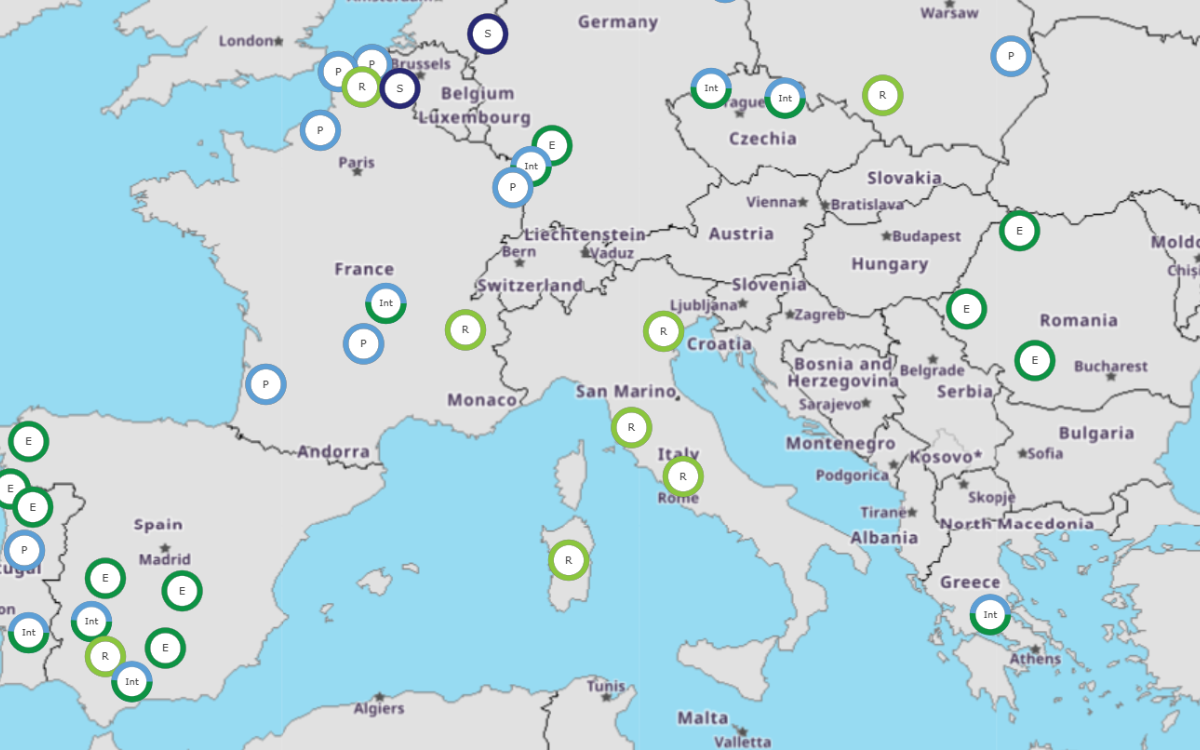
The European Commission (EC) adopted on Tuesday the first 47 strategic projects aimed at strengthening the extraction capacity of critical raw materials. All selected projects are located within EU member states and were chosen from 122 applications submitted in response to a public call last summer.
Among them, there is no trace of the “Jadar” project or any other project from Serbia. The selected projects, published on the EC’s website, focus on 14 critical raw materials, including lithium, aluminum, magnesium, cobalt, boron, nickel, manganese, graphite, and tungsten.
A Milestone for EU’s Critical Raw Materials Strategy
These new strategic projects mark a significant milestone in the implementation of the Critical Raw Materials Act (CRMA), which aims to ensure that EU extraction, processing, and recycling of critical raw materials meet the bloc’s demand by 2030. The goal is for extraction to cover 10%, processing 40%, and recycling 25% of the EU’s demand for critical raw materials by 2030.
Strengthening the EU’s Supply of Strategic Raw Materials
In May 2024, the European Commission launched a call for strategic projects, with the first 47 approved projects located in EU member states, including Belgium, France, Italy, Germany, Spain, Estonia, Czechia, Greece, Sweden, Finland, Portugal, Poland, and Romania.
These projects were selected based on their contribution to the EU’s supply of critical raw materials, adherence to environmental, social, and governance (ESG) criteria, and their technical feasibility. Additionally, they provide clear cross-border benefits for the EU.
FIND OUT MORE IN ENGLISH:
SEOS: “No Lithium Mines in Serbia”
The Alliance of Environmental Organizations of Serbia (SEOS) had previously notified the European Commission in a letter that Rio Tinto had nominated the “controversial and disputed” Jadar project, which focuses on the extraction and processing of lithium in western Serbia. SEOS emphasized that “regardless of what the European Commission decides,” there “will be no mine in the Jadar Valley.”
“There will be no mine because it is disastrous and harmful to the citizens of Serbia from multiple perspectives,” SEOS stated.
The environmental alliance expressed hope that reason will prevail and that Europe will not selfishly prioritize its own interests at the expense of others.
“We hope Europe will not destroy the very foundations on which it was built, especially at a time when the people of Serbia are fighting for European values and against crime and corruption. We await Europe’s test of maturity,” SEOS declared in their letter.
Following the publication of the EU’s priority projects—which did not include Serbian lithium—SEOS welcomed the decision, stating that “reason has prevailed in the European Commission.”
MORE TOPICS:
SERBIAN EXPERT TEAM: Data indicates that NATO deliberately committed genocide in Yugoslavia in 1999!
Source: Vreme, Foto: Prinstcreen European Commission
 Add Serbian Times as your Google source