




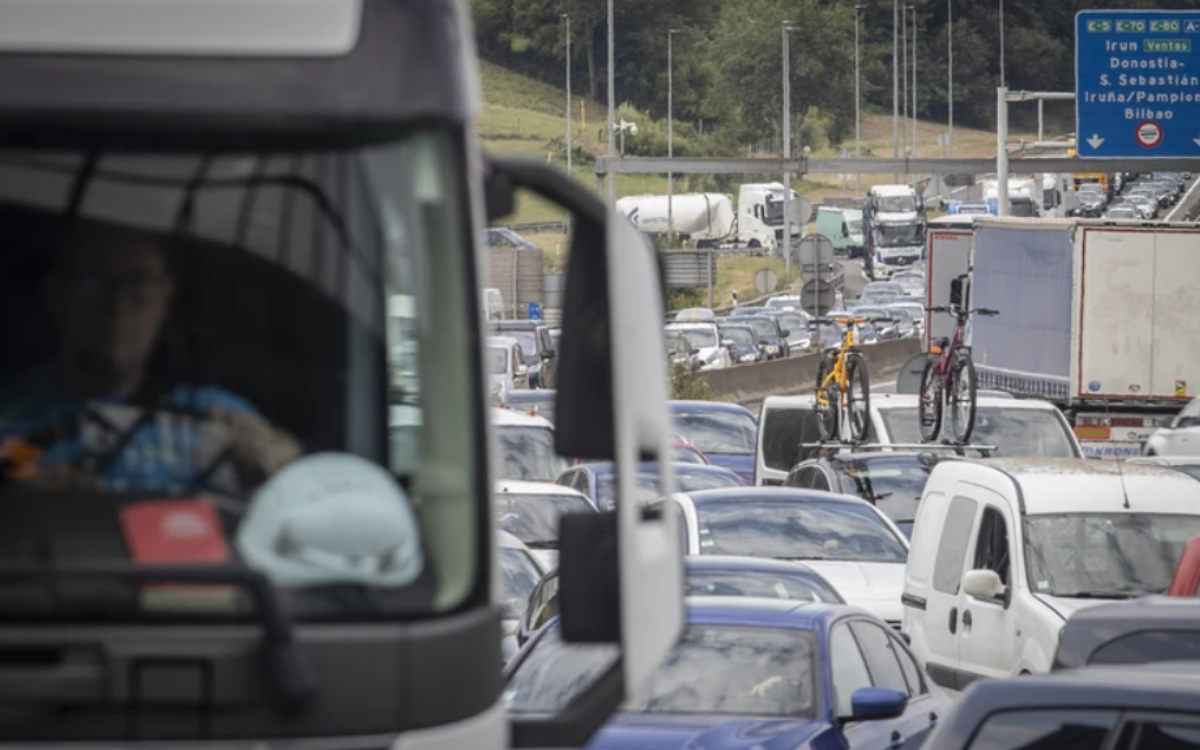
Tourists have been warned to brace themselves for longer waits when traveling to France, after the country became the latest EU member to decide to reintroduce controls at its Schengen borders in an effort to curb migration.
Increased border controls will come into effect from November 1.
A French government statement says the checks will be introduced due to “serious threats to public policy, public order, and internal security posed by high-level terrorist activities.”
France has followed in the footsteps of six other EU member states, including Germany, which have introduced similar controls, citing concerns about unrestricted migration.
The new regulation will not affect all travelers, but on-the-spot checks will be carried out at the border, but travel experts have warned that around 100 million tourists who visit France each year, including Britons, could face chaos and potential delays at the border.
The new border controls will affect France’s land, sea, and air routes with its six neighboring Schengen members: Belgium, Germany, Italy, Luxembourg, Spain, and Switzerland.
The increased restrictions, or stricter controls, should last until April 1, 2025, with authorities noting that they could be extended.
This is the first time France has introduced tighter controls since the Covid-19 pandemic.
Under the Schengen Agreement, 29 European countries have agreed to abolish internal border controls with the aim of achieving freedom of movement across the continent.
However, the Schengen Borders Code allows member states to introduce temporary border checks if authorities believe there is a serious threat to public order or internal security.
PRATITE NAS I NA FEJSBUKU:
Germany also closed its borders
In Germany, Olaf Scholz’s government, after a knife attack by a Syrian asylum seeker at a festival in Solingen and the success of the far-right AfD in elections in Thuringia and Saxony, decided to reintroduce border controls for six months. The decision came into force on September 16.
Until now, the German police have controlled the borders with Poland, the Czech Republic, Austria, and Switzerland, and now controls are being extended to five more countries, on the borders with France, Luxembourg, the Netherlands, Belgium, and Denmark. According to the Schengen Agreement, a member state can introduce controls only temporarily and in case of “exceptional circumstances”.
As a result of the controls since October 2023, more than 30,000 people have been turned back from the German border, Interior Minister Nancy Faeser said. This has contributed to a drop of more than a fifth in the number of asylum seekers compared to last year, she claims.
New EU rules
Germany presents its measures as temporary and necessary while waiting for the new European asylum system to come into force. The EU’s external borders should finally be comprehensively protected, and responsibility for refugees in Europe should be more fairly distributed.
Although Germany has been carrying out controls on the border with Poland since October, “closely coordinated” with the Poles, Warsaw has protested, claiming that they were not informed in advance of Germany’s plans.
Danger to Schengen
Across Europe, border controls are being tightened by right-wing or center governments fearing the rise of the far right.
After the terrorist attacks in 2015, France reintroduced border controls – and has largely maintained them ever since, but has now decided to tighten control. Denmark has also been controlling its borders since 2015. France justifies this by the increased threat of terrorism and the threat to internal security. But controls are a problem for carriers – between Germany and the Netherlands alone, around 100,000 trucks travel each day. Every hour of waiting at the border costs 100 euros per truck, the logistics cooperative TLN warned earlier.
FIND OUT MORE:
HEARTBREAKING VIDEO: Barefoot girl from Gaza carries her injured sister in search for help! (VIDEO)
Izvor: Kurir
Foto: Javier Etxezarreta / EPA
 Add Serbian Times as your Google source