




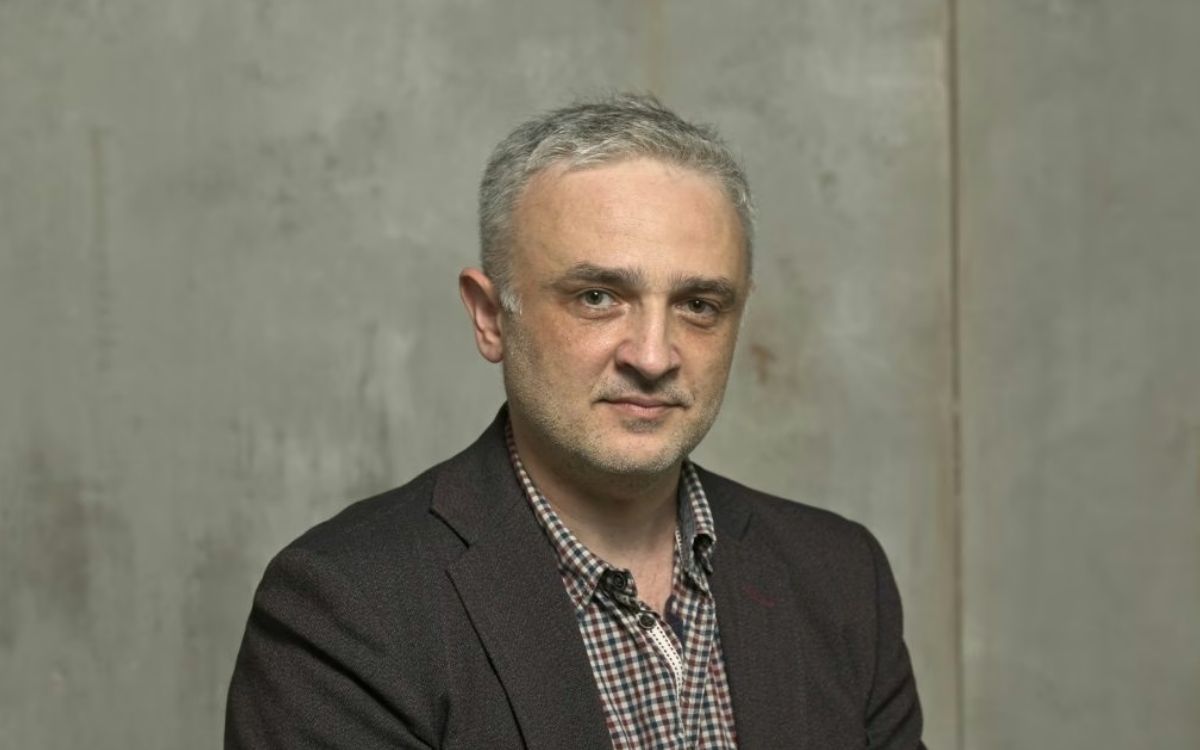
The Nova.rs portal, one of Serbia’s most widely read independent media outlets, is currently fighting a decisive battle to preserve its editorial independence. Just before the elections, the new owners are attempting to take control of the newsroom by imposing a management team that journalists categorically reject. Faced with ultimatums, threats to “digitally lock” the website and the possibility of being forcibly removed from their offices, the newsroom staff have refused to compromise with censorship.
Ratko Femić, editor of Nova.rs and a man who, as he says, has become the spokesperson for this journalistic revolt against media darkness through force of circumstance, speaks to SerbianTimes.info about the dramatic developments, the open letter sent to IT support, public solidarity and the personal cost of resistance.
The Nova.rs newsroom today sent an open letter to Dejan Kocić, director of United Cloud, the company providing IT support for the Nova.rs portal. How real is the danger that editors could be technically prevented from publishing articles in the coming hours, and would that effectively mark the end of the editorial policy the portal has followed until now?
Ratko Femić: We received information, which we confirmed through two independent sources, that an order arrived at United Cloud yesterday at around 7 p.m., after working hours, instructing the company to grant administrator or editorial account access exclusively to Marko Stjepanović and Ivana Mastilović Jasnić, whom the new owners appointed as editor-in-chief and deputy editor-in-chief. How real is the danger? It is real, but we are simply fighting against it. We have informed international, local and regional journalistic associations, made the public aware of this possibility, and will also notify European Union institutions — in fact, we have already sent them emails.
If this happened, it would constitute a violation of several laws. First and foremost, the Labor Law, because suspending our CMS accounts would prevent our editors from performing the duties required under their employment contracts. We could also be talking about a form of workplace harassment, mistreatment or mobbing. Beyond that, I believe this would be an unprecedented case of censorship in 21st-century Europe, in a country that is a candidate for European Union membership.
The new owners have issued an ultimatum to the newsroom, giving us 48 hours to state whether we wish to remain with the company under the conditions dictated by the new management and editors whom the newsroom does not want.
How has the newsroom responded to this pressure, and is there any room for negotiations with the new owners, or is this a classic attempt to take control?
Ratko Femić: We will fight to the very end to preserve our existing editorial policy, and we will not simply hand over a platform that attracts more than half a million unique users from Serbia alone every day, allowing someone to silence it, tone it down and turn it into some kind of lightweight, sugary publication for election day and the days that follow.
That letter is null and void. It is unsigned, it was sent to us by someone from HR whom we had never dealt with before, and it arrived after working hours. N1 published it first, and only afterward did it reach our email inbox. So there are several questionable aspects to it. As for dismissals, let us look at the French model for selecting an editor-in-chief. At the French newspaper Le Monde, for example, a director must secure the support of at least 60 percent of the newsroom staff to appoint an editor-in-chief.
A protest in support of your newsroom was held yesterday. At a time when you are facing threats to your livelihoods, how much does the solidarity of citizens and fellow journalists mean to you, and does seeing that support encourage newsroom staff not to abandon their principles?
Ratko Femić: That gathering, as well as the support we receive through various messages on social media, gives us the strength to persevere in this fight. So far, it has kept us going and carried us forward. Given that we are now just about ten days away from the elections, I really do not think we are going to disgrace ourselves by giving up at this point.
This forced imposition of editors is happening just before the elections. Do you believe the new owners’ primary motive is political — to silence or bring under control one of the few independent portals at a crucial moment for the citizens of Serbia?
Ratko Femić: We have no doubt that there is a political motive behind the takeover of the portal. They would not be putting us under so much pressure ten days before the elections, embarrassing themselves and making such mistakes by insisting on people the newsroom does not want, or be willing to shut down our accounts just to take control of the portal, if there were no political motive.
Why would they do this if they claim they do not intend to change anything and that everything will remain professional? They have made all kinds of promises. So why not wait a few days until after the elections? Let them come in properly — we will be here waiting for them with Turkish delight and coffee.
What do you think of the argument that the portal is privately owned and that its owners can decide who runs it without the employees’ or newsroom’s consent?
Ratko Femić: The portal is privately owned, but people are what make it a portal. People have a conscience and integrity, and neither can belong to anyone else. Some things are not for sale, and we have the right to disobey. That does not mean we refuse to cooperate or do our jobs. We simply do not want to accept political control or any changes in editorial policy, especially now, just before these crucial elections.
They are bringing in people from pro-government media whose work to date has shown them to be propagandists. We do not trust them. A private owner has the right to propose someone and appoint someone, but the newsroom also has the right to express a lack of confidence in that person. If only a few newsroom members felt that way, then fine. But if the entire newsroom does not trust him, that person has no legitimacy to lead it. If this issue has resonated so widely with the public and they still insist, then it is clear that this is not merely a commercial or market-driven decision, but that something much bigger lies behind it.
Various scenarios involving further pressure have been mentioned if the newsroom continues to resist. Are you afraid that the new owners might take radical steps, such as forcibly removing journalists from the newsroom with possible assistance from the police or private security?
Ratko Femić: As for any radical moves by the new owners, that is up to them. We do not know whether they are prepared to go that far, but we will not make it easy for them. I do not want to discuss everything we are prepared to do, or what I personally am prepared to do, but I am not prepared to back down or make things easier for them at this point.
I do not want to simply hand over a platform that informs a large number of people every day, only for them to use it to misinform the public and conceal things that might happen on election day or afterward. We do not know what election day will be like, but we have the right to make assumptions and have suspicions, because things have not ended peacefully over the years. We have witnessed various abuses, pressure, threats and even election theft.
If you are denied access to the website and physically prevented from working from your offices, what will the newsroom do next? Is there a “plan B” to ensure that the truth and your team’s independent reporting still reach readers in Serbia and the diaspora?
Ratko Femić: We are considering various options in case we lose access to the website, but we will genuinely do everything we can to prevent that from happening. We will protest, because it would truly be an act of censorship showing that the regime in Serbia is not much different from the one in Belarus. We essentially have Minsk in Belgrade today.
Over seven years, we have earned our readers’ trust and reached third place on Gemius’s rankings. In a study published last year by the University of Oxford and the Reuters Institute, we ranked second among media outlets in Serbia in terms of reader trust. Our readers have enormous confidence in us, and if someone does not know how to appreciate that, I do not know what else to say. We are not the ones readers distrust; it is the people the new owners are trying to impose on us.
What is happening to Nova.rs is symptomatic of the media landscape in Serbia. Why is it so important, not only for your journalists but for society as a whole, that the portal survive this attack and remain a beacon of free journalism?
Ratko Femić: I really do not like describing ourselves as the last bastion or beacon of free journalism. That would sound pretentious, because we are not the only ones. There are other newsrooms fighting here, and small portals that do their jobs honestly. But we must acknowledge that we reach the largest number of people. Among the remaining critical media outlets, we are the largest and most widely read independent portal.
It is important to show that we are not prepared to let these last remnants of freedom and journalistic professionalism be crushed for political reasons. Why must all media outlets in Serbia be uniform and look exactly alike?
Post shared by SERBIAN TIMES & Serbian News (@serbian.times)
Finally, I have to ask you something personal. You have stood up for your newsroom, openly confronted the new owners and taken a huge burden upon yourself. As a man with three children, how much pressure are you under right now, and where do you find the courage not to compromise in this kind of media and political darkness?
Ratko Femić: There is no price I would accept for betraying my children. Do you understand? If I end up losing my job, well, I have ten fingers. I will work in a metalworking shop, deliver food for Glovo, ask Antonio Kovačević whether I can go to America to drive a truck, or do something else.
I draw strength from the declarations and promises we made here, and from the articles we have written. I stand behind every word I have written, and I cannot back down. Neither I nor my colleagues can be one kind of person in our articles and something completely different in real life. I am not alone in this. If someone sees me as a courageous man, there are people in this newsroom who are far more courageous and principled than I am. The new management will have the same story with them as it does with me. By virtue of my position, I was second in command after the previous editor-in-chief, so it fell to me to speak out and become the spokesperson for our little revolt.
I draw strength from the people who support us, from the solidarity we saw at the protest we organized on the spur of the moment in just four hours, from my colleagues, from words of support, from my children and from the hope of a better future, however much that may sound like a cliché to some. On the other hand, the pressure can only fuel our defiance and push us toward further escalation.
MORE TOPICS:
Source: Vera Nikolić, Foto: Nova.rs
 Add Serbian Times as your Google source