




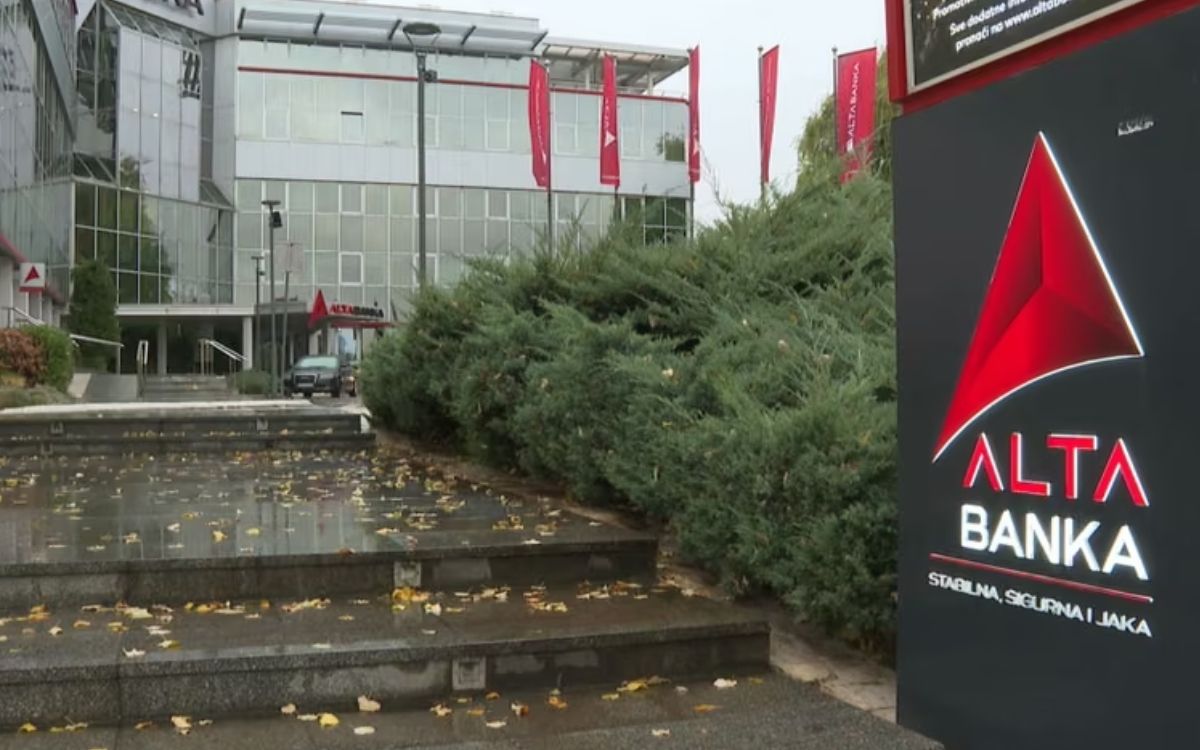
The National Bank of Serbia has revoked the operating license of Alta Bank, which, according to the Financial Times (FT), is “used by Russians” and is “under international scrutiny over suspicions of money laundering.”
The National Bank of Serbia announced on Saturday that it had decided to shut down Alta Bank because “the bank’s financial position has deteriorated significantly and there is a possibility of further deterioration,” including a worsening of its liquidity position, the Financial Times reports.
The decision came less than a week after Serbia’s longtime leader Aleksandar Vučić lost the election to the student movement, which had protested against his alleged corruption and increasingly authoritarian rule, the British outlet recalls.
Alta’s banking operations have been suspended, and some customers told the Financial Times that they had been unable to withdraw money since Saturday. Serbia’s deposit insurance system covers amounts of up to 50,000 euros per depositor, the Deposit Insurance Agency announced.
Serbian officials told the Financial Times that, in the days following the election, Alta customers withdrew large sums of money and also transferred significant amounts abroad.
According to people familiar with the matter, Alta played a significant role in facilitating money transfers to and from the Balkan country for Russian individuals and legal entities following Russia’s invasion of Ukraine in 2022.
According to these sources, it was one of the few banks in Serbia willing to provide services to both Russian individuals and businesses.
Alta had previously come under scrutiny from the European Central Bank over suspicions of money laundering. The ECB investigation raised serious concerns about the Serbian banking group’s operations, with officials questioning whether the bank could verify the legitimate origin of deposits.
The bank’s closure is particularly affecting the Russian expatriate community in Serbia, several Russian citizens holding Russian passports and living in Belgrade told the Financial Times.
By the end of last year, around 55,000 Russian citizens held residence permits in Serbia, more than ten times the number recorded before the invasion. They represent the largest group of foreign nationals in the Balkan country.
Pavel Belavin, a Russian journalist now living in Belgrade and an Alta customer, said his accounts at the bank had been frozen since Saturday.
The bank’s app worked intermittently, allowing customers to check their account balances but not carry out any other transactions, he said. He added that he had received no instructions from either Alta or the National Bank of Serbia about what would happen to his accounts.
Belavin said Alta was the most popular bank among the community because it allowed Russian citizens to open both personal and business accounts.
Olga, a financial consultant who emigrated from Russia, said she had been receiving messages from distressed Russian clients who had kept “all their family savings” at the bank.
Among them was one client who had recently deposited “300,000 euros from the sale of an apartment in Russia.”
In 2022, Alta announced that its foreign exchange risk had risen to 42 percent, exceeding the maximum threshold of 20 percent, due to a significant inflow of rubles “as a result of the war and EU sanctions against Russia,” the FT reports.
This indicator measures the difference between a bank’s foreign currency assets and liabilities in relation to its regulatory capital and reflects the bank’s exposure to exchange rate fluctuations.
Alta’s customer deposits had increased more than fivefold by the end of last year compared with the period before the war.
The Prosecutor’s Office for Organized Crime called on Serbian authorities on Saturday “to investigate Alta’s operations, as well as the responsible officials at the National Bank of Serbia, in connection with the possible outflow of funds from Alta’s accounts and money transfers abroad.”
“Inside the leaderless movement that is expected to take power in Serbia”
The Student List, which is expected to form a parliamentary majority within a month and a government by the end of January, has also called for a thorough investigation, the FT notes.
“The problems in Alta Bank’s operations did not emerge overnight,” the Student List said in a statement.
The outlet also quoted part of the statement, which reads:
“There are indications that this situation is the result of a delayed response by regulatory bodies… as well as the failure of the prosecution to act and freeze assets acquired through corruption.”
Alta Bank did not respond to the FT’s request for comment.
The bank’s parent company, Alta Pay, is owned by one of Serbia’s most prominent entrepreneurs, Davor Macura, who has attempted to leave Serbia at least twice in recent weeks, according to officials, the FT reports.
In mid-October, Macura was not allowed to leave an airport in neighboring Montenegro.
“Mr. Macura was not informed of any reason for the entry ban,” the bank said on October 14, stating that the ban had been imposed “without any explanation, without a factual basis, and without any evidence.”
“Sources: He tried to flee to Moscow”
Following the election, Macura attempted to flee to Moscow, people familiar with the situation told the Financial Times.
Macura did not respond to a request for comment.
Miloš Damnjanović, an analyst at the BIRN consultancy in Belgrade, described the Alta Bank case as an indication of a change of regime.
“The revocation of Alta Bank’s operating license indicates not only that Vučić’s clientelist regime is falling apart faster than expected,” Damnjanović said.
He added: “There are people within the system who want to take part in dismantling it.”
MORE TOPICS:
Source: N1, Foto: N1
 Add Serbian Times as your Google source