




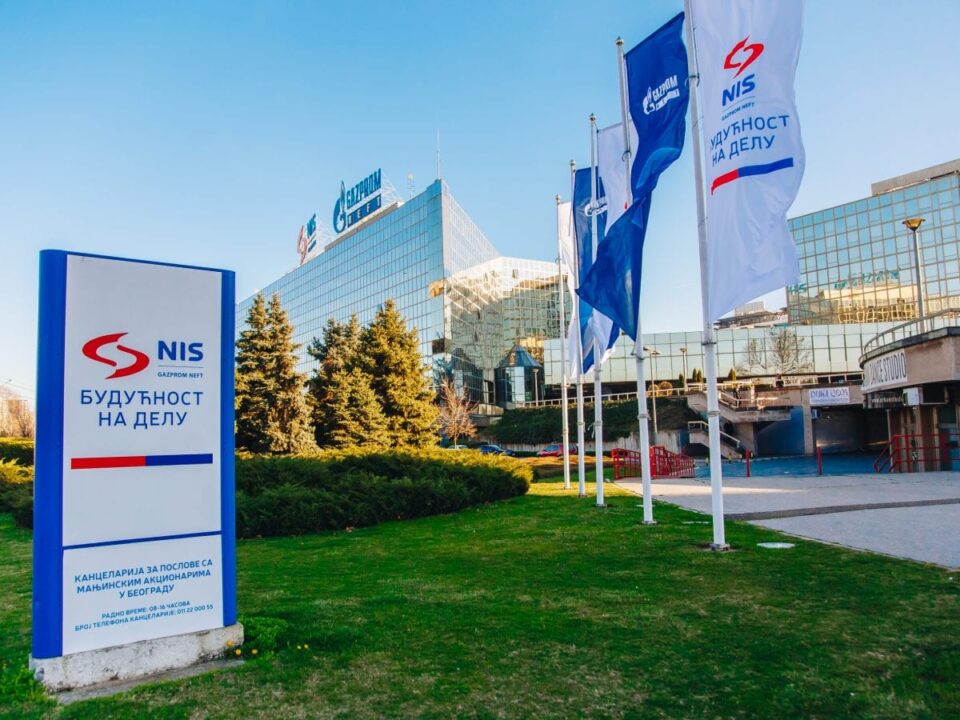
The General Director of Srbijagas, Dušan Bajatović, told RTS that he hopes for a delay of sanctions against NIS for up to three months. Energy expert Željko Marković says that there is a majority Russian ownership, and the American side treats it as complete ownership – Gazpromneft and Gazprom as the parent company have over 50 percent, and their request is to reduce it below 50 percent, which has not been done.
At midnight, or tomorrow at 6 AM our time, the deadline for the application of American sanctions against NIS due to Russian ownership expires. Initially, the Oil Industry of Serbia requested a delay of three months, and the Washington administration prolonged it for only one month.
We are hours away from the decision of the American administration. President Aleksandar Vučić says that there is no change in the American position in the negotiations.
The General Director of “Srbijagas” Dušan Bajatović told RTS that he expects that the deadline for the introduction of American sanctions against the Oil Industry of Serbia (NIS) will be extended, and that a delay of more than 30 days can be expected.
“It may happen that we get an extension of up to three months. So, if you ask me, I’m now gambling with my, let’s say, professional career, but we have to say something, not to calm the public, tomorrow morning at six o’clock we will know everything. We will get an extension of one month to three months. That’s my prediction,” says Bajatović.
As he emphasizes, the latest information about the sanctions against NIS will be known tomorrow morning at 6 o’clock, after the last consultations between the lawyers of NIS and the Government of Serbia.
“Tomorrow morning, at 6 o’clock, we will know everything. Today will be the last conversation between the lawyers of the Oil Industry of Serbia and the Government of the Republic of Serbia. The government has sent a letter, as you know, the Hungarian government has supported us again. The role of Janaf, due to their interests, is constructive in this part and we are simply waiting now. Tomorrow morning around 6 o’clock I assume we will know everything,” says Bajatović.
Bajatović explained that sanctions are currently one of the biggest challenges for the oil industry, but that efforts are underway to reach a favorable solution.
He noted that there has already been one delay of sanctions, and that the ownership structure of NIS has also changed, given the reduction of Gazprom’s stake in the company.
Political sanctions and economic impact
“We previously received a delay, but political sanctions can be unpredictable. While legally speaking, this change in NIS’s ownership structure should be enough to avoid sanctions, we expect that they will be needed,” he states. Bajatović.
He reminded that Gazprom now owns only 11 percent of NIS, while Serbia has about 30 percent, which should be enough in accordance with the regulations related to sanctions.
FIND OUT MORE IN ENGLISH:
Not all scenarios are favorable
If the sanctions are not delayed, Bajatović emphasizes that there will be enough oil and fuel in Serbia. NIS, as he announced, is well supplied, but a problem may arise if the refineries are not maintained at maximum capacity. In that case, stocks would run out faster.
“We have enough stocks for about 200 days in accordance with the reserves available,” said Bajatović.
What if sanctions are introduced?
If sanctions are introduced, the situation will be serious, but not catastrophic, because the state will control the price of fuel and avoid inflation that could further worsen the economic situation in Serbia. Bajatović announced that in that case Serbia will use the foreign exchange reserves of the National Bank of Serbia to continue importing oil derivatives.
The future of the oil industry in Serbia
According to Bajatović, one of the most important steps in solving this problem is the development of an action plan that will define the measures that Serbia will take in case the sanctions are still imposed. In his opinion, the best scenario would be to get a delay of one month to three months, and this will require the active role of the Serbian government and continuous talks with Russia and America.
Bajatović finally announced that, if sanctions are introduced, Serbia will do everything to ensure the stability of the energy market and avoid a time that could affect the economy.
Unpredictability of the future and control of fuel prices
While the situation is not clear, Bajatović assured the public that the state will continue to control fuel prices in order to avoid inflation and economic problems in the country. “Our first obligation is to maintain control over prices and prevent any negative effects on the economy,” concluded Bajatović.
Marković: It is clear that there is a majority Russian ownership
Energy expert Željko Marković, speaking in the RTS Daily News, said that the deadline for delaying sanctions has not expired, so there is still a chance and a decision on delaying sanctions can be made after the deadline.
“These days there have been conflicting statements from both sides. One side believes that there will be a delay – NIS’s, and the American administration has not commented, it is very reserved,” says Marković.
According to him, nothing has happened in the ownership transformation, in the change of ownership. He believes that sanctions will be introduced, that is, that there will be no extension.
“It is clear that there is a majority Russian ownership, the American side treats it as complete ownership, ‘Gazpromneft’ and ‘Gazprom’ as the parent company have over 50 percent, and their request is to reduce it below 50 percent and that has not been done,” Marković notes.
“NIS went with the idea that since they reduced the stake of Gazpromneft, which is under Russian sanctions, to below 50 percent, the conditions were met for NIS to be removed from that list, but the interpretation from the other side is not like that and it is not likely that NIS will now be removed from the sanctions list,” Marković believes.
NIS also has the support of Hungary and Janaf. Marković says that the support is significant because that support indicates to OFAC that the problem of introducing sanctions against NIS is a bigger problem for Serbia and the region than for the Russian side itself.
This month, banks were not in a hurry to stop cooperating with NIS.
“They sent them a warning last time, and those banks that have an interest in not accidentally being on the sanctions list because they work with a prohibited entity will certainly block their activities. NIS may find some banks that will work with NIS,” says Marković.
“Gazprom” as the parent company is not on the sanctions list, and owns 11 percent, perhaps that 11 percent could be handed over to Serbia and then the conditions for further delays would be met because then Russian ownership would be 45 percent, concludes the energy expert.
MORE TOPICS:
SERBIAN EXPERT TEAM: Data indicates that NATO deliberately committed genocide in Yugoslavia in 1999!
Source: RTS, Foto: Naftna Industrija Srbije
 Add Serbian Times as your Google source