




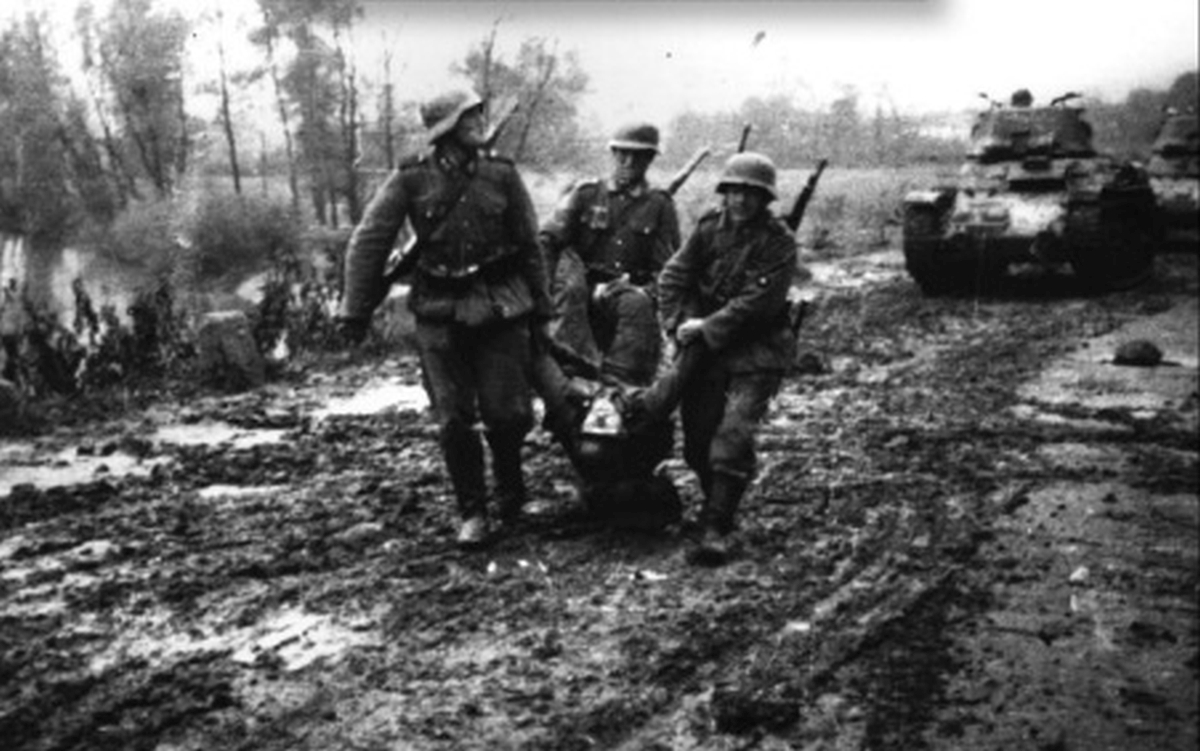
Sabotages by insurgents in the vicinity of Kraljevo, as evidenced by numerous telegrams to the German administrative authority, grew into the creation of an insurgent ring around the city and the forces stationed in it.
On September 16, 1941, Adolf Hitler, regarding the situation in Serbia, ordered „that order be established for a long time with the strictest measures“, reports Info Kraljevo, relying on data from the National Museum in Kraljevo.
The Chief of the German High Command Wilhelm Keitel immediately forwards: „The Leader has now ordered that the strictest measures must be applied everywhere to suppress the movement in the shortest possible time… The manner of carrying out the death penalty must further increase the terrifying effect“.
Then, Franz Böhme, immediately upon taking office as the Plenipotentiary Commanding General in Serbia, says in his order: „A terrifying example must be created for the whole of Serbia that must affect the entire population“.
The siege of Kraljevo and the camp for hostages
The partisan – Chetnik blockade, in which the insurgents occupied military positions on all approaches to the city starting from October 4, was coordinated from the joint headquarters in Drakčići.
The countermeasure of the 717th Wehrmacht Division was to start locking up hostages in the locomotive hall, within the circle of the Railway Workshop, on October 4. Workers and employees of the then factories, railway workers, citizens collected by raid – became hostages in the „collection camp“ on the city periphery, which contemporaries called the lager after the storage facilities of the Yugoslav army.
Armed attacks by Chetnik – Partisan units on the 717th Wehrmacht Division, in which 14 German soldiers were killed and 10 wounded, directly served to implement the orders with draconian punishment of the hostages.
In the chain of military responsibility of the regular army of Germany, the Wehrmacht, since the headquarters of the 717th Division received the order of General Franz Böhme on October 10, 1941, the division headquarters forwarded it to the regimental commanders. The commander of the 749th Regiment, Major Otto Desch, issued an order for the execution of mass retaliation. The authorizations were clear, concretizing their execution in the ratio of 100 hostages for a killed, 50 for a wounded German soldier.
The crime and the victims
A state of emergency with a summary court was introduced in Kraljevo on October 14, 1941, the same day the execution of hostages began.
In front of the machine guns of the soldiers of the 749th Infantry Regiment of the 717th Garrison Division, 2/3 of whom were Austrians, the hostages were forced to dig trenches, not suspecting that they would become their graves…
The last day of the execution was October 20. Members of the Fire Department… according to the order of the Command of the Place, were assigned to bury the victims after the execution.
Behind the mass crime, the area of the lager was covered with lime.
Many families lost several of their members in the October execution (Blažići, Dimitrijevići, Radomirovići, Mitrovići, Obradovići, Petrovići…).
The search for the „human face and name of the victim“ led to a total number of 2,190 executed in the lager, below which number one should not go in further research.
Thanks to primary sources, and the testimonies of interviewees, multi-year research has established that at least 2,190 civilians were executed, among whom were children, women, and elderly people.
Sociological – demographic analyses based on the memorial heritage in the database speak of the cruelty and genocidal nature of the war crime against humanity committed by the regular Wehrmacht army in Kraljevo, in October 1941.
Existing data show that 102 people under the age of 18, who did not live to become fathers and mothers, were executed in the lager. Among the executed were 29 women.
The scale of the crime against humanity is indirectly found in the number of families left without a breadwinner, the number of war orphans, the devastated economy, based on the fact that at least 1,840 executed persons were in the most fruitful period of life and work, between 18 and 55 years of age, mostly workers of the Airplane and Wagon Factory, railway workers, employees in institutions…
Sources also confirm that the raid for execution in the camp was also carried out in the city hospital, and the names of the sick patients are preserved in them.
MORE TOPICS:
CRTA: The student list is supported by 12 percent more citizens than Vučić’s!
Source: National Geographic; Photo: Wikimedia Creative Commons
 Add Serbian Times as your Google source