




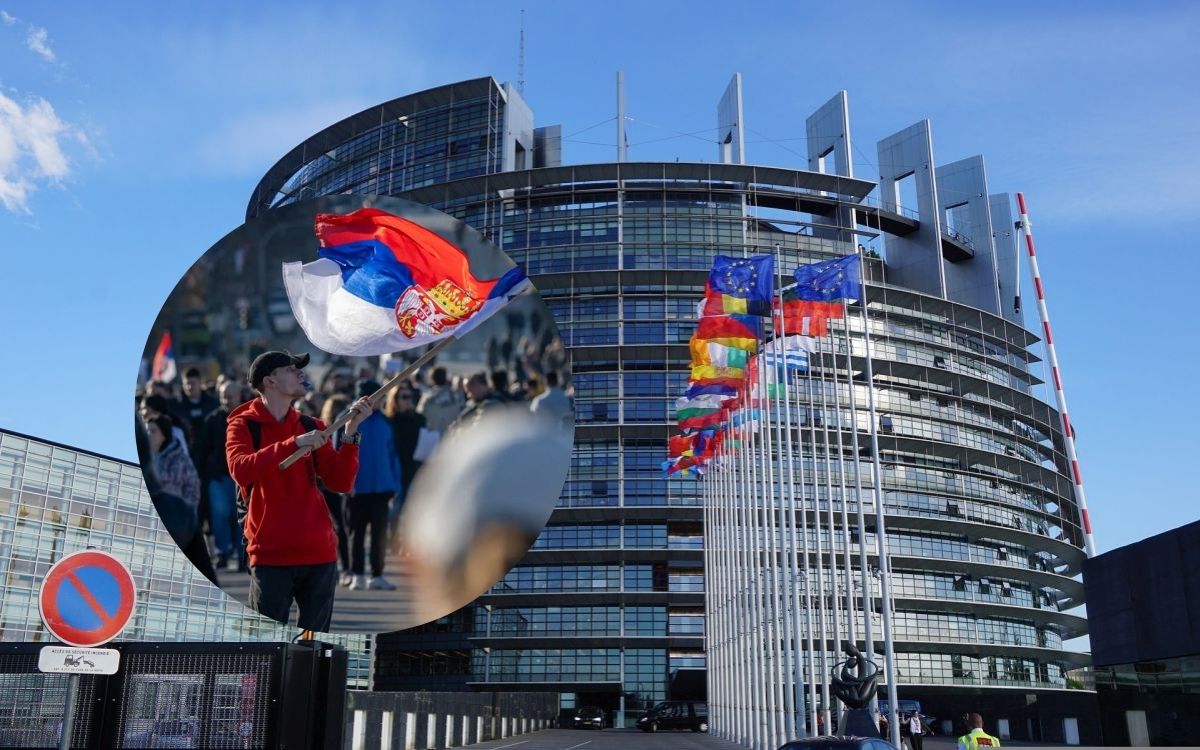
The European Parliament has launched a procedure to adopt a resolution on Serbia titled “Waves of violence and continuous use of force against demonstrators in Serbia,” at the initiative of several political groups within the institution.
The resolution’s topic will be discussed at the first autumn session of the EU Parliament, scheduled for September 8, according to the official EP page for legislative procedures.
The resolution is classified as an RSP (Resolution on Topical Subjects), meaning it addresses urgent political, democratic, or security issues requiring a parliamentary response. In this case, the subject is the events during and after months of protests in Serbia, particularly reports of excessive use of force against demonstrators, including students and minors.
The European Parliament is expected to adopt a political assessment of the situation, with a potential call for action or recommendations to European institutions and member states. The draft text has not yet been published.
The months-long protests in Serbia, which have repeatedly provoked reactions from both domestic and international public, have resulted in serious accusations of excessive use of force by security forces.
Since the protests began, the European Parliament has debated the situation in Serbia three times.
In December 2024, a plenary debate was held on the political crisis in Serbia, focusing on student protests and the authorities’ reaction after the tragedy in Novi Sad, but without adopting a specific resolution.
In February, the European Parliament adopted a resolution on irregularities in the December elections, which sharply criticized the abuse of voter lists, phantom voters, pressure on the opposition, and unfair media conditions. The resolution called for an independent international investigation and possible EU sanctions if further violations of standards occurred.
In May, the EP adopted a resolution in response to the European Commission’s annual reports on Serbia, noting limited progress in the European integration process. Special emphasis was placed on problems in the rule of law, media freedom, and the independence of institutions.
MORE TOPICS:
Source: N1; Foto: Pixabay, AFP
 Add Serbian Times as your Google source