




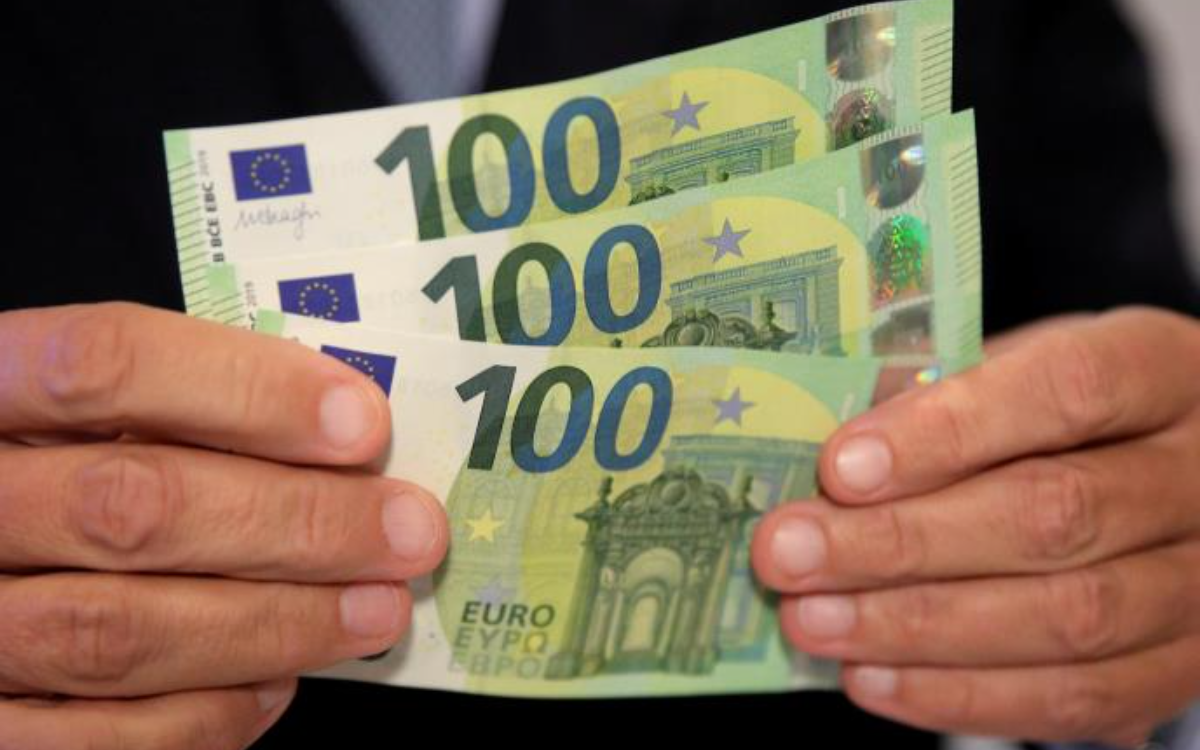
The increased demand for euros at exchange offices is the result of a psychological effect and public anxiety, rather than a shortage of foreign currency, Dušan Uzelac, editor of the Kamatica portal, told RTS. He stressed that the Alta Bank case cannot threaten the stability of the banking system and that there is no reason to panic.
At some exchange offices, the euro is being sold for 119 or even 120 dinars, while the official middle exchange rate has remained almost unchanged. Dušan Uzelac, editor of the Kamatica portal, says that the increase in the euro’s price at certain exchange offices is primarily the result of a psychological effect and greater demand for cash, rather than an actual shortage of foreign currency.
“I would say that some exchange offices are trying to take advantage of this situation. There is a very clear rule limiting the highest selling rate in relation to the middle exchange rate. There are no problems, no deficit and no shortage. Everything that is happening is short-term and psychological in nature,” Uzelac points out.
He recalls that the euro exchange rate was also around 117.6 dinars in November 2021, which, he says, shows that the value of the domestic currency has remained within relatively stable limits for years.
He explains that citizens who purchase foreign currency at exchange offices account for a smaller share of the overall foreign exchange market, in which companies, corporations and public enterprises play a significant role, including those purchasing energy products.
“Increased demand for foreign currency is expected because of the season. Citizens who go to exchange offices are buying physical currency, meaning cash. Today, nobody has a problem purchasing foreign currency through a banking app. There are no restrictions or unusually high exchange rates,” Uzelac says.
Why some exchange offices are limiting euro sales
According to him, problems have emerged exclusively in the segment of the market dealing with cash, because supplying physical currency requires a certain amount of logistical preparation. He gives the example of a shop that normally sells one ton of apples a week and then suddenly faces demand for ten tons.
“Of course, it takes time for the goods to be delivered and placed on the shelves. It is the same with exchange offices. If someone buys all the euros they have in the morning, they have nothing left to sell for the rest of the day. This primarily affects smaller exchange offices, which were unable to secure enough cash to meet the increased demand,” Uzelac explains.
He adds that if there were more serious disruptions in the foreign exchange market, significantly larger changes in the official middle exchange rate would also be expected.
“The middle exchange rate has barely moved despite everything that has been happening, which means these developments have had no major impact beyond the psychological effect,” Uzelac says.
“The Alta Bank case cannot put the entire banking system at risk”
Speaking about the revocation of Alta Bank’s operating licence, Uzelac points out that the banking system relies heavily on the trust of citizens and businesses.
“The entire financial system is based on trust. We saw very quickly what happens when that trust is absent. Alta Bank’s liquidity fell, and when it drops below a certain level, protective mechanisms are activated,” Uzelac says.
He explains that similar mechanisms are applied in other cases involving problems in banks’ operations, recalling the examples of Agrobanka, Privredna Banka Beograd and Univerzal Banka.
“When it is announced that a bank is experiencing problems, creditors start withdrawing their money, which further reduces its liquidity. That is one of the factors that can lead to bankruptcy,” Uzelac explains.
He stresses that, according to the information available to him, there are currently no indications that a major theft of money took place in the Alta Bank case. However, there are suspicions that certain activities were carried out in violation of banking procedures, which still needs to be established.
Asked whether the Alta Bank case could undermine confidence in the entire banking sector, Uzelac replies that confidence has already been shaken, but that this does not mean the stability of the system is under threat.
“Alta Bank accounts for around three percent of the market. Its operations are under scrutiny as to whether they were conducted properly and whether there was embezzlement; all of that will be established. But that does not mean that the bank’s entire business was irregular. The banking system is one of the most regulated and most closely monitored systems, precisely because trust in it is so sensitive,” Uzelac emphasizes.
Is it better to save in dinars or euros?
Uzelac advises citizens currently buying foreign currency not to make decisions out of fear and, if they need to purchase it, to consider using banking apps.
“If you buy foreign currency now and sell it a month later, you will lose money on that transaction. Wait five or six days, and if nothing changes, then take action. I believe the logistical problems with delivering cash will be resolved during that period,” Uzelac says.
As for whether to save in dinars or euros, he emphasizes that the decision should depend on the purpose of the money and when citizens plan to spend it.
“Save according to the purpose of those funds. If you are going to spend the money in dinars in six months, there is no need to convert it into euros now. You always lose something in the conversion,” Uzelac explains.
For money that citizens will not need for a longer period, he suggests considering the possibility of investing.
“If you do not need the money for more than six months, consider investing as well. That means converting money into something that is not money, and then following the market for that asset rather than just the exchange rate, interest rates and inflation,” Uzelac says.
He concludes that the choice between keeping savings in a bank, holding cash, using a safe deposit box or investing depends on individual needs and preferences.
He believes that, because of negative experiences in the past, citizens often react out of fear and decide to withdraw their money even when there are no economic reasons to do so.
“Fear is not always something we can explain rationally. I believe the situation will calm down in a few days and that citizens will realize there is no reason to be concerned,” Uzelac says.
“Quiet discrimination” against Russian citizens
According to Uzelac, Russian citizens and entrepreneurs who were clients of Alta Bank are facing a particular problem. They are now trying to open accounts at other banks so they can continue operating, receive payments and pay salaries.
“Except for a few domestic banks, the others are practising a form of quiet discrimination against Russian citizens. It is an open secret. Banks that receive instructions from Europe, and that includes most of the banking sector, have procedures that effectively tell them to avoid doing business with such clients,” Uzelac claims.
According to him, this practice most often takes the form of administrative requirements, such as requests for additional documentation proving the origin of funds.
“Everything is wrapped up in paperwork. They ask for proof of the origin of the money, certificates, stamps and other administrative documents. The bottom line is that they are turning them away,” Uzelac believes.
He assesses that such conduct is a consequence of the European Union’s policy towards Russia, which, he claims, is also affecting banks in Serbia that are under European ownership.
MORE TOPICS:
Source: RTS Foto: Reuters
 Add Serbian Times as your Google source