




Germany – the promised land, as it is perceived not only by people from Serbia who have been living and working there for years, but also by workers from the region. And why wouldn’t it be, when German employers offer salaries measured in thousands of euros per month for in-demand professions that are paid three times less in our country. Moreover, it is constantly looking for workers from the Balkans, which is why it often facilitates the conditions for staying and working on its territory, especially since it introduced the “chance card”.
Germany introduced a “chance card” in June of this year, i.e., new rules that make it significantly easier for qualified workers from the Balkans to find a suitable job faster.
According to information from the Germany-Visa.org portal, the “chance card” is a residence permit that allows citizens of non-EU countries to stay in Germany for up to one year to find a job.
Unlike the six-month job-seeker visa, this card allows for a longer stay and work with reduced working hours or trial jobs (up to 20 hours per week). In other words, those who have been issued a card can live in Germany for up to a year while looking for a job, instead of requiring the employer to sponsor them beforehand.
The card also allows people to legally work part-time while looking for something more permanent.
Conditions for obtaining a card
Chance cards work by awarding points to workers based on various criteria, such as language skills, work experience, and age. It applies to those with at least two years of vocational training or a university degree recognized in the country where the qualification was obtained. Knowledge of German or English is also required.
Candidates must provide proof of the ability to cover living expenses while job searching, meaning they must have at least 1,027 euros per month.
Once the card is approved, the applicant can enter Germany and look for a job for up to a year, meaning they no longer have to submit a contract with a German company before being allowed to enter Germany to work.
Incidentally, the new rules were introduced with the aim of reducing bureaucracy and shortening procedures, and are part of a comprehensive law aimed at addressing the shortage of skilled workers in Germany.
Most sought-after professions
Our people who already live in Germany are most often engaged in physical work, primarily construction, and a large number of them are employed in the healthcare system, such as caregivers, medical technicians, physiotherapists, pharmacists, and a large number of our doctors have also gone.
Emina, the director of a Serbian employment agency in Germany, previously stated for Nova.rs that medical professionals have been among the most sought-after profiles in Germany for years, but that the fewest of them are currently leaving Serbia. In fact, almost all who wanted to have already left.
“That wave of medical workers has already gone, and there are very few who want to leave. These are, namely, nurses, technicians and doctors. However, in the previous period, physiotherapists were very much in demand, and I think that, as it seems, their era will only now come to the fore. This is also shown to us by our clients who come to us with a diploma in physiotherapy,” she said.
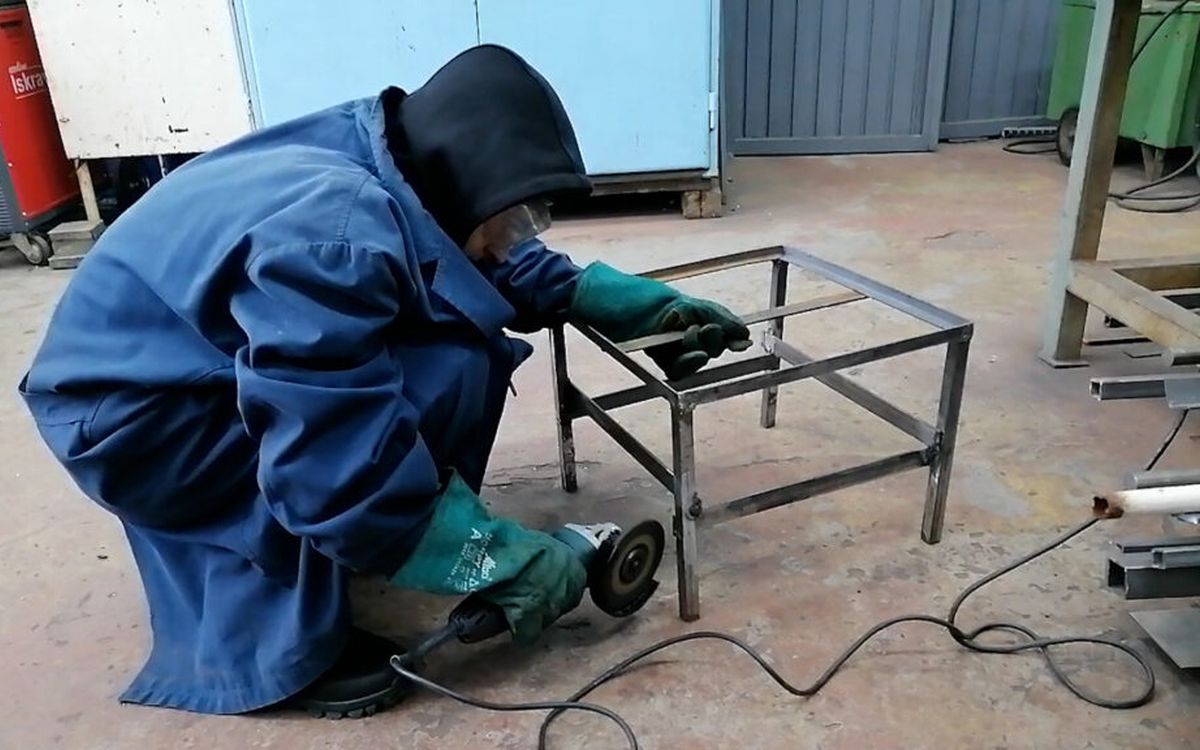
According to her, Germany is also looking for welders, electricians, painters, and auto mechanics, who are very much in demand in Serbia. While the Germans give them up to 3,000 euros, in our country, these craftsmen earn around a thousand euros. Ads posted on the website of Serbian employment agencies in Germany show that local companies are also lacking professional drivers.
Cleaners who can earn good money are also in demand, and they are also provided with accommodation in the hotel where they work.
Waiters, cooks, as well as staff for work in the kitchen and food production, as well as workers for maintaining the hygiene of the facility, are also sought after.
Incidentally, our interlocutor explained that the entire employment procedure in Germany is carried out by the agency, as the process can be complicated and time-consuming.
Faster obtaining a residence permit for those with a blue card
Holders of the so-called EU blue card can now obtain a settlement permit even faster (27 months of employment with this card). If the candidate has sufficient knowledge of the German language (B1 level), this period is reduced to 21 months (previously 33 months).
As German-Visa.org reports, a settlement permit is also called a permanent residence permit or in German “Niederlassungserlaubnis” (it is important to note because it is often misunderstood).
With a permanent residence permit, you can work in Germany and travel in and out of the country whenever you need to. If you have a permanent residence permit, your children and spouse are allowed to join you. They will first receive a temporary residence permit, and after a few years they will also be able to obtain a permanent one.
FIND OUT MORE IN SERBIAN:
There is no renunciation of old citizenship
Applicants to become naturalized citizens will no longer have to renounce their previous citizenship to become German citizens.
People will be able to apply for German citizenship after having lived in the country legally for five years, instead of the previous eight.
Naturalization will be possible after only three years for something that the German Ministry of the Interior calls “special achievements in integration.” Such achievements can include not only learning German, but also excellence in school or in professional life, engagement in civic life, or running for political office.
Incidentally, citizens of Serbia, Bosnia and Herzegovina, Montenegro, North Macedonia, and Albania have been significantly facilitated to stay in Germany, as that country has decided to double the number of work visas for citizens of these countries.
More precisely, they will have a privileged position on the labor market in that country, which is “crying out” for workers of various levels of education – from those with a university degree to “physical workers”. And the salaries, indeed, can be huge.
Chance card vs. green card
Since the “chance card” was introduced only this year, it is often confused with the American “green card” and the traditional German job-seeker visa.
While the “chance card” allows a one-year stay without the need for a job offer, contract, or family ties, but based on a point system, the “green card” in the US offers a path to citizenship within three to five years through a lottery or strict conditions.
On the other hand, according to the Germany-Visa portal, it is important to emphasize that the job-seeker visa and the chance card in Germany differ.
This difference is reflected in the qualifications. A job-seeker visa requires a university diploma or recognized vocational training, while the Chance card requires at least two years of vocational training and relevant work experience.
Then in the duration of the visa – a job-seeker visa is valid for up to six months, while the chance card can last up to one year.
The difference is also in the work permit. A job-seeker visa does not allow any work during the duration, while the Chance card allows work with reduced working hours (up to 20 hours per week).
Germany, with a low unemployment rate and numerous job opportunities, attracts job seekers from all over the world. These opportunities are especially beneficial for citizens of the Western Balkans and other countries who are looking for employment abroad.
In addition, Germany offers many benefits, including 24 days of paid leave per year, as well as a minimum hourly wage of 12.41 euros, and the salary can be higher depending on the industry and work experience.
MORE TOPICS:
“NO ONE CAN DENY”: Croatia officially acknowledges genocide against Serbs in ISH (NDH)
SERBS DELIGHTED: American christmas movie filmed in popular Serbian mountain! (VIDEO)
JOKIĆ’S SON’S NAME CONFUSES AMERICA: Famous journalist asks Serbs for help! (VIDEO)
TRADITION AS A RESPONSE TO FAMILY BREAKDOWN: Why more and more Americans are converting to Orthodoxy
Source: Nova.rs, Photo: Video/Nova.rs