




Year-on-year inflation in Serbia reached 4.6% in June, once again moving outside the target framework set by the National Bank of Serbia. Although central bank officials recently assured the public that inflation was stabilizing, the latest data from the Statistical Office of the Republic shows otherwise.
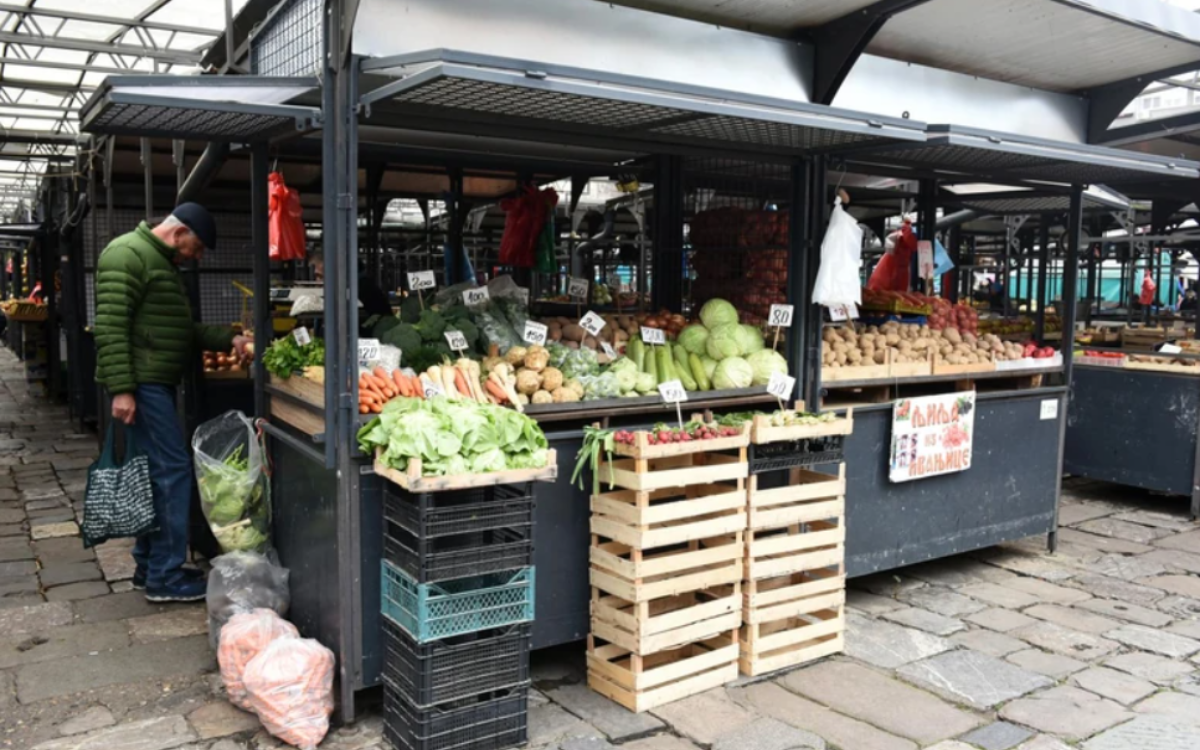
Prices in Serbia continue to rise. Data from the Statistical Office of the Republic indicates that food prices, particularly fruits and vegetables, have increased significantly – fruit is 31.6% more expensive compared to the same month last year, and vegetables are up by 11.3%.
“I wanted to buy paprika for 300 dinars, there wasn’t even 100g, too expensive… The prices are terrible, incomes aren’t growing, pensions are what they are, I’m a pensioner. According to comments in my family and business environment, prices are significantly higher compared to this period last year. I’ve noticed, of course, that everything is more expensive; salaries have gone up but they don’t keep pace, prices don’t keep pace with salaries,” citizens say.
The main culprit, according to the National Bank of Serbia, are adverse weather conditions that destroyed agricultural yields: hail, frost, and then drought. However, experts say that if bad weather conditions continue, the rise in food prices could be more permanent, which would continue to put pressure on inflation and potentially force the central bank to take additional measures.
“If we generally have a worse agricultural season, it will reflect on prices and in that sense, it can push inflation. This could be an additional inflationary pressure that doesn’t completely rule out the possibility that the NBS will be forced to once again resort to a more restrictive monetary policy, i.e., to start raising interest rates to curb it,” says Petrica Đaković, a journalist for Forbes Serbia.
For years, a significant market imbalance has been highlighted, as food prices in Serbia are often disproportionately high compared to more developed countries, according to our interviewee.
“There are clearly market imbalances here, and there are reasons why inflation in Serbia is falling slower than in other countries. We still have no concrete explanation from the competent Commission for Protection of Competition, which should actually discover who in that chain contributes to competition being higher than it should be,” Đaković believes.
Regarding the inflation trend until the end of the year in Serbia, economists believe that if Serbia experiences no external shocks, it is difficult to expect higher inflation rates in the coming period.
Source: Nova, Photo: Pixabay
MORE TOPICS:
SERBIAN DIASPORA GATHERS: Crown Prince Alexander’s Birthday Celebrated in New York!
SECRET VIDEO SURFACES: Nole Wishes Teodosić Retirement with a Song, Sings a Legendary Hit! (VIDEO)
ITALIAN MOVED TO SERBIA FOR LOVE OF DUŠICA: Changed Faith and Took the Name Stefan!
END OF AN ERA: After 25 Years, EXIT Moves from Petrovaradin to the Egyptian Pyramids!