




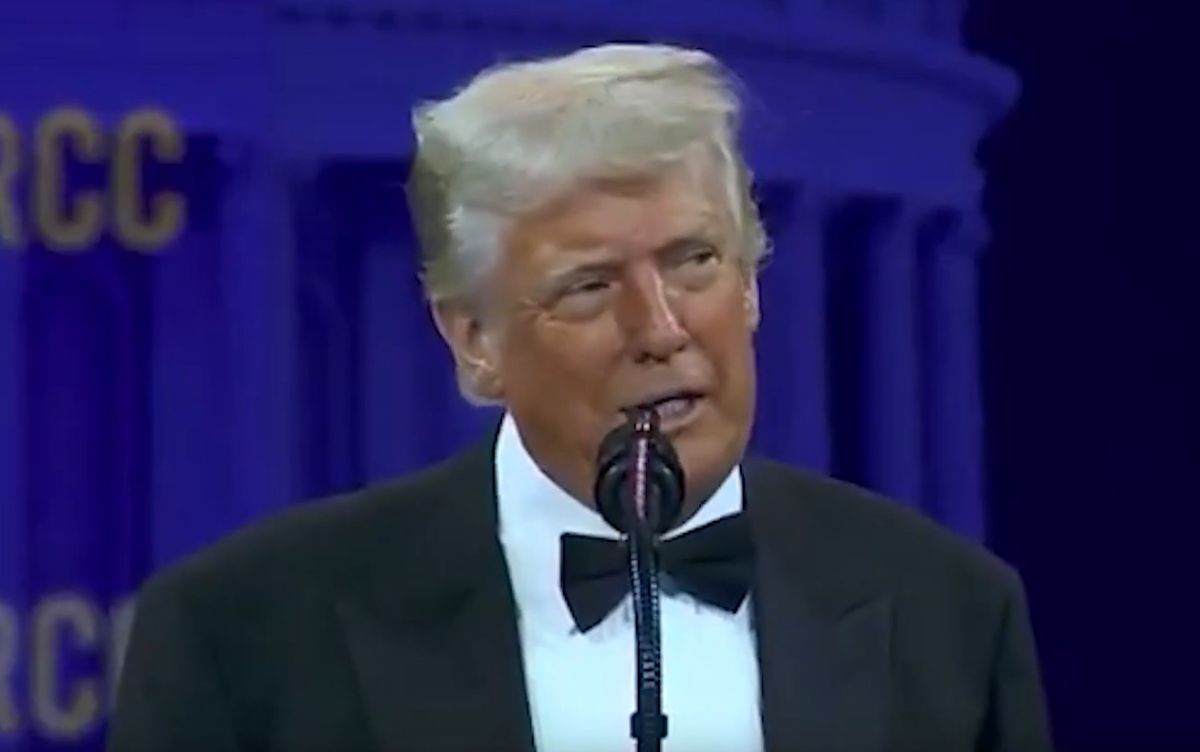
U.S. President Donald Trump has presented a new peace plan to end the war in Ukraine, which has been ongoing since February 2022. The plan consists of 28 points that cover the key elements of the conflict, as well as the reasons for its outbreak.
Many around the world were shocked when the plan suddenly appeared, and strong reactions quickly followed. Donald Trump gave Kyiv a deadline until Thursday to accept the plan, and the Ukrainian authorities, after an address to the nation by President Volodymyr Zelensky, who said they were under enormous pressure, formed a negotiating team.
Here is what the plan envisions, point by point, along with commentary from CNN’s foreign policy journalists.
- Ukrainian sovereignty will be confirmed
CNN journalist Matthew Chance says that although this may sound obvious, Ukraine’s survival as a sovereign state in wartime was not guaranteed, and this recognition represents a significant achievement.
- A comprehensive non-aggression agreement will be concluded between Russia, Ukraine, and Europe. All ambiguities from the last 30 years will be considered resolved.
- Russia is expected not to invade neighboring countries, and NATO is expected not to expand further.
CNN editor Nick Paton Walsh says this means that Georgia is not expected to join NATO, even though it had that intention under previous governments, but that idea has now ended.
- Dialogue will be held between Russia and NATO, mediated by the United States, to resolve all security issues and create conditions for de-escalation in order to ensure global security and increase opportunities for cooperation and future economic development.
Matthew Chance comments that Trump has again positioned the U.S. as a mediator between NATO and Russia, distancing himself from traditional allies, even though the U.S. is actually the largest part of NATO.
- Ukraine will receive reliable security guarantees.
- The size of the Ukrainian armed forces will be limited to 600,000 personnel.
Matthew Chance says that, for peacetime conditions, 600,000 soldiers is significant and far from demilitarization, which was a proclaimed Russian war goal. However, it will represent a major expense for Ukraine, which may struggle to maintain it. On the other hand, Russia, which has a much larger army, does not have to reduce it.
- Ukraine agrees to include in its constitution that it will not join NATO, and NATO agrees to include a provision in its statutes stating that Ukraine will not be admitted in the future.
The Kremlin would use this as proof that its war achieved one of its key goals: the idea that Ukraine might join NATO was one of the reasons cited for launching the invasion, says Matthew Chance. However, this would require all NATO members to agree to amend its statutes.
- NATO agrees not to deploy troops in Ukraine.
From the Russian perspective, this is meant to prevent NATO countries from circumventing the provision banning Ukraine’s formal inclusion in the alliance, says Matthew Chance.
- European fighter jets would be stationed in Poland.
- American guarantees
a) The U.S. will receive compensation for the guarantee.
b) If Ukraine invades Russia, it will lose the guarantee.
c) If Russia invades Ukraine, in addition to a decisive coordinated military response, all global sanctions will be reinstated, recognition of new territory and all other benefits of this agreement will be revoked.
d) If Ukraine launches a missile at Moscow or Saint Petersburg without cause, the security guarantee will be considered void.
- Ukraine may join the EU and will receive short-term preferential access to the European market while the issue is under consideration.
- A strong global package of measures for rebuilding Ukraine, including but not limited to:
a) Creation of a Ukraine Development Fund for investment in fast-growing industries, including technology, data centers, and artificial intelligence.
b) The U.S. will work with Ukraine on joint reconstruction, development, modernization, and management of Ukraine’s gas infrastructure, including pipelines and storage.
c) Joint efforts to rehabilitate war-affected areas for rebuilding, reconstruction, and modernization of cities and residential zones.
d) Infrastructure development.
e) Extraction of minerals and natural resources.
f) The World Bank will develop a special financial package to accelerate these efforts.
- Russia will be reintegrated into the global economy
a) The lifting of sanctions will be considered and agreed upon in phases and case by case.
b) The U.S. will conclude a long-term agreement on economic cooperation for mutual development in energy, natural resources, infrastructure, artificial intelligence, data centers, Arctic rare-earth mining projects, and other mutually beneficial corporate opportunities.
c) Russia will be invited to rejoin the G8.
The lifting of sanctions is a key Russian goal, says Matthew Chance, especially because its economy is under increasing pressure. The fact that Moscow is being offered reintegration and G8 membership may indicate how damaging years of isolation have been. This point also addresses other areas of potential economic cooperation between the U.S. and Russia—something the Kremlin has wanted as a way to expand relations beyond the narrow focus on Ukraine, he adds.
- Frozen Russian assets will be used as follows:
100 billion dollars of frozen Russian assets will be invested in U.S.-led reconstruction and investment efforts in Ukraine. The U.S. will receive 50% of the profits from this venture. Europe will add 100 billion dollars to increase the investment funds available for Ukraine’s reconstruction. The remaining portion of frozen Russian assets will be invested in a special U.S.-Russian investment fund that will carry out joint projects in specified areas. This fund will aim to strengthen relations and increase shared interests to create a strong incentive preventing the conflict from reigniting.
- A joint U.S.-Russian working group on security issues will be established to promote and ensure adherence to all provisions of this agreement.
- Russia will legally establish its non-aggression policy toward Europe and Ukraine.
- The United States and Russia will agree to extend the validity of nuclear non-proliferation and arms-control treaties, including the START I Treaty.
- Ukraine agrees to remain a nuclear-weapon-free state in accordance with the Nuclear Non-Proliferation Treaty.
- The Zaporizhzhia nuclear power plant will be operated under IAEA supervision, and the electricity produced will be equally divided between Russia and Ukraine—50:50.
- Both countries commit to implementing educational programs in schools and society aimed at promoting understanding and tolerance of different cultures and eliminating racism and prejudice:
a) Ukraine will adopt EU rules on religious tolerance and protection of linguistic minorities.
b) Both countries will agree to abolish all discriminatory measures and guarantee the rights of Ukrainian and Russian media and education.
c) Any Nazi ideology and activities must be rejected and banned.
- Territories:
a) Crimea, Luhansk, and Donetsk will be recognized as de facto Russian, including by the United States.
b) Kherson and Zaporizhzhia will be frozen along the line of contact, meaning de facto recognition of the line of contact.
c) Russia will relinquish other territories it controls outside the five regions.
d) Ukrainian forces will withdraw from the part of Donetsk region they currently control, and this withdrawal zone will be considered a neutral demilitarized buffer zone, internationally recognized as territory belonging to the Russian Federation. Russian forces will not enter this demilitarized zone.
- After agreeing on future territorial arrangements, both the Russian Federation and Ukraine commit not to change these arrangements by force. Any security guarantees will not apply in the event of a violation of this commitment.
- Russia will not prevent Ukraine from using the Dnipro River for commercial activities, and agreements will be reached on the free transport of grain through the Black Sea.
- A humanitarian committee will be established to resolve outstanding issues:
a) All remaining prisoners and bodies will be exchanged on an “all for all” basis.
b) All civilian detainees and hostages, including children, will be returned.
c) A family reunification program will be implemented.
d) Measures will be taken to alleviate the suffering of conflict victims.
- Ukraine will hold elections within 100 days.
- All parties involved in the conflict will receive full amnesty for their actions during the war and agree not to file or pursue any claims or complaints in the future.
Matthew Chance states that this is clearly aimed at removing the International Criminal Court’s arrest warrant for Vladimir Putin, but would also require dropping all war-crimes charges against Russians—for example, for Bucha.
- This agreement will be legally binding. Its implementation will be overseen and guaranteed by the Peace Council, headed by President Donald Trump. Sanctions will be imposed for violations.
- When all parties agree to this memorandum, a ceasefire will take effect immediately after both sides withdraw to the agreed points to begin implementing the agreement.
MORE TOPICS:
BELGRADE UNIVERSITY ADVANCED ON THE SHANGHAI LIST: Highly ranked in 18 scientific fields!
AFTER NINE DAYS: Transporter Milomir Jaćimović ends hunger strike! (VIDEO)
Source: Nin, FOto: TANJUG / AP / Ukrainian Presidential Press Office
 Add Serbian Times as your Google source