



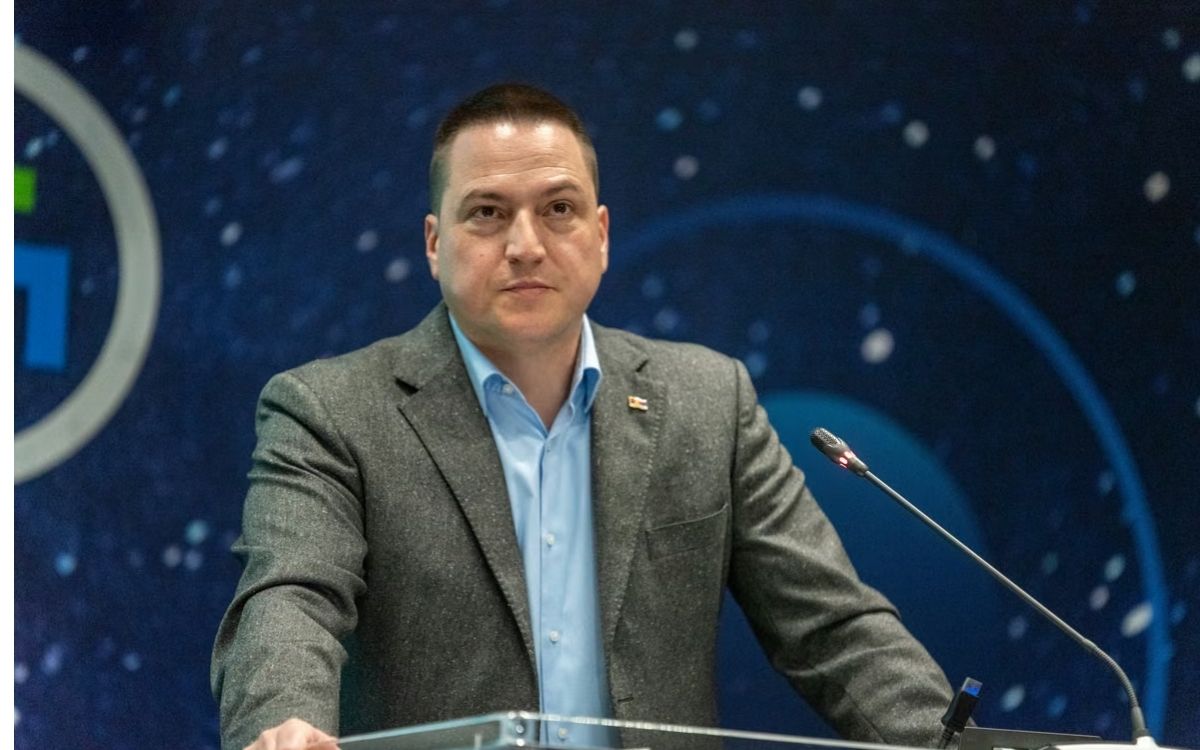
Former vice president of the Socialist Party of Serbia (SPS) Branko Ružić said he does not rule out the possibility of taking part in the parliamentary elections on October 25, but that he will not make a decision simply so that his name appears on the ballot.
“I am talking to many people, and these conversations are serious. An independent list is one possibility. A joint list with people with whom there is sufficient political overlap is another. I do not rule out other models either. What I will not do is seek a political home at any cost,” Ružić told the Beta news agency.
Asked who he is talking to about continuing his political engagement, Ružić said they are people he has worked with for years, including current and former SPS members, as well as people who have never been members of the party.
“I am also talking to people from other political circles and those who have not been in any party for years,” he added.
He did not want to mention specific names because that would be “unfair to them.” Ružić added that there is “great dissatisfaction with the existing political offering and that this dissatisfaction no longer has a clear party address.”
“I do not need political asylum for dissatisfied people from other parties. I need people who know why they are coming and what they are prepared to defend when things get difficult. It matters more to me why someone is with me than where they came from,” Ružić said.
He was expelled from the SPS on August 31, with the explanation that he had engaged in the “continuous, conscious and deliberate violation of the Statute, failure to respect the obligation to implement the decisions of the party bodies and the unified policy of the SPS.”
Asked where he sees room for the politics he advocates, Ružić said he “sees many people who want change, but do not want chaos, people who are dissatisfied with the SNS, but do not identify with the existing opposition offering.” “These are people who want an orderly state, job security, accessible healthcare, good education and the feeling that the state is not against them,” said Ružić, who was a member of several previous governments.
According to him, Serbia has been forced for years to choose between two extremes, while between obedience to the authorities and revolt against everything there is a “large Serbia that wants change, but does not want someone to endanger its normal life through that change.”
“Change that takes away people’s sense of security very quickly ceases to look like progress to them. That is why serious politics must offer both freedom and security at the same time,” Ružić said.
Asked whether this means that he is now in opposition to Aleksandar Vučić and the SNS, Ružić answered in the affirmative, adding — “if opposition means that I will criticize the authorities where I believe they are wrong.” “If (opposition) means that I have to declare everything the authorities do to be wrong simply because I am no longer part of them, then no,” he added.
Asked what he objects to most about Vučić’s style of governing, Ružić said it was the “excessive concentration of political power around one man.”
“No state becomes stronger because one man is stronger than its institutions. Serbia must once again have a government that governs, a parliament that oversees the government, a judiciary that does not wait for a political signal, and media in which criticism of the authorities is not an incident,” Ružić said.
He did not want to say whether he might cooperate with the SNS again after the elections, saying that before the elections he “will not trade in post-election combinations.”
“For me, any future cooperation, with anyone, would have to have clear political and institutional conditions. After everything I have been through, I would not enter again into a relationship in which one partner makes the decisions and the other later explains why it was a joint decision,” Ružić said.
Regarding his support for the student protests, for which he was previously criticized by members of the SPS and the ruling coalition, Ružić said that the protests had brought the issue of accountability back to the center of public life and shown that there is a generation that cannot be disciplined through positions, employment or party affiliation.
“Students forced society to once again distinguish authority from office. They also showed that fear is not hereditary. The greatest service politicians can do for students is to stop explaining to students what students must be. Support is support only as long as you do not send them the bill for it,” Ružić said.
As the values he will continue to uphold in politics, he cited dignity, solidarity and justice, saying that these are “three concrete criteria by which you can see what kind of state you have.”
“Human dignity must not depend on a party membership card. Solidarity must not be charity handed out before elections. Justice must not first ask who you are and only then what happened to you,” he said.
Every serious political force must know where its red line is, Ružić said, adding that every person must know where their red line is, and a person holding public office even more clearly.
“A red line is not just what you draw for others. It is also the boundary you do not allow yourself to cross. A person can lose their position, mandate and party. The most costly thing is when they lose the criterion by which they know what they can and cannot do. A person without a red line very quickly begins to live by the boundaries others draw for them,” Ružić said.
Asked about Serbia’s prospects of becoming a member of the EU, Ružić, who previously served as the minister responsible for this process, said that Serbia “belongs to Europe.”
“But European integration must not become a process in which Serbia fulfills the conditions for years while the goal keeps moving further away. Such a relationship erodes trust. Serbia also has no right to blame Brussels for its own weaknesses. No one in Brussels ordered us to weaken institutions, control the media or tolerate corruption. Those are our problems,” Ružić told Beta.
READ MORE:
MORE TOPICS:
Source: Nova ; Foto:Dimitrije Nikolic/ATAImages
 Add Serbian Times as your Google source