




There are major differences between online gambling regulations in Serbia and the US. This article explains how each framework works, who sets the rules, how licensing is handled, and where restrictions commonly apply so that you can understand the baseline compliance expectations.
Serbia regulates online gambling through a single national framework overseen by the Ministry of Finance, which is responsible for licensing and supervision. In the US, the system is decentralized: each state decides what to permit and sets its own rules, while a small number of federal laws still shape certain areas, such as payments and interstate activity.
Serbia’s Online Gambling Legal Framework
The Law on Games of Chance sets the legal basis for online gambling in Serbia. It treats gambling as an exclusive right of the Republic, but that right can be transferred to an approved, licensed operator.
Industry supervision sits with the Games of Chance Administration, an administrative body within the Ministry of Finance. It issues and manages approvals for gambling activities, oversees compliance, and applies controls that connect with anti-money laundering obligations.
Guides on Serbia’s market usually emphasize the same essentials: operator suitability, technical standards for online systems, documentation duties, and ongoing regulatory control. That’s also how many review sites frame their coverage, often using a few of Serbia’s best online casinos to illustrate what locally licensed operators typically disclose about licensing and player safeguards.
Recent amendments adopted in 2024 and applied from the beginning of 2025 reflect a move toward modernization and tighter monitoring, particularly around transaction handling, deposit and withdrawal processes, and fee structures, alongside stronger responsible gambling obligations.
What “Legal” Means for Serbian Players
For an online gambling site to be considered legal in Serbia, it generally requires approval to offer games via electronic communication, which falls under the supervision of the Games of Chance Administration. In practical terms, that usually comes with standard player-facing safeguards, including mandatory warning messages and a formal self-exclusion option that is shared across licensed organizers in Serbia.
Simply put, Serbia gambling laws rely on local licensing and oversight, so confirming the operator’s approval status is a sensible first check. If you want to go a step further, review the terms and conditions and look for normal identity checks during registration, since licensed operators are expected to follow defined registration and verification rules.
It’s also worth checking how deposits and withdrawals work. Serbia’s framework sets rules around pay-in/pay-out processes and limits certain cash-transfer practices, aligning with anti-money laundering controls. Red flags include vague withdrawal conditions, hard-to-reach support, or attempts to bypass verification.
US Framework: Federal Guardrails & State-by-State Legality
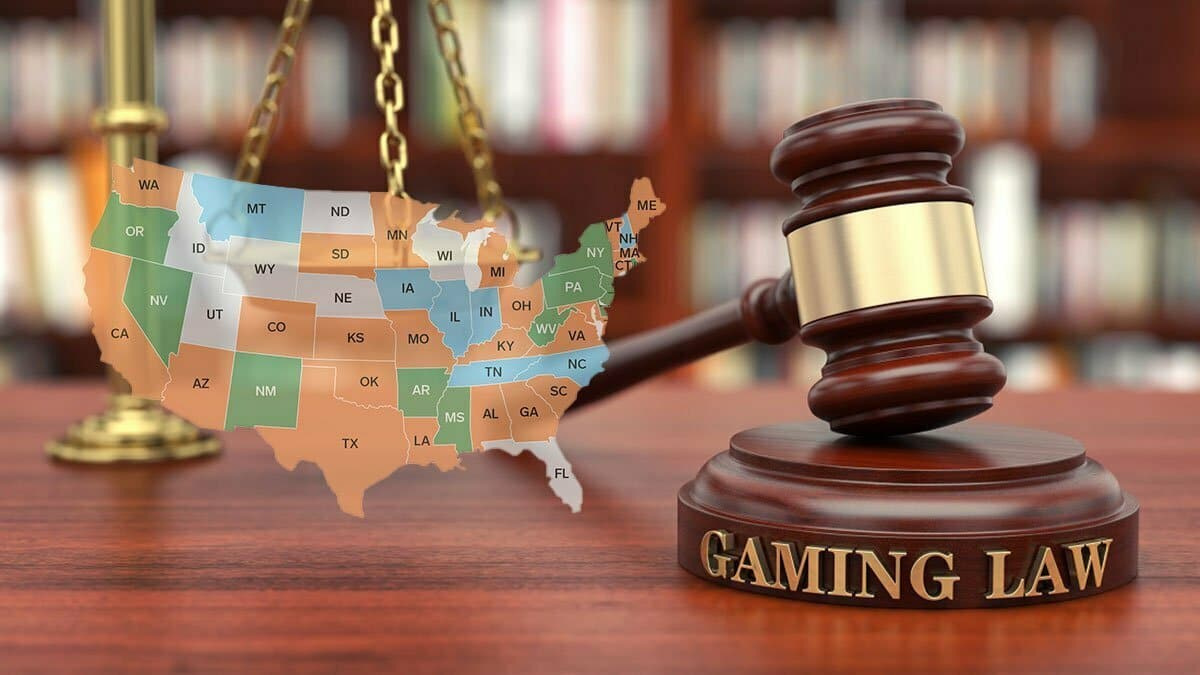
The legal framework for online gambling in the United States is complex and depends largely on the state where you are located. Each state can decide what to permit and how to regulate it. Tribal gaming is a separate layer, since tribes operate under a distinct legal framework. In some cases, gambling options may be available on tribal lands even when the local state’s rules are tighter.
The key point is that there is no single nationwide law that makes online casino games or sports betting legal or illegal across the entire country. That is why legality can change quickly once you cross a state line, and why licensed operators use location tools and verification to follow local requirements.
Federal Laws List:
• Wire Act (18 U.S.C. § 1084): Targets certain wagering-related transmissions using wire communications in interstate or foreign commerce. It is often discussed in sports-betting contexts, especially where bets, lines, or account activity could cross state borders.
• UIGEA (2006): Addresses payment processing connected to “unlawful Internet gambling” and largely depends on what is illegal under federal or state law. It does not create a blanket federal licensing system.
• PASPA (1992): Prevented states from authorizing sports betting schemes until it was overturned, which changed how states could regulate sportsbooks.
The landscape shifted after Murphy v. NCAA (2018), when the Supreme Court struck down PASPA’s restriction on state authorization. That ruling allowed states to decide whether to legalize sports betting and how to regulate it, which is why the legal map still varies widely.
For readers trying to make sense of US online gambling laws, the practical step is to check your state’s current rules and product scope (sports betting, online casino, or poker), then confirm the operator is licensed for that activity and follows local identity and geolocation checks before you deposit.
Side-by-Side Comparison
The most significant difference between Serbia and the US is who grants licenses. Serbia operates under a single nationwide framework with centralized oversight, while US licensing is decentralized and handled by individual states, with tribal jurisdictions playing a separate role in some areas.
Another key difference is where online gambling platforms can offer services. Because Serbia’s rules apply nationally, licensed operators can generally serve eligible players across the country. In the US, regulated platforms typically operate within state borders, so players are commonly required to use geolocation and complete verification within an approved jurisdiction.
Both systems prioritize identity checks, AML controls, responsible gambling tools, and consumer safeguards, but enforcement feels different. The biggest takeaway from Serbia vs USA gambling lawsis that Serbia’s rules read like a single national system, while the US is a legal landscape that changes from state to state.
Quick Compliance & Safety Checklist
Before signing up anywhere, a few quick checks can clarify whether a site looks properly regulated:
- Confirm the operator shows a license/authorization and clear company details.
- Check age/KYC requirements and withdrawal terms before depositing.
- Look for responsible gambling tools and support contacts.
- In the US, verify your state’s permitted product and expect geolocation checks.
Conclusion
The bottom line is that Serbia regulates online gambling through a single licensing network and supervision framework. In the US, the landscape is totally different – a decentralized system set by individual states, with federal statutes that affect payments and interstate transmissions. In both cases, checking licensing and reading terms is strongly recommended. Follow the latest business news to stay informed about any changes in the gambling sector.
Article: PR Photo: California Business Journal
 Add Serbian Times as your Google source