




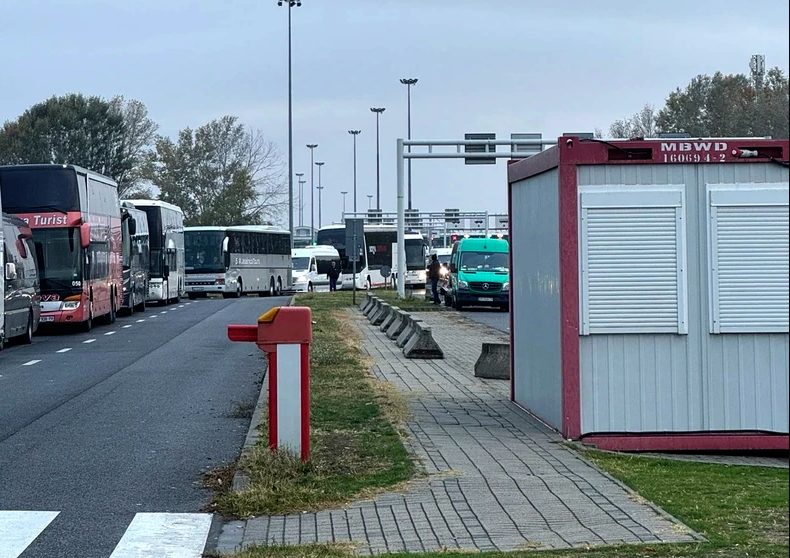
“We set off for a mini-break for the holidays in Prague through an agency, by bus. We never dreamed that this trip would turn into a nightmare, which is still ongoing because we have been stuck since last night at the Horgoš border crossing with Hungary. We can neither move forward nor back. The passengers are nervous, there are children too. We are without food and water. We wonder when our agony will end?” a passenger from Serbia, who found herself stuck at the border with everyone else, told us in one breath.
“Last night at 9:40 PM we were at our border. We crossed it relatively quickly. We have been at Horgoš since midnight. Currently, there are two buses in front of us; I don’t know how many more hours of waiting that means. Due to the whole situation, I called the Ministry of Foreign Affairs. They told me to call the border administration, and I called them a little while ago, but no one answers. I don’t know who else to contact. You can’t even imagine how long the line is. The inter-border space cannot be approached because there is no more room,” this passenger told us resignedly.
“No food, no water, one toilet, everyone is nervous”
She says the problem is the introduction of the new EES system, and as she unofficially learns, the Hungarians will not work with it for the whole shift, but only for two hours according to the new system.
“We have been waiting at the border for ten hours now. We even asked the driver to return to Serbia, but we can’t. When we arrived at the border last night, there were 14 buses in front of us, now there are only two. There are children on the bus, all the passengers are nervous. We are stuck here; we have no food or water. We had one kiosk; now we don’t even have that because it is closed. We have one toilet and a million people using it. That is totally inadequate. This is worse than prison,” this passenger tells us.
The delay is most likely due to the implementation of the new EES system
According to the arrangement program, they were supposed to be in Prague today at noon, but at this pace, she says, it is questionable whether they will even arrive there by tomorrow.
Passengers from Serbia have been waiting at the border for ten hours
Gradual introduction of the EES system
By the way, the implementation of the EES system at the Hungarian border began on October 28th at the Tompa-Kelebija crossing, while it was introduced at the Reske-Horgoš crossing from November 4th. It will enter into force on the remaining road, rail, and river crossings between Hungary and Serbia by November 11th.
Checkpoints for passenger registration have been set up at the Tompa border crossing, and Hungarian police officers direct vehicles into separate traffic lanes for those who need to register through the new IT system for recording entry and exit into the EU – the EES.
The Hungarian border police create an electronic file for every passenger from third countries, including Serbian citizens, which includes photographing the face and taking fingerprints of four fingers of the right hand.
There is no age limit for applying the EES; all passengers will have to undergo registration, except that children up to 12 years of age will be exempt from fingerprinting.
For EES purposes, a “non-EU national” means a traveler who does not have the citizenship of any European Union country or the citizenship of Iceland, Liechtenstein, Norway, or Switzerland.
MORE TOPICS:
Source: Blic Photo: Blic