




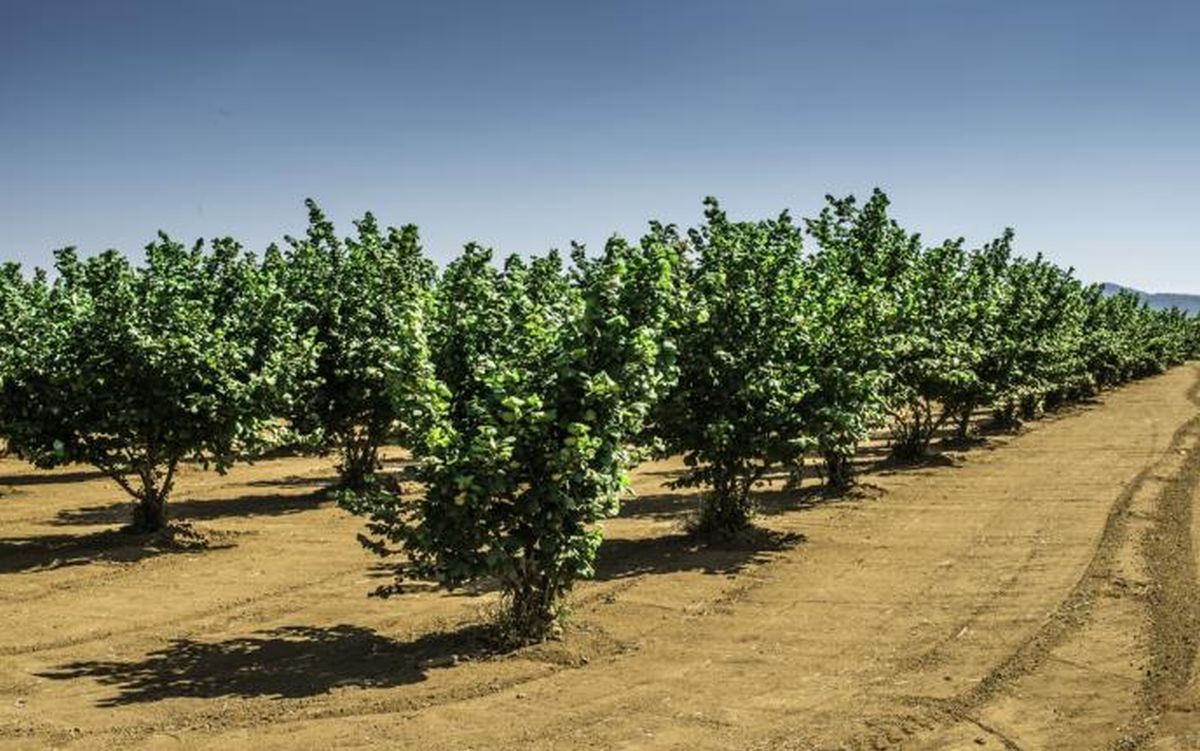
Although he lived in Austria for 20 years and successfully established 26 hazelnut plantations for Austrians, Dušan Banjanac from Paraćin, a returnee from abroad, got the idea to plant hazelnuts in his hometown from his son-in-law.
Boban Dejanović, a lawyer employed by the Paraćin municipal administration and married to Dušan’s twin sister, saw an opportunity to increase the family budget in a hazelnut plantation. Said and done. Together, they bought eight hectares of land in the village of Mirilovac, and two years later, it’s a plantation with about 4,000 hazelnut seedlings that have already yielded an initial harvest.
There is no larger hazelnut plantation in Paraćin, and it is one of the largest in Pomoravlje. Moreover, the two partners took a bit of a risk. To avoid waiting too long for a harvest, they planted four-year-old seedlings instead of younger ones. Extensive preparations for planting lasted almost a year. The land was of the fourth class.
“We improved it with artificial fertilizer. We brought 50 tons of waste from a sugar factory and spread it over the plot, then plowed it. After a few months, laboratory tests of soil samples showed that we had managed to achieve a neutral pH value. From the fourth class of soil, we got the second one. In the meantime, we dug a well to ensure water and fenced the plantation, and only then did the planting follow,” says Banjanac.
In just two days, in December 2022, they planted all 4,000 seedlings. The first symbolic harvest arrived nine months later, and this year the yield was 1.5 tons of hazelnuts in the shell. This is just the beginning – the two partners emphasize.
FIND OUT MORE:
Serbia imports a “gold nugget”
There are currently about 2,700 hectares of hazelnuts in our country, which meets only 11% of the domestic market’s needs. The rest is imported, claims Banjanac. Turkey holds the world market with 70% of production, while the rest is provided by Italy, France, and California (USA). The current price of shelled hazelnuts in Serbia is 7.5 euros per kilogram wholesale, and in retail, it is from 1,200 to 1,400 dinars. The price is much higher abroad, so Dušan and Boban plan to export in the future. Until then, they will complete the machinery they already have with a line for drying and cracking hazelnuts.
They expect the first serious quantities in 2026. Afterward, the plantation will bring a solid annual income.
“Each tree yields eight to 12 kilograms of hazelnuts in the shell. That’s four to five kilograms of kernels, so at least 25 euros per tree will remain from this plantation. That is the main motivation for growing hazelnuts, especially since the shrub form of hazelnuts bears fruit for 70 years. A plantation like ours is fruitful for three generations, so since we both have daughters, their families will also have a nice annual income,” say the producers.
A well 151 meters deep, 2.5 kilometers of fence
Hazelnuts like to have “their feet in water and their head in the sun,” so our interlocutors had to invest in a well 151 meters deep, a 5,000-liter water reservoir, and a cistern. Fencing the plantation took three months. Two and a half kilometers of wire went into the fence, and it is held by nearly 900 poles – explains Boban Dejanović, who was most involved in this work.
And when there is nothing to do around the hazelnuts, the plantation, in its beautiful natural setting, becomes a place for socializing and barbecuing.
The hazelnut harvest begins in the second half of August. It lasts three to four weeks. They are still investing in the plantation, and the total figure is close to 150,000 euros. However, this will return with just two harvests in full yield. According to their calculations, about 100,000 euros will remain annually from eight hectares of hazelnuts. They don’t call hazelnuts a “gold nugget” for nothing.
SIMILAR TOPICS:
IT’S NOT ALL THAT EXOTIC: A Serbian woman went to work in the Bahamas, working 7 days a week!
Izvor: Kurir
Foto: Shutterstock